


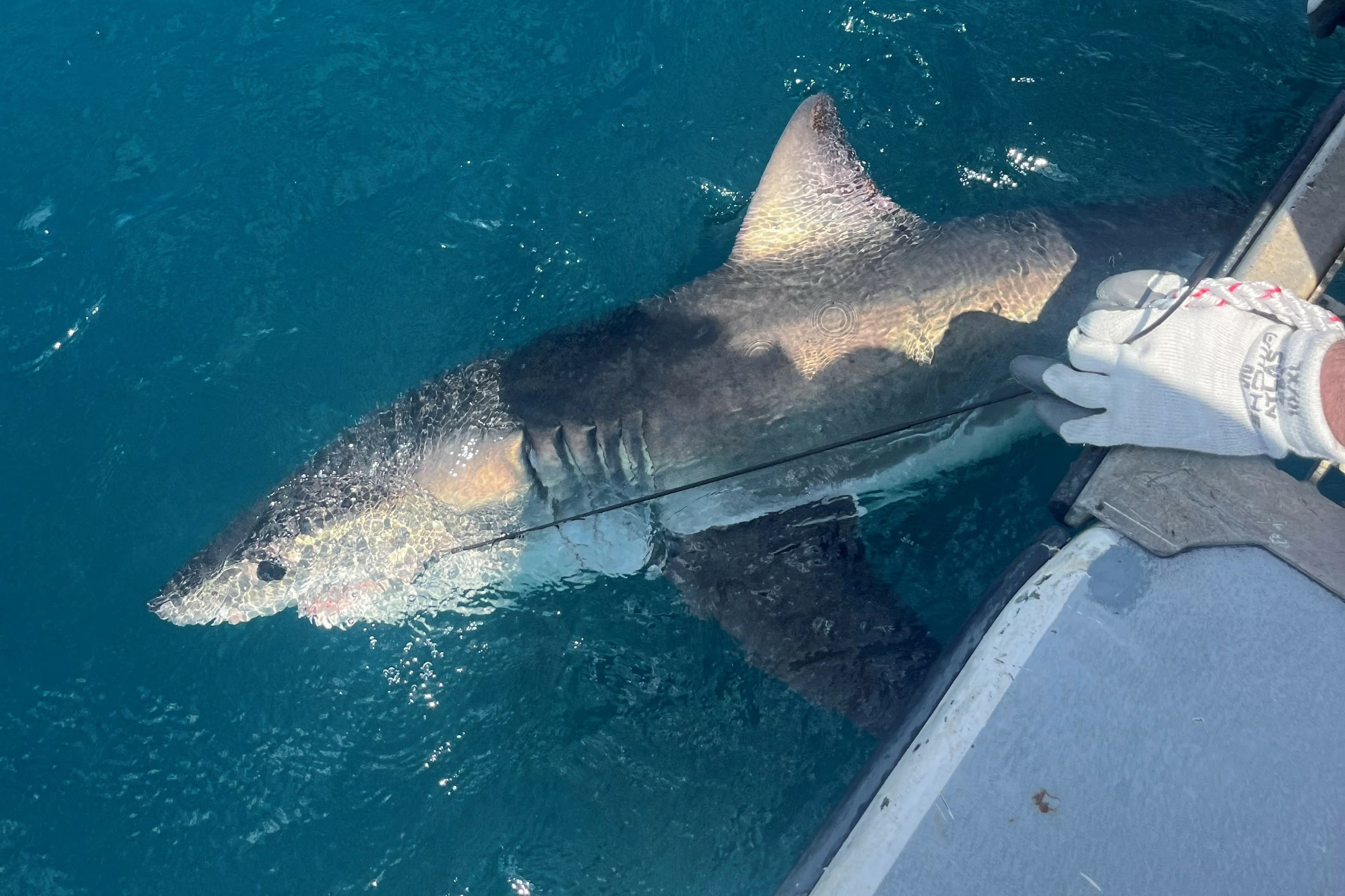
Sharks may now be able to predict hurricanes
Summarized and contextualized by DistantNews.
At a glance
News
Named sources
Context piece
- Researchers are exploring the use of sharks as mobile ocean-data observers to help predict hurricane intensity.
- Sharks are being equipped with sensors that measure ocean conditions like temperature, salinity, and depth.
- This data can inform climate models and improve understanding of how ocean heat content influences hurricane strength.
Sharks, often depicted as fearsome predators in popular culture, may soon play a crucial role in predicting hurricanes. Researchers at the University of Delaware are investigating whether these marine animals can serve as living oceanographic sensors.
Animal-borne sensors have been used successfully by oceanographers for years, particularly on elephant seals in polar regions where scientific observations are scarce.
The project involves attaching small electronic devices, known as CTD tags, to sharks. These tags measure ocean electrical conductivity (related to salinity), temperature, and depth as the sharks move through the water. This data provides near-real-time observations of ocean conditions, which are vital for improving atmospheric and climate models.
Sharks offer a new opportunity in such research because they are abundant, widely distributed and easier to access than many protected marine mammals.
Aaron Carlisle, a professor at the university's School of Marine Science and Policy, explained that animal-borne sensors have been used successfully for years, but sharks offer a new opportunity. He noted that sharks are abundant, widely distributed, and more accessible than many marine mammals, making them ideal candidates for this research.
We are really most interested in the heat content of the top layer of the ocean, which is known as the mixed layer.
The team is particularly interested in the heat content of the ocean's mixed layer. Carlisle stated, "This is the part of the water column that really drives hurricane intensity – warmer mixed layer equals stronger hurricane – as it holds the heat that feeds hurricanes." By tracking sharks, scientists hope to gain a better understanding of this critical factor, potentially leading to more accurate hurricane intensity forecasts before they make landfall.
This is the part of the water column that really drives hurricane intensity – warmer mixed layer equals stronger hurricane – as it holds the heat that feeds hurricanes.
DistantNews Editorial
Originally published by Gulf Today. Summarized and contextualized by our editorial team with added local perspective. Read our editorial standards.
More Stories



From Our Blog

What Gets Lost (and Found) When News Is Translated

The Critical Role of Diaspora Media in Global News

What Travellers Should Know About Countries with Restricted Press

A Digital Nomad's Guide to Following Local News

How the Same Story Looks Different in Different Countries
