


Shipping faces a volatile world: Marinakis and Frangou on global trade
Translated from Greek, summarized and contextualized by DistantNews.
At a glance
News
Sources not specified
New plan
- International shipping faces a volatile world with geopolitical tensions and energy insecurity.
- Shipping leaders Vangelis Marinakis and Angeliki Frangou discussed navigating these challenges and ensuring global trade flows.
- Marinakis proposed a transit fee for the Strait of Hormuz in exchange for free and safe passage, a concept he has formally presented to the U.S. government.
The global shipping industry is navigating a new era of unpredictability, characterized by fragmentation, heightened geopolitical tensions, energy insecurity, trade restrictions, increased costs, and evolving technological demands. The primary challenge for the sector is no longer merely enduring these disruptions but adapting, managing risks, and ensuring the continuous flow of global trade and energy.
This was a proposal made during Posidonia a month ago in Athens. I have also sent this proposal to the Trump administration and it is official. I believe it is the right step forward.
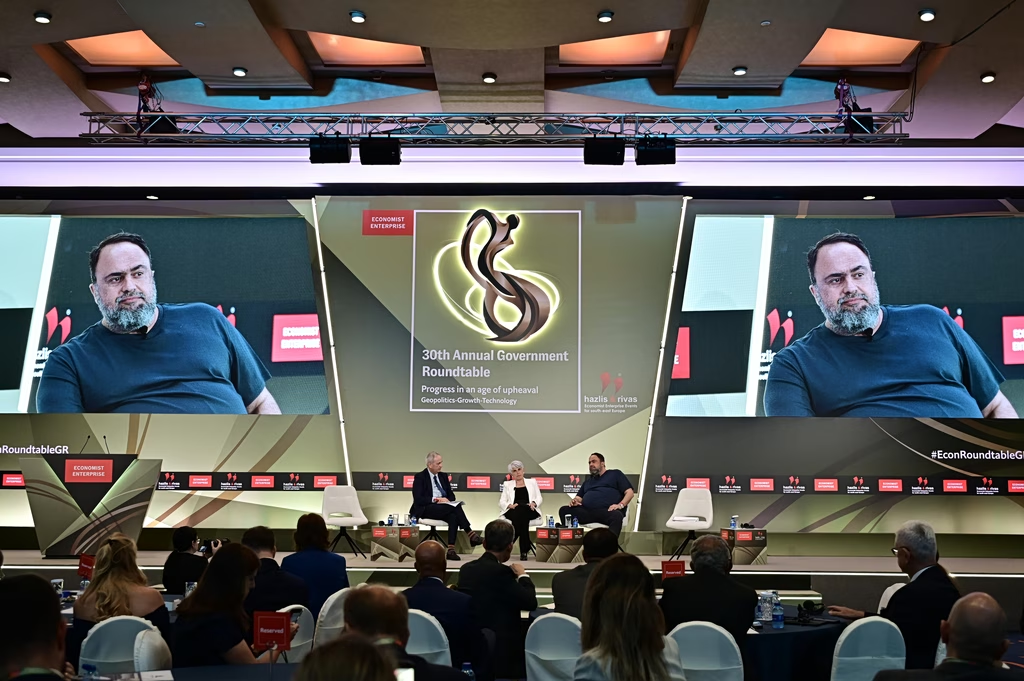
This was the central message conveyed by Vangelis Marinakis, founder and chairman of Capital Maritime & Trading Corp., and Angeliki Frangou, chairman and CEO of Navios Maritime Partners. Speaking at The Economist's Annual Government Roundtable in Lagonissi, Greece, they discussed the intersection of trade and geopolitics. Both Greek shipping magnates described an industry operating under constant crisis, yet one that is gaining strategic importance for governments, economies, and businesses worldwide.
First of all, this was a proposal made during Posidonia a month ago in Athens. I have also sent this proposal to the Trump administration and it is official. I believe it is the right step forward. And I can explain my reasoning.
A key proposal discussed was Marinakis's idea to implement a transit fee for the Strait of Hormuz, which would be exchanged for guaranteed free and safe navigation. Marinakis revealed that he has officially presented this concept to the U.S. government. He explained that shipping companies currently pay substantial war risk premiums, ranging from $1 million to $3 million depending on the vessel's value, due to the risks associated with the region, even in the absence of active conflict.
First, this was a proposal made during Posidonia a month ago in Athens. I have also sent this proposal to the Trump administration and it is official. I believe it is the right step forward. And I can explain my reasoning. First, this is a proposal that was made during Posidonia a month ago in Athens. I have also sent this proposal to the Trump administration and it is official. I believe it is the right step forward. And I can explain my reasoning.
Marinakis argued that a transit fee, coupled with guaranteed free passage, would eliminate the need for these high war risk premiums. Furthermore, he suggested that ensuring free navigation would allow leaders more time to secure proper agreements on critical issues like nuclear weapons, democracy, and trade, preventing conflicts from disrupting the global economy for extended periods. He also noted that economies are already strained by inflation and high energy prices, making the continuous flow of essential goods even more critical.
First, this was a proposal that was made during Posidonia a month ago in Athens. I have also sent this proposal to the Trump administration and it is official. I believe it is the right step forward. And I can explain my reasoning.
DistantNews Editorial
Originally published by Ta Nea in Greek. Translated, summarized, and contextualized by our editorial team with added local perspective. Read our editorial standards.
More Stories


From Our Blog

What Gets Lost (and Found) When News Is Translated

The Critical Role of Diaspora Media in Global News

What Travellers Should Know About Countries with Restricted Press

A Digital Nomad's Guide to Following Local News

How the Same Story Looks Different in Different Countries
