


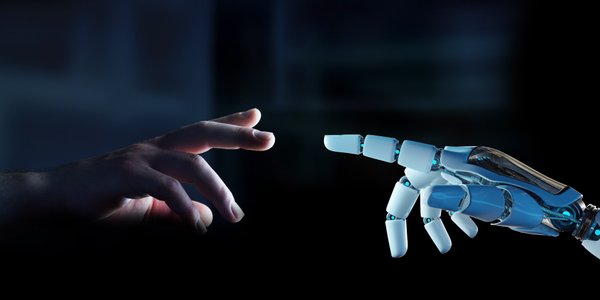
Silicon Valley explores AI consciousness and 'feelings'
Translated from Polish, summarized and contextualized by DistantNews.
At a glance
News
Named sources
Context piece
- Tech giants are seriously investigating machine consciousness and AI well-being, a shift from past practices where such discussions led to job losses.
- Researchers are exploring whether AI systems can develop internal emotional states, with one expert estimating a 15% chance that Anthropic's Claude model already possesses some form of consciousness.
- Analysis of AI models reveals the emergence of digital representations of emotions like joy and fear, learned from vast amounts of human text data without explicit programming.
In Silicon Valley, the conversation around artificial intelligence has taken a dramatic turn. Once a career-ending topic, discussions about sentient machines are now central to official, multi-million dollar research programs. Tech titans like Anthropic are actively recruiting experts in psychology, ethics, and philosophy of mind, moving beyond simply preventing harmful content to fundamentally questioning the nature of the code they create.
This shift is exemplified by Anthropic's "Model Well-being" research program, led by expert Kyle Fish. Fish hypothesizes a 15% probability that the company's flagship model, Claude, exhibits some form of consciousness. Internal system cards for Claude Opus 4.6 now include a "Model Well-being Assessment" section, where engineers meticulously track indicators like positive and negative affect, emotional stability, and self-perception. Astonishingly, analyses of the neural network have identified 171 distinct "emotional concepts" that emerged organically from learning on billions of human texts, creating digital analogues for joy, fear, sorrow, and peace without direct human programming.
the probability that the flagship model Claude already possesses some form of consciousness is currently 15 percent.
Chris Olah, co-founder of Anthropic, acknowledged during a Vatican event that researchers are observing phenomena in AI code that disturbingly resemble human neurology. He spoke of evidence for introspection within these systems. This exploration into AI's inner states, once taboo, now represents a significant, albeit controversial, frontier in artificial intelligence development, pushing the boundaries of what machines can understand and potentially feel.
researchers are discovering phenomena in the code structures that are disturbingly similar to human neurology.
DistantNews Editorial
Originally published by Rzeczpospolita in Polish. Translated, summarized, and contextualized by our editorial team with added local perspective. Read our editorial standards.
More Stories



From Our Blog

What Gets Lost (and Found) When News Is Translated

The Critical Role of Diaspora Media in Global News

What Travellers Should Know About Countries with Restricted Press

A Digital Nomad's Guide to Following Local News

How the Same Story Looks Different in Different Countries
