


Silverfish in Your Home? It's a Sign of High Humidity, Not a Health Threat
Translated from Spanish, summarized and contextualized by DistantNews.
At a glance
News
Sources not specified
Context piece
- Silverfish infestations indicate high indoor humidity levels, potentially signaling pipe leaks, poor ventilation, or condensation.
- While not a health risk to humans, these insects consume starch-based materials like paper, fabrics, and adhesives, causing economic damage.
- Silverfish are adaptable, long-lived pests that reproduce quickly in warm conditions, making them difficult to eradicate.
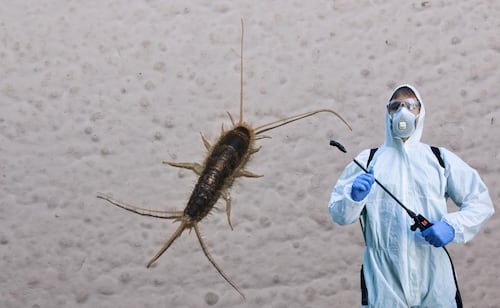
Tiny, wingless, and metallic-looking, silverfish (Lepisma saccharina) often go unnoticed due to their nocturnal habits. However, their frequent appearance in homes, on shelves, in kitchens, or bathrooms, is not random. It directly signals internal environmental conditions.
The observation of specimens in shelves, kitchen, or showers is not a casual fact, but a direct indicator of the internal environmental conditions of the property.
According to biological studies from Mexico's National Autonomous University (UNAM), these zygentomids thrive in urban interiors due to stable temperatures. Their presence indicates relative humidity above 70%, acting as a bioindicator for potential pipe leaks, inadequate ventilation, or unusual condensation on walls and ceilings.
The silverfish does not cause bites in humans nor does it transmit pathogens directly.
Despite their unsettling appearance, silverfish do not bite humans or transmit pathogens. Mexico's National Service for Health, Food Safety, and Quality Agro-food (SENASICA) confirms they pose no public health risk. However, their appetite for starch-based materials like paper, books, natural fabrics (cotton, linen, silk), adhesives, and even silicone sealants can cause considerable economic and property damage.
The Lepisma saccharina has a diet based on starch, sugars, and cellulose.
These adaptable insects can live for 2 to 8 years, entering dormancy during resource scarcity. They mature in about four months and molt up to eight times. Their reproductive rate is high in warm temperatures, with females laying up to 100 eggs in hard-to-reach crevices. Eradicating them is challenging due to their life cycle and ability to hide.
These insects reach a lifespan of between 2 and 8 years, with the ability to enter states of latency or hibernation during periods of resource scarcity.
DistantNews Editorial
Originally published by El Universal in Spanish. Translated, summarized, and contextualized by our editorial team with added local perspective. Read our editorial standards.
More Stories



From Our Blog

What Press Freedom Means for the News You Read

What Gets Lost (and Found) When News Is Translated

The Critical Role of Diaspora Media in Global News

What Travellers Should Know About Countries with Restricted Press

A Digital Nomad's Guide to Following Local News
