

Singapore manufacturers adjust to higher US tariff, hold off on major production shifts
Summarized and contextualized by DistantNews.
At a glance
News
Named sources
New plan
- Singaporean manufacturers are adapting to a new 12.5% US tariff imposed on certain exports.
- The tariff, effective July 24, targets countries restricting imports produced with forced labor, with Singapore facing a higher rate than some regional competitors.
- Companies are exploring ways to manage increased costs, such as improving productivity and automation, but are hesitant to make major shifts in production locations.
Singaporean manufacturers are adjusting to the economic realities of a new 12.5% US tariff, a measure that has increased costs for exporters to the United States. The tariff, implemented on July 24, stems from a US investigation into 60 trading partners regarding their import restrictions on goods made with forced labor. Singapore faces the higher end of the tariff range, which replaced a previous global import surcharge.
Approximately one-third of Singapore's domestic exports to the US are affected by this new duty, though key sectors like pharmaceuticals and semiconductors remain exempt. The Ministry of Trade and Industry has affirmed Singapore's stance against forced labor and its robust enforcement framework, while continuing dialogue with the US Trade Representative. The tariff adds to existing pressures from elevated ocean freight rates, significantly increasing the overall cost of serving the US market.
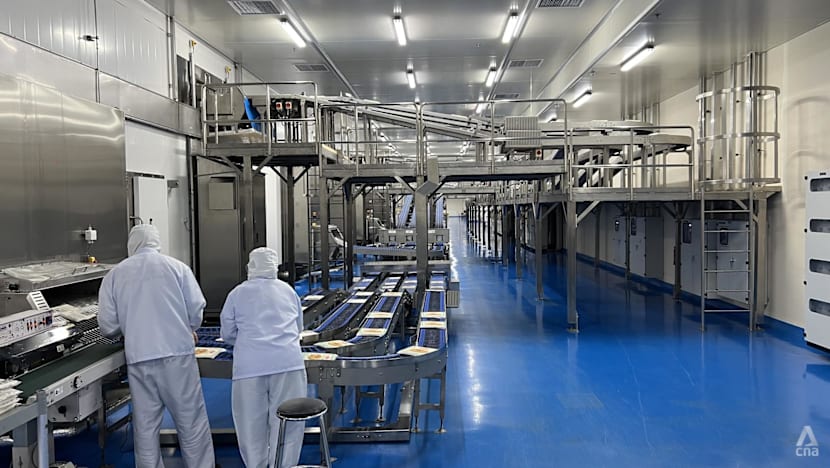
Food manufacturer Tee Yih Jia, known for products like spring roll skins, faces these heightened costs. With the US accounting for about 20% of its revenue, the company's global strategic manager, Priscilla Ng, noted the impact on the entire supply chain, from production to the end customer. Shipping a 40-foot container from Singapore to the US now costs around S$14,000 (US$11,000).
Despite the financial strain, Tee Yih Jia is not immediately relocating its production. Ng emphasized that decisions regarding outsourcing supply or production require extensive long-term planning. The company is currently focusing on enhancing automation, improving demand forecasting, and optimizing its operations to mitigate the tariff's impact.
It essentially means a higher cost of serving the US market because we are actually looking at the entire supply chain, from the manufacturers in Singapore, down to the distributors and then eventually the customers in the US. So with the new tariffs and the high ocean freight, it actually increases the cost much more significantly than previously.
DistantNews Editorial
Originally published by CNA. Summarized and contextualized by our editorial team with added local perspective. Read our editorial standards.
More Stories
From Our Blog

What Gets Lost (and Found) When News Is Translated

The Critical Role of Diaspora Media in Global News

What Travellers Should Know About Countries with Restricted Press

A Digital Nomad's Guide to Following Local News

How the Same Story Looks Different in Different Countries
