


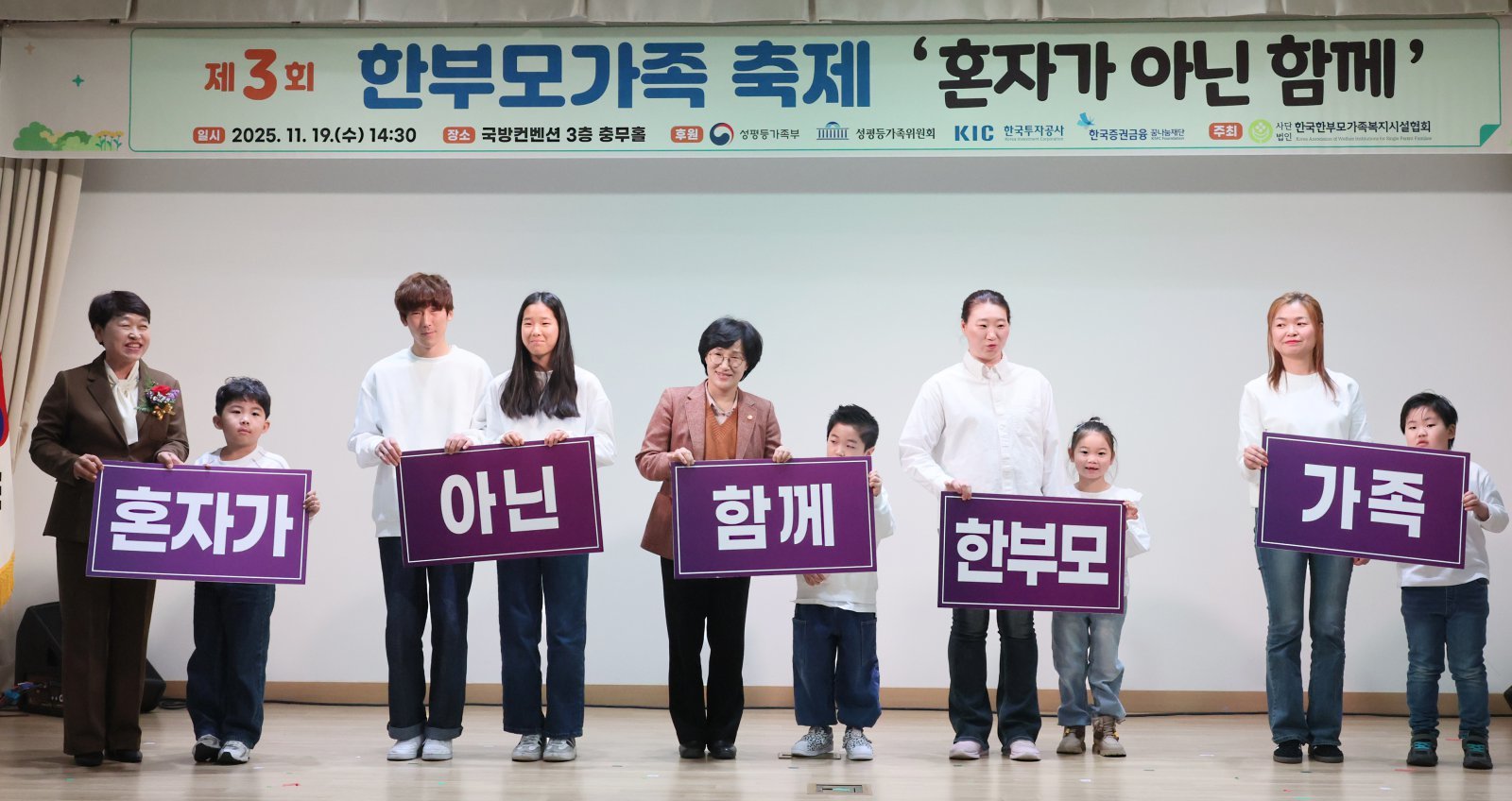
Single-parent families exceed 500,000, up 60,000 in five years
Translated from Korean, summarized and contextualized by DistantNews.
At a glance
News
Documents & data
New plan
- The number of single-parent families in South Korea receiving welfare benefits has surpassed 500,000, an increase of over 20,000 in the past year.
- Women constitute the majority of these families, making up 61.7% of recipients, with the 10-19 age group for children being the most represented.
- Over 83,000 single-parent families are classified as low-income, highlighting economic vulnerabilities, while the government recently increased the standard median income for welfare eligibility.
South Korea's welfare system now supports over 500,000 individuals belonging to single-parent families, according to data from the Korea Social Security Information Service. The latest figures show a total of 517,709 recipients, marking a significant increase of 20,697 from the previous year's 497,012. This figure represents those registered within the social security information system who qualify as low-income or single-parent families, suggesting the actual number of single-parent households could be even higher.
The trend of increasing single-parent families has been consistent, with a rise of 60,473 individuals over the past five years compared to 2020. Analysis by gender reveals that women head the majority of these families, accounting for 319,272 recipients (61.7%), while men head 197,982. The age distribution of children in these families shows the largest group, 208,891, is between 10 and 19 years old. Parents in their 40s are the next largest demographic group among recipients, numbering 98,034.
Geographically, Gyeonggi Province has the highest concentration of single-parent families with 111,327 individuals. Seoul follows with 58,176, and Incheon with 39,643. Combined, the Seoul metropolitan area accounts for 40.4% of all recipients. Among these families, 83,482 are classified as low-income, indicating significant economic challenges. These families are eligible for various forms of support, including child-rearing and educational expenses, as well as living allowances. Low-income single-parent families may also receive additional benefits such as reduced medical co-payments and support for acquiring job skills.
This demographic trend emerges as the South Korean government recently approved a record 6.7% increase in the standard median income for 2027, a benchmark used for 15 government ministries and 80 welfare programs. The new median income figures set the threshold at 2,736,042 won for a one-person household, 4,480,645 won for a two-person household, 5,718,091 won for a three-person household, and 6,494,738 won for a four-person household. This adjustment aims to expand eligibility for welfare services to more vulnerable populations.
DistantNews Editorial
Originally published by Dong-A Ilbo in Korean. Translated, summarized, and contextualized by our editorial team with added local perspective. Read our editorial standards.
More Stories



From Our Blog

What Gets Lost (and Found) When News Is Translated

The Critical Role of Diaspora Media in Global News

What Travellers Should Know About Countries with Restricted Press

A Digital Nomad's Guide to Following Local News

How the Same Story Looks Different in Different Countries
