


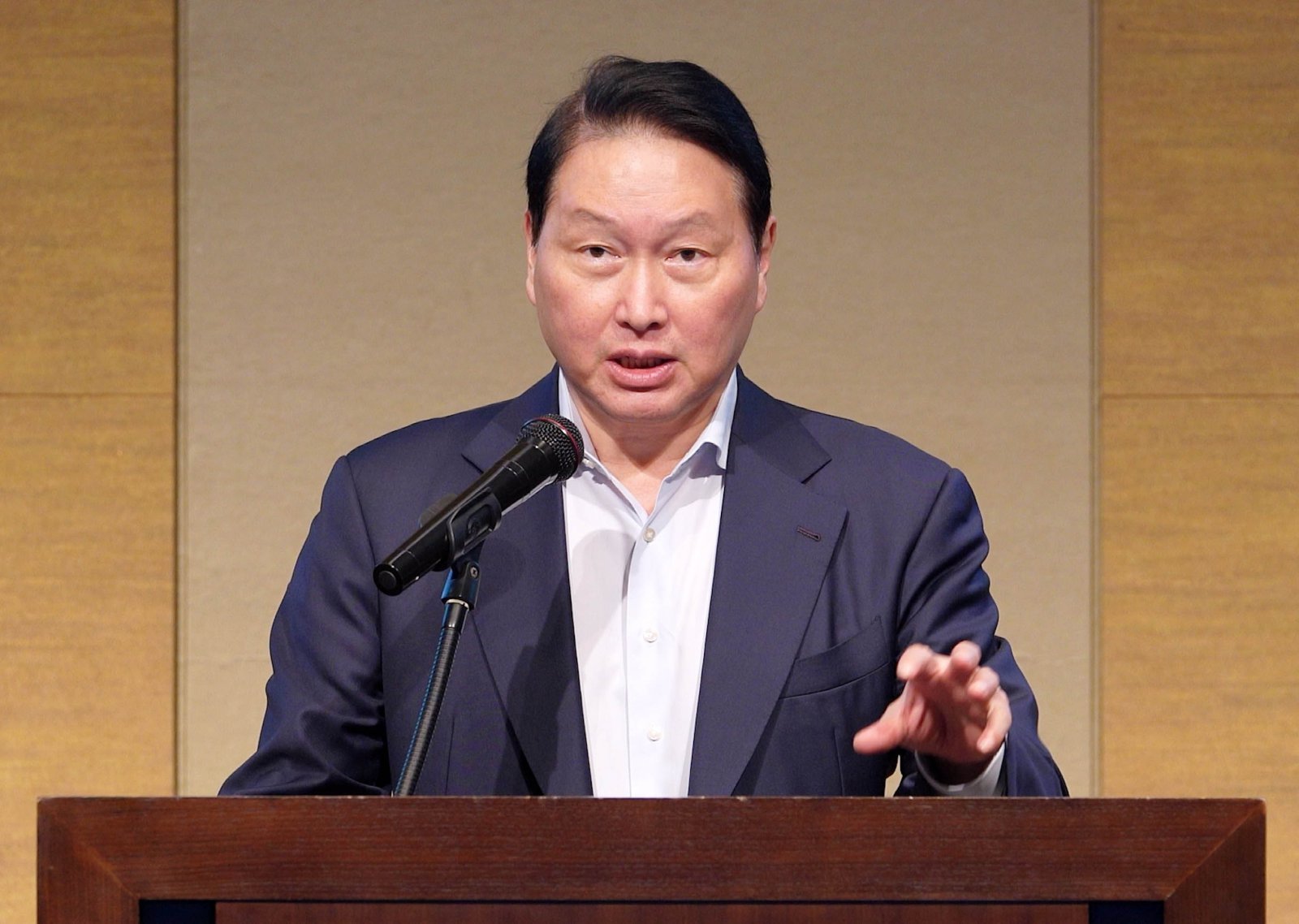
SK Group chief weighs joint Kioxia plant, warns investment could end without cooperation
Translated from Korean and summarized by DistantNews. Read the original for the full story.
At a glance
News
Named sources
New plan
- SK Group Chairman Chey Tae-won said SK Hynix could partner with Kioxia in joint production, research and development, supply-chain sharing or a jointly built semiconductor plant.
- SK Hynix competes with Kioxia in NAND flash but indirectly owns a stake in the Japanese company through a Bain Capital-managed special purpose company.
- Chey said SK could end its investment if the companies cannot build a broader cooperation, and said SK was considering overseas factories, including in Japan, to meet rising memory demand.
SK Group Chairman Chey Tae-won has put a possible partnership with Japan’s Kioxia on the table, including the construction of a semiconductor plant together. But he also made clear that SK Hynix could walk away from its investment if the relationship produces no meaningful cooperation.
“If SK Hynix can be part of Kioxia’s future strategy, we are willing to become a partner at any time,” Chey said in an interview with Japan’s Asahi Shimbun, reported on the 2nd. He described cooperation with Kioxia as “one option” and identified joint production, research and development, and supply-chain sharing as possible areas.
If SK Hynix can be part of Kioxia’s future strategy, we are willing to become a partner at any time.
Chey also pointed to Kioxia’s existing joint venture with U.S. semiconductor company SanDisk, which produces key products together. Asahi reported that he raised the possibility of SK and Kioxia jointly building a factory. SK Hynix and Kioxia currently compete in the NAND flash market while remaining linked through investment. SK Hynix indirectly holds shares in Kioxia through a special purpose company operated by Bain Capital.
If we can no longer build any kind of cooperation, we will end our investment in Kioxia.
That relationship has limits. “If we can no longer build any kind of cooperation, we will end our investment in Kioxia,” Chey said. He also said the global generative artificial intelligence boom had left data-center memory semiconductors, in his view, 20% to 30% short of demand. Investment underway in South Korea alone would not be enough, he said, prompting consideration of new factories overseas, including in Japan.
Chey called Japan an attractive candidate for a new semiconductor production base from both risk and cultural perspectives. He cited the concentration of equipment, materials and component suppliers, the country’s established production environment and its emphasis on manufacturing. Asahi reported that Japanese local governments had made offers to attract a factory, and that Chey could disclose a specific investment policy before the end of the year.
Kioxia is a company with many strengths.
About this summary
Originally published by Dong-A Ilbo in Korean. Translated, summarized, and contextualized automatically by DistantNews, with a note on how the source frames the story. Not individually reviewed before publishing. How this works.
More Stories


From Our Blog

What Gets Lost (and Found) When News Is Translated

The Critical Role of Diaspora Media in Global News

What Travellers Should Know About Countries with Restricted Press

A Digital Nomad's Guide to Following Local News

How the Same Story Looks Different in Different Countries
