


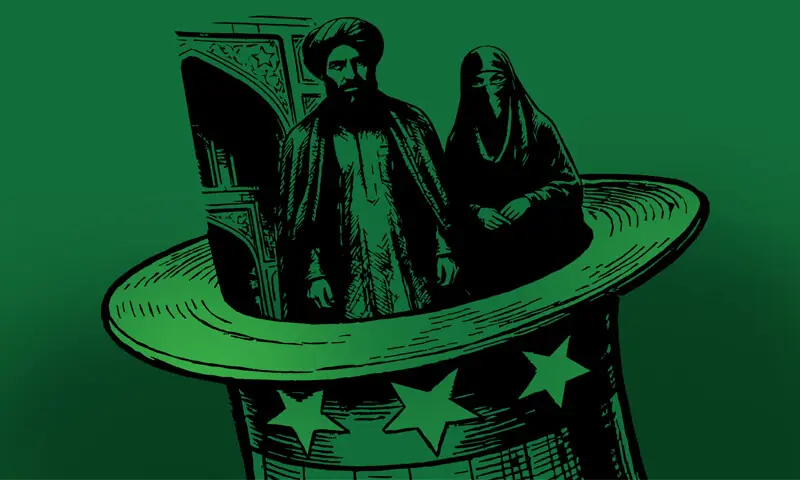
Smokers' Corner: The Geopolitics of the Pulpit
Translated from English, summarized and contextualized by DistantNews.
TLDR
- Western intelligence agencies, including the CIA and British intelligence, historically used radical Islamist movements as strategic assets against secular or leftist rivals in the Middle East and South Asia.
- This strategy involved collaborating with clerics and Islamist groups to undermine nationalist and socialist movements, often with unintended long-term consequences like the rise of theocratic governance.
- The article suggests a shift in regional dynamics, with countries like Pakistan and Saudi Arabia moving away from past Islamist frameworks, indicating the emergence of a new, more pragmatic regional identity.
This analysis from Dawn delves into a complex and often uncomfortable history: the instrumentalization of radical Islamist movements by Western powers, particularly the US and Britain, to serve their geopolitical interests in the Middle East and South Asia. The article meticulously details how intelligence agencies, in their pursuit of countering secular or leftist rivals, actively bolstered and collaborated with Islamist groups, a strategy that has yielded significant, and often ironic, blowback.
The history of Western engagement in the Middle East and South Asia reveals a pattern in which radical Islamist movements were frequently used as strategic assets against secular or leftist rivals.
The historical examples cited are particularly striking. The CIA's involvement in the 1953 Iranian coup, where they allied with clerics like Ayatollah Kashani against Prime Minister Mosaddegh, is presented as a prime instance of leveraging religious opposition for regime change. This alliance, however, sowed the seeds for future challenges, as the very clergy empowered by the West eventually turned against the Shah, whom the CIA had helped reinstate, ultimately leading to the Islamic Revolution that branded the US as "satanic."
Collaborating with the Iranian clergy demonstrated a willingness by Western intelligence networks to leverage the pulpit for regime change.
Similarly, the article highlights Britain's collaboration with the Muslim Brotherhood in the 1950s and 60s to undermine Arab nationalist leaders like Egypt's Gamal Abdel Nasser. By disseminating rhetoric that alienated the public from Nasser's pan-Arab project, Western powers engaged in a sophisticated form of cultural engineering, prioritizing the suppression of 'socialism' over the potential rise of theocratic states. This historical pattern, the article argues, demonstrates a consistent Western tendency to employ certain social forces to delegitimize ideologies threatening their hegemony.
Western powers once instrumentalised political Islam to counter socialism. Today, the same forces are recast by the West as existential threats.
The piece concludes by noting a potential shift in the contemporary regional landscape. As nations like Pakistan and Saudi Arabia reportedly move away from past Islamist frameworks, a new, more pragmatic regional identity appears to be emerging. This suggests that the long-term consequences of the historical strategy of instrumentalizing political Islam are now being re-evaluated, both by regional actors and potentially by the West itself, as the dynamics of power and influence in the region continue to evolve.
British intelligence frequently collaborated with the Islamist outfit Muslim Brotherhood during the 1950s and 1960s to undermine the influence of ‘modernist’ Arab nationalist leaders, such as Egypt’s Gamal Abdel Nasser.
DistantNews Editorial
Originally published by Dawn in English. Translated, summarized, and contextualized by our editorial team with added local perspective. Read our editorial standards.
More Stories

From Our Blog

What Gets Lost (and Found) When News Is Translated

The Critical Role of Diaspora Media in Global News

What Travellers Should Know About Countries with Restricted Press

A Digital Nomad's Guide to Following Local News

How the Same Story Looks Different in Different Countries
