


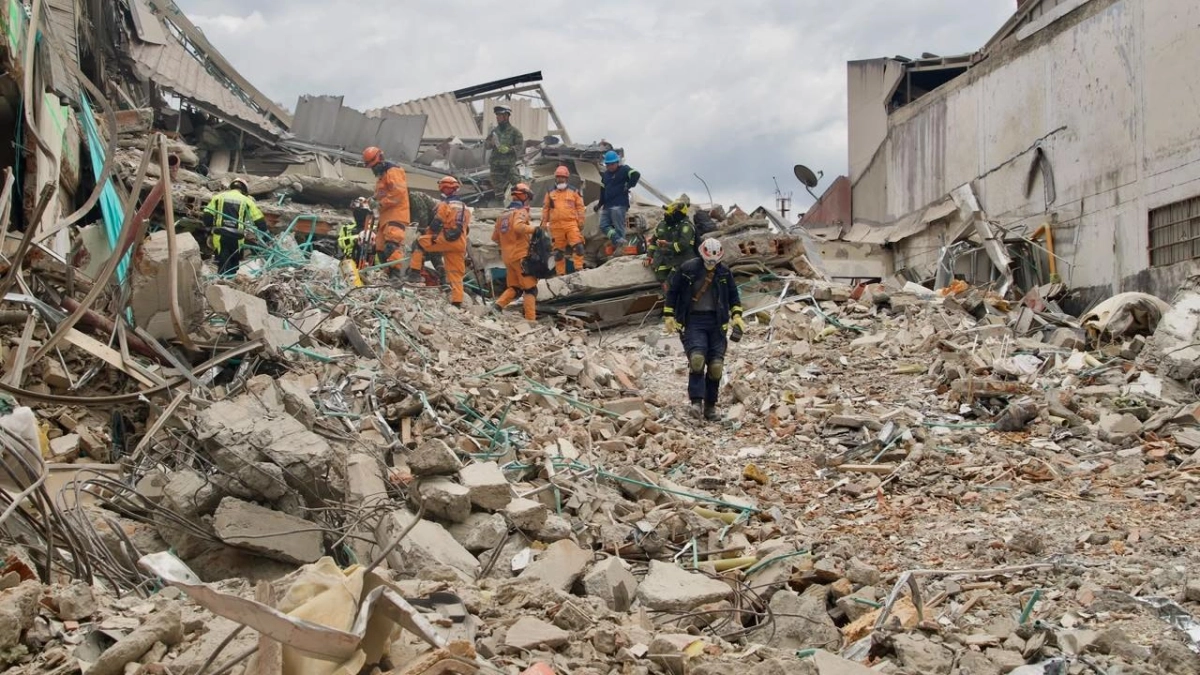
Solidarity Tourism: A Strategy to Revitalize Areas Affected by Colombia's 7.4 Magnitude Earthquake
Translated from Spanish and summarized by DistantNews. Read the original for the full story.
At a glance
News
Named sources
Ongoing story
- Colombia is employing "solidarity tourism" as a strategy to help areas recover from a magnitude 7.4 earthquake.
- The return of visitors is seen as a way to stimulate economic recovery and development in affected regions.
- This approach aims to support the revitalization of the tourism sector and its associated economy.
Colombia is leveraging tourism as a tool for recovery in regions devastated by a powerful magnitude 7.4 earthquake. The strategy, termed "solidarity tourism," aims to bring visitors back to affected areas, providing a much-needed economic boost.
The return of tourists is viewed as a crucial alternative for driving the improvement of the local tourism sector and its economy. By encouraging travel to these areas, authorities hope to stimulate business activity, support local communities, and aid in the broader process of rebuilding and revitalization.
This initiative underscores the interconnectedness of tourism and economic resilience, particularly in the wake of natural disasters. The focus is on creating a sustainable model where visitor engagement directly contributes to the recovery and long-term development of the impacted regions.
The success of solidarity tourism will depend on coordinated efforts to ensure safety, promote local attractions, and manage visitor flows effectively, thereby transforming a challenging situation into an opportunity for community-driven recovery.
About this summary
Originally published by El Tiempo in Spanish. Translated, summarized, and contextualized automatically by DistantNews, with a note on how the source frames the story. Not individually reviewed before publishing. How this works.
More Stories
From Our Blog

What Gets Lost (and Found) When News Is Translated

The Critical Role of Diaspora Media in Global News

What Travellers Should Know About Countries with Restricted Press

A Digital Nomad's Guide to Following Local News

How the Same Story Looks Different in Different Countries
