


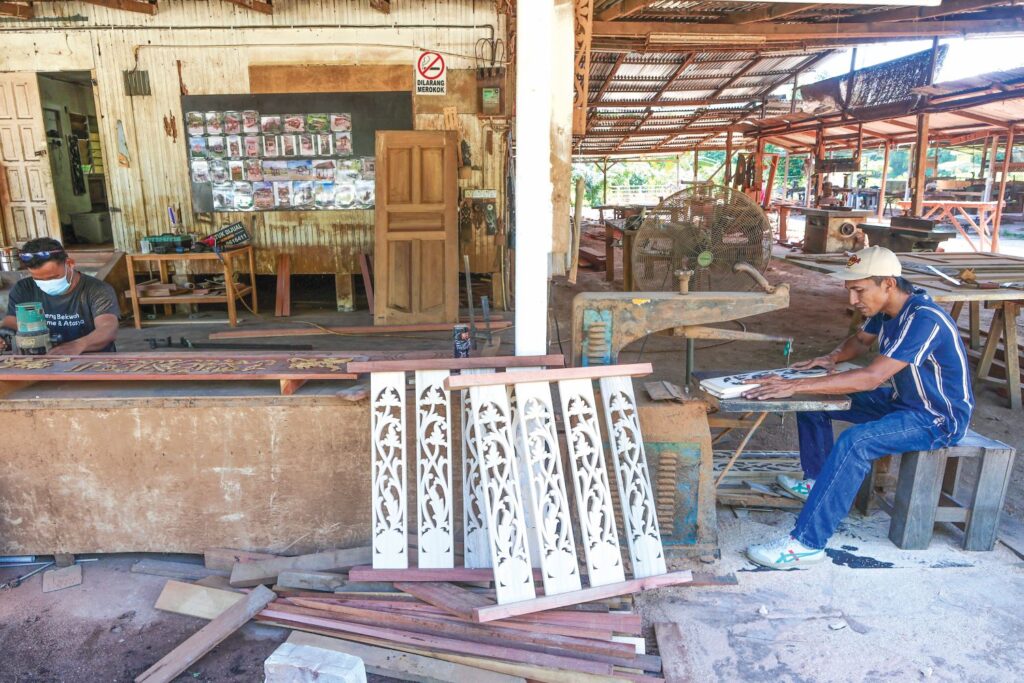
Sound of chisels fades as wood carving heritage risks extinction
Translated from Malay, summarized and contextualized by DistantNews.
At a glance
In-depth
Sources not specified
Context piece
- The traditional art of wood carving in Besut, Malaysia, is at risk of disappearing due to declining demand and a lack of new practitioners.
- Modern building materials and a preference for speed and low cost are diminishing the appeal of intricate, handcrafted woodwork.
- Experienced carvers express concern that the heritage, once a source of pride, may be lost to time without a new generation to carry it forward.
The rhythmic sounds of chisels and hammers, once the defining soundtrack of Besut's wood carving workshops, are fading. This traditional art form, a long-standing identity and pride of the district, is now under threat as demand wanes and the number of skilled artisans dwindles.
Once adorning traditional Malay homes, palaces, mosques, and heritage buildings across Malaysia, the intricate carvings from Besut showcased the creativity of Malay artisans, passed down through generations. However, the rise of modern construction materials like metal, aluminum, and plastic, which offer faster and cheaper alternatives, has led to a significant decline in the demand for handcrafted wood.
Mohd. Ayub Che Mat, a 50-year-old carver, voices deep concern over the diminishing number of master carvers. He fears that without successors ready to continue the legacy, this cherished heritage could be lost forever. "If this situation continues, it's not impossible that wood carving, once the pride of the Malay community, will disappear with time," he stated.
If this situation continues, it's not impossible that wood carving, once the pride of the Malay community, will disappear with time
Che Mat also highlighted the challenge of keeping the art relevant in a world that increasingly prioritizes speed and low costs. He explained that wood carving requires not just skill but also artistic talent, creativity, and meticulous attention to detail. While modern machinery can speed up production, it cannot replicate the finesse and artistic value of hand-carved pieces.
Younger generations are often deterred by the perceived complexity, time-consuming nature, and potentially lower financial returns of the craft. Mohd. Aizat Jafni Mohamad, 37, another carver, noted that while many young people show initial interest, few have the deep patience and dedication required to master the art. He emphasized that sustained interest and passion are crucial for survival in this demanding field.
Many come to learn, but eventually stop halfway. Wood carving requires focus because every piece must be made meticulously. If there is no deep interest, it is indeed difficult to remain in this field
DistantNews Editorial
Originally published by Utusan Malaysia in Malay. Translated, summarized, and contextualized by our editorial team with added local perspective. Read our editorial standards.
More Stories



From Our Blog

What Gets Lost (and Found) When News Is Translated

The Critical Role of Diaspora Media in Global News

What Travellers Should Know About Countries with Restricted Press

A Digital Nomad's Guide to Following Local News

How the Same Story Looks Different in Different Countries
