

South Korea Busts $30 Million Clothing Label Fraud, Government Gear Falsely Marketed
Translated from Korean, summarized and contextualized by DistantNews.
At a glance
News
Official statement
Outcome reported
- South Korean authorities have cracked down on 193 companies for illegally relabeling imported clothing as domestic products, totaling 41.6 billion won ($30 million) in unfair practices.
- The operation uncovered instances where workwear and protective gear supplied to government agencies were falsely marketed as domestically produced.
- Companies face fines, criminal charges, and restrictions on public procurement contracts as the government aims to eradicate label-switching and protect the domestic fashion industry.
South Korean authorities have uncovered widespread "label-switching" schemes where imported clothing was falsely marketed as domestic, leading to the detection of unfair practices worth 41.6 billion won ($30 million) across 193 companies. The crackdown, a joint effort by the Korea Customs Service, Fair Trade Commission, Public Procurement Service, National Police Agency, and the Seoul Metropolitan Government, ran for 100 days from February to May.
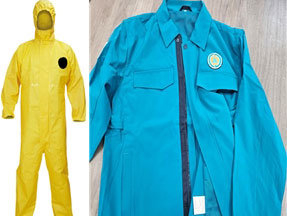
The investigation revealed that clothing wholesalers instructed garment manufacturers to replace original labels on imported apparel with "Made in Korea" tags or to remove origin labels entirely before selling them. Alarmingly, the scheme extended to workwear and protective gear supplied to government agencies, including civil defense uniforms and chemical protective suits, which were also misrepresented as domestically produced.
This operation significantly surpassed the results of a similar crackdown in 2019, which identified 15 billion won in illicit activities. The government plans to impose fines and pursue criminal charges against the implicated companies under the Foreign Trade Act. Additionally, companies involved in public procurement will face restrictions on bidding for government contracts and the recovery of illicit gains.
The government will pursue fines and criminal charges against the implicated companies.
DistantNews Editorial
Originally published by Dong-A Ilbo in Korean. Translated, summarized, and contextualized by our editorial team with added local perspective. Read our editorial standards.
More Stories



From Our Blog

What Gets Lost (and Found) When News Is Translated

The Critical Role of Diaspora Media in Global News

What Travellers Should Know About Countries with Restricted Press

A Digital Nomad's Guide to Following Local News

How the Same Story Looks Different in Different Countries
