

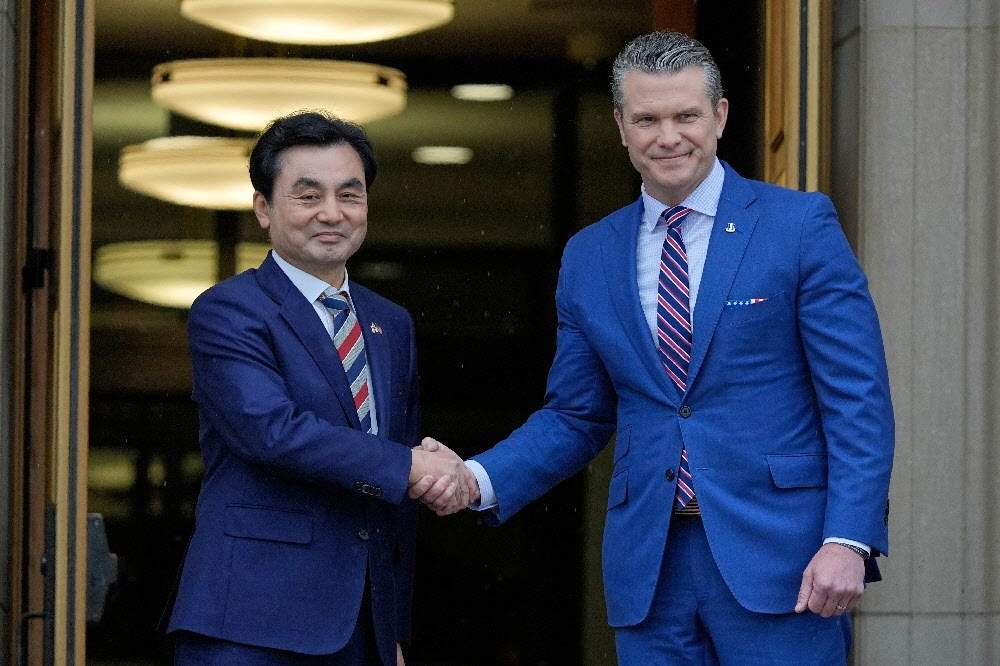

South Korea Eyes Year-End Deal with U.S. on Nuclear, Submarine Talks
Translated from Korean, summarized and contextualized by DistantNews.
At a glance
News
Named sources
Ongoing story
- South Korea expects to finalize negotiations with the United States on uranium enrichment and nuclear submarine cooperation within the year.
- The foreign ministry has prepared a task force to support South Korean companies participating in Middle Eastern reconstruction projects post-ceasefire.
- Seoul is also coordinating with Iran to ensure safe passage for its ships through the Strait of Hormuz.
South Korea is anticipating a swift resolution to its nuclear and submarine cooperation talks with the United States, with high-level officials expressing optimism for a deal within the current year. These discussions are crucial for Seoul's nuclear energy program, potentially granting it rights for uranium enrichment and reprocessing of spent nuclear fuel, as well as paving the way for nuclear-powered submarines.
"The two leaders have already agreed to conclude the consultations quickly, and we expect all of this to be finalized within the year," a senior official stated. The talks, which have involved technical discussions in Seoul and are set to continue in the U.S., aim to amend the existing South Korea-U.S. Atomic Energy Agreement. Options range from a full revision to a partial amendment or securing rights through an addendum.
Beyond nuclear cooperation, South Korea is proactively preparing for post-ceasefire reconstruction in the Middle East. The Ministry of Foreign Affairs has established a task force to identify economic cooperation opportunities for South Korean firms. This initiative predates any potential ceasefire agreement between the U.S. and Iran, demonstrating Seoul's strategic foresight in engaging with the region.
The two leaders have already agreed to conclude the consultations quickly, and we expect all of this to be finalized within the year.
Meanwhile, South Korea is actively addressing maritime security concerns in the Strait of Hormuz. Following the passage of two South Korean vessels, a total of 22 ships from the nation remain in the strait. Seoul is in continuous communication with relevant countries, including Iran, to ensure the safe and free navigation of all vessels. Foreign Minister Cho Hyun is also coordinating a call with his Iranian counterpart to discuss the situation.
The official also commented on inter-Korean relations, addressing concerns about potential divergences in approach between Seoul and Washington regarding North Korea's denuclearization. The official emphasized that practical negotiations and coordination have maintained a fundamental alignment, stating, "We have consistently held working-level negotiations and coordination with the U.S., so there is no fundamental difference in our positions." The strategy involves dialogue to achieve phased denuclearization, rather than immediate sanctions relief.
We have consistently held working-level negotiations and coordination with the U.S., so there is no fundamental difference in our positions.
DistantNews Editorial
Originally published by Hankyoreh in Korean. Translated, summarized, and contextualized by our editorial team with added local perspective. Read our editorial standards.
More Stories


From Our Blog

What Gets Lost (and Found) When News Is Translated

The Critical Role of Diaspora Media in Global News

What Travellers Should Know About Countries with Restricted Press

A Digital Nomad's Guide to Following Local News

How the Same Story Looks Different in Different Countries
