


South Korea faces widespread subtropical climate by 2100 if emissions continue
Translated from Korean, summarized and contextualized by DistantNews.
At a glance
News
Documents & data
Context piece
- South Korea's climate is projected to become subtropical in most regions by 2080-2100 if greenhouse gas emissions continue at the current rate.
- The number of subtropical climate zones in South Korea has increased from 14 to 17 over the past 35 years, with average annual temperatures rising.
- Projections indicate further expansion of subtropical areas by 2040 and potentially across most of the country by the end of the century, depending on emission scenarios.
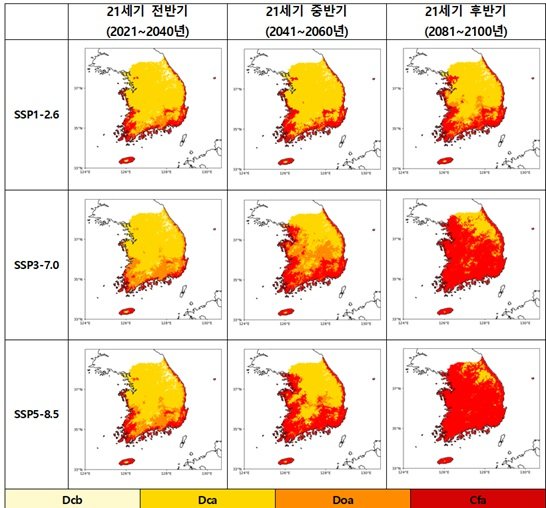
South Korea faces a significant climate shift, with projections indicating that most of the country could transition to a subtropical climate by 2080-2100, excluding some inland areas of Gangwon province. This forecast is based on current greenhouse gas emission trends.
Recent data reveals a noticeable expansion of subtropical climate zones within South Korea. Over the last 35 years, the number of observation points meeting subtropical criteria has grown from 14 to 17. This change is linked to a consistent rise in average annual temperatures, which have increased by 0.3 degrees Celsius per decade over the past 53 years (1973-2025).
The definition of a subtropical climate includes the average temperature of the coldest month being below 18 degrees Celsius and having at least eight months with an average monthly temperature above 10 degrees Celsius. Previously concentrated in southern coastal areas like Busan and Yeosu, these zones have now extended to parts of the east coast, including Uljin and Gangneung. This expansion is partly attributed to a significant rise in November average temperatures, reaching above 10 degrees Celsius in these areas.
Looking ahead, the Korea Meteorological Administration forecasts that by 2021-2040, regions in South and North Gyeongsang provinces, along with coastal areas and some major cities, will experience subtropical conditions. The extent of this transformation by the end of the century hinges on future emission pathways. A scenario with developed renewable energy technology and minimal fossil fuel use suggests a more limited expansion, while unchecked fossil fuel consumption and urban development could lead to subtropical conditions across most of the peninsula.
The East Sea's sea surface temperature has risen rapidly, significantly increasing temperatures in the East Coast region over the past decade.
DistantNews Editorial
Originally published by Dong-A Ilbo in Korean. Translated, summarized, and contextualized by our editorial team with added local perspective. Read our editorial standards.
More Stories


From Our Blog

What Gets Lost (and Found) When News Is Translated

The Critical Role of Diaspora Media in Global News

What Travellers Should Know About Countries with Restricted Press

A Digital Nomad's Guide to Following Local News

How the Same Story Looks Different in Different Countries
