


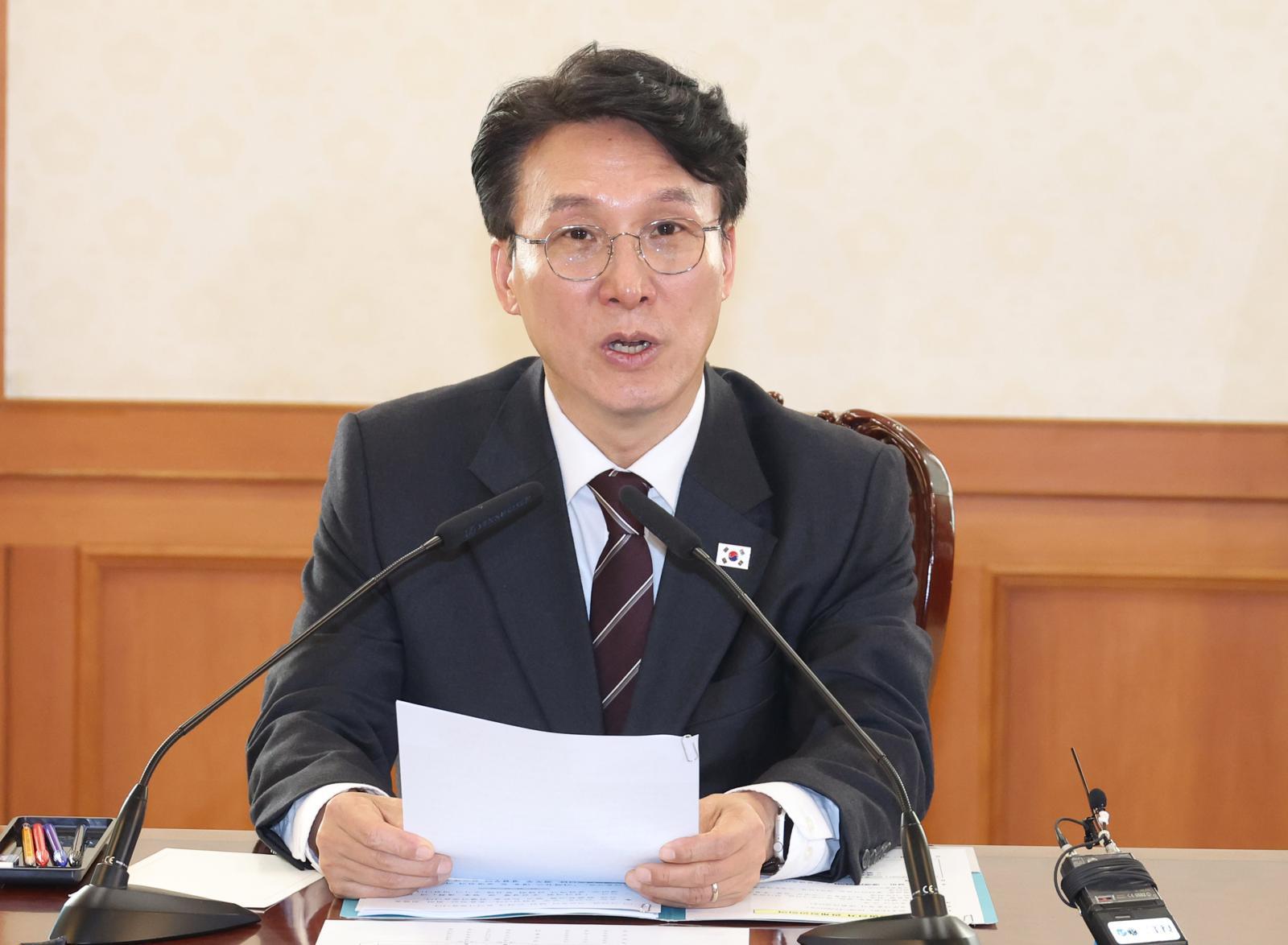
South Korea's Prime Minister Acknowledges Need to Amend "Yellow Envelope Law"
Translated from Korean, summarized and contextualized by DistantNews.
TLDR
- South Korean Prime Minister Kim Boo-kyum acknowledged the need to amend the "Yellow Envelope Law" (Labor Union Act) just over a month after its implementation.
- The law has caused confusion regarding the responsibility of primary contractors in negotiations with subcontractor unions.
- The government is considering legal revisions to clarify employer status and responsibilities, particularly in the private sector.
South Korea's Prime Minister Kim Boo-kyum has conceded that the recently enacted "Yellow Envelope Law" (Labor Union Act) requires further refinement, a mere month after its implementation. This law, designed to reshape labor relations, has immediately sparked considerable confusion, particularly concerning the obligations of primary contractors when engaging in negotiations with unions representing workers from subcontractor companies. The core issue revolves around defining "employer status" and responsibility, a matter the government now acknowledges needs clearer legal definition. Initially, the government had denied that primary contractors held such status in relation to subcontractor unions. However, following instances where employer status was recognized for public entities like the National Tax Service, Korea Electric Power Corporation, and Korea Asset Management Corporation, the administration is reconsidering its stance. The "Yellow Envelope Law" has been a contentious piece of legislation, with business organizations previously voicing concerns about potential "fragmented negotiations." Despite these warnings, the government and the ruling party pushed the law through. The impact is already being felt, with a significant number of primary contractors facing negotiation demands from numerous subcontractor unions. The situation is particularly acute in the private sector, which accounts for about 60% of these demands. Concerns are mounting that unions might push for demands beyond wages, such as improved working conditions, even if not explicitly covered by the law. While the government assures that recognition of employer status does not automatically obligate primary contractors to raise wages or directly employ subcontractor workers, many businesses remain apprehensive. Ensuring stability in labor relations is crucial for national competitiveness, and the government must thoroughly investigate and address the ambiguities and overlapping negotiation issues arising from the law's implementation. For the dialogue to continue productively, unions must also exercise restraint and avoid making unreasonable demands.
DistantNews Editorial
Originally published by Dong-A Ilbo in Korean. Translated, summarized, and contextualized by our editorial team with added local perspective. Read our editorial standards.
More Stories



From Our Blog

What Gets Lost (and Found) When News Is Translated

The Critical Role of Diaspora Media in Global News

What Travellers Should Know About Countries with Restricted Press

A Digital Nomad's Guide to Following Local News

How the Same Story Looks Different in Different Countries
