

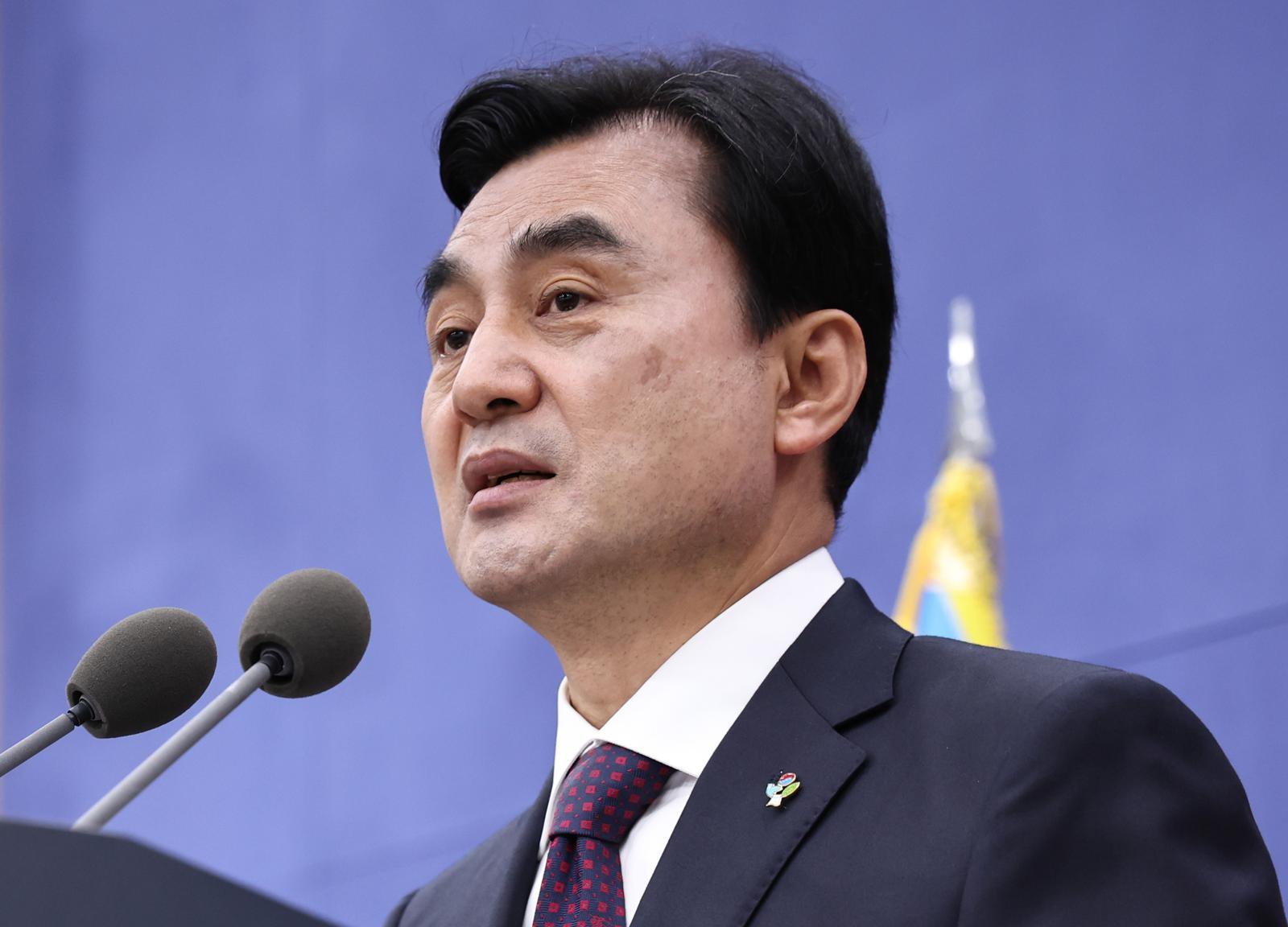

South Korea Won't Add Conditions for Wartime Control Transfer
Translated from Korean, summarized and contextualized by DistantNews.
At a glance
News
Named sources
New plan
- South Korean Defense Minister Ahn Kyu-baek stated that no additional conditions will be added for the transfer of wartime operational control (Sacom) from the US to South Korea.
- Ahn cited the rapidly changing nature of modern warfare, including the emergence of drones, suggesting that existing conditions might become outdated, using the idiom 'baek-nyeon-ha-cheong' (a long and uncertain wait).
- South Korea aims to propose the end of 2026 as the target year for Sacom transfer to the US, with the process involving capability assessments and mutual agreement between the two nations.
South Korean Defense Minister Ahn Kyu-baek has firmly stated that no new conditions will be imposed for the transfer of wartime operational control (Sacom) from the United States to South Korea. Responding to questions about whether existing conditions are sufficient to address modern warfare, Ahn remarked, "The battlefield landscape changes daily, so wouldn't such conditions be 'baek-nyeon-ha-cheong' (a long and uncertain wait)?" This marks the first time South Korea has publicly declared its stance against adding further conditions for Sacom recovery.
The battlefield landscape changes daily, so wouldn't such conditions be 'baek-nyeon-ha-cheong' (a long and uncertain wait)?
Ahn emphasized that Sacom should be recovered first, and then discussions about adapting to evolving battlefield environments can follow. He asserted that South Korea possesses sufficient capabilities despite significant shifts in warfare paradigms. The minister's reluctance to introduce new conditions stems from past experiences where the Sacom transfer was repeatedly delayed each time new conditions were added.
Originally agreed for April 17, 2012, under the Roh Moo-hyun administration, the transfer was postponed by the Lee Myung-bak administration to December 1, 2015, citing security concerns following North Korea's nuclear tests. The Park Geun-hye government further delayed the timeline indefinitely, agreeing to a transfer based on 'mutually agreed conditions' that met the rising threat of North Korean nuclear and missile capabilities. This 'condition-based transition' framework persists to this day.
Conditions should be met for Sacom recovery, and then that (the change in battlefield environment) should be discussed.
South Korea plans to propose the end of 2026 as the target year for Sacom transfer to the US, aligning with the current administration's national agenda of 'recovering Sacom within the term.' The process involves a three-stage assessment of the future Combined Forces Command's operational capabilities. Initial Operational Capability (IOC) and Full Operational Capability (FOC) assessments have been completed, with the FOC verification scheduled for the upcoming Korea-US Integrated Defense Discussion (SCM) in November. Following this, the defense ministers will decide on the Sacom transfer year and propose it to the respective presidents.
Our capabilities are sufficient.
Additionally, Ahn reaffirmed South Korea's intention to domestically build nuclear-powered submarines, clarifying that this plan is not yet agreed upon with the US. He stated, "It is our consistent position that we must build it with our own technology domestically, and the US side understands this process."
It is our consistent position that we must build it with our own technology domestically, and the US side understands this process.
DistantNews Editorial
Originally published by Hankyoreh in Korean. Translated, summarized, and contextualized by our editorial team with added local perspective. Read our editorial standards.
More Stories


From Our Blog

What Gets Lost (and Found) When News Is Translated

The Critical Role of Diaspora Media in Global News

What Travellers Should Know About Countries with Restricted Press

A Digital Nomad's Guide to Following Local News

How the Same Story Looks Different in Different Countries
