


South Korean Defense Minister Urges Progress on Wartime Control Transfer, Cites Resistance to Reforms
Translated from Korean, summarized and contextualized by DistantNews.
At a glance
News
Sources not specified
Ongoing story
- Defense Minister Shin Won-sik stressed the importance of regaining wartime operational control (S Joo-kwon) for South Korea's self-defense and alliance enhancement.
- He urged efforts to complete verification of Full Operational Capability (FOC) by the upcoming Korea-U.S. Security Consultative Meeting (SCM) in October.
- Shin also highlighted the need to overcome resistance to defense reforms, including the operational control transfer, education reform in military academies, and intelligence agency restructuring.
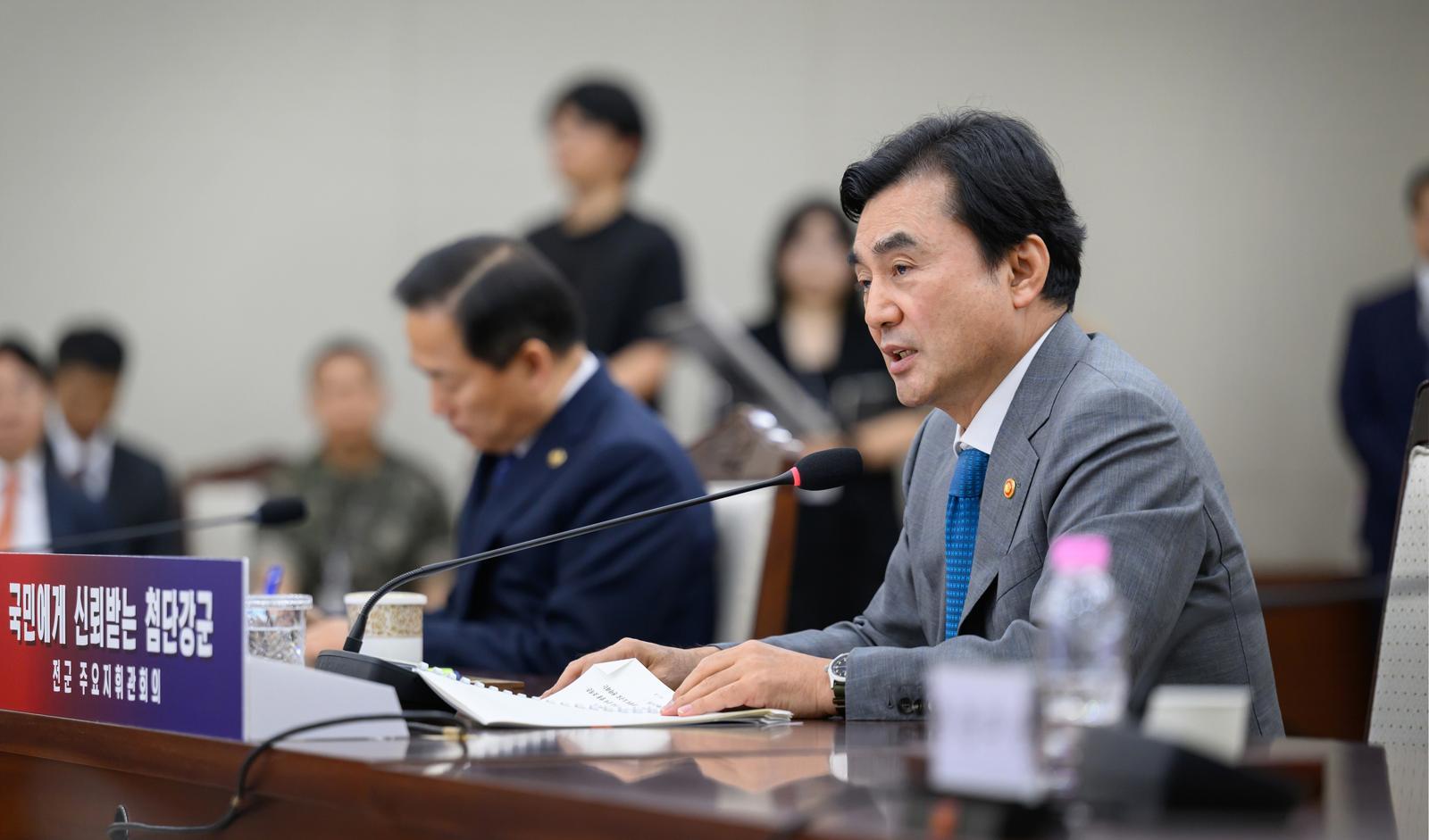
South Korean Defense Minister Shin Won-sik underscored the critical importance of regaining wartime operational control (S Joo-kwon) during a meeting of key military commanders. He asserted that a military unable to make its own decisions cannot be a strong military, emphasizing that the transfer of operational control is essential for enhancing South Korea's self-defense capabilities and evolving the ROK-U.S. alliance.
A military that cannot make its own decisions cannot be a strong military.
Shin stated that regaining operational control would empower the South Korean military to lead all aspects of wartime planning and execution, unleashing its accumulated capabilities and potential. He urged his staff to "do their best to complete the verification of Full Operational Capability (FOC) at the upcoming Korea-U.S. Annual Security Consultative Meeting (SCM) in October," aiming to report the target year for regaining control. The two nations are progressing through a three-stage evaluation of the future Combined Forces Command's operational readiness, having completed the Initial Operational Capability (IOC) phase and currently undergoing FOC verification.
Regaining operational control is not just a matter of self-defense; it is a path to building a stronger South Korea and evolving the ROK-U.S. alliance to a higher level.
The minister also addressed the challenges inherent in defense reform, likening the process to a revolution that faces "desperate resistance from vested interests and preconceived notions." He specifically mentioned the transfer of wartime operational control, the reform of military academy education, and the restructuring of intelligence agencies as crucial tasks that must be completed. Shin acknowledged the diverse voices and criticisms, including personal attacks, he has faced, recognizing the significant responsibility to "build thicker and stronger public support."
Do your best to complete the verification of Full Operational Capability (FOC) at the upcoming Korea-U.S. Annual Security Consultative Meeting (SCM) in October, and report the target year for regaining operational control.
Shin's remarks come as South Korea aims to regain operational control under the current administration, while the United States prioritizes meeting specific conditions over a fixed timeline for the transfer. The successful verification of FOC in October is seen as a pivotal step toward achieving this goal, potentially allowing the two allies to propose a transition year to their respective presidents.
Reform is more difficult than revolution. Unlike revolution, which overturns the entire structure, reform involves the desperate resistance of vested interests and preconceived notions.
DistantNews Editorial
Originally published by Hankyoreh in Korean. Translated, summarized, and contextualized by our editorial team with added local perspective. Read our editorial standards.
More Stories

From Our Blog

What Gets Lost (and Found) When News Is Translated

The Critical Role of Diaspora Media in Global News

What Travellers Should Know About Countries with Restricted Press

A Digital Nomad's Guide to Following Local News

How the Same Story Looks Different in Different Countries
