


South Korean Emergency Rescue Team Arrives in Nepal, Plans Field Deployment After Assessment
Translated from Korean and summarized by DistantNews. Read the original for the full story.
At a glance
News
Named sources
Ongoing story
- South Korea’s overseas emergency rescue team arrived in Kathmandu on an Air Force KC-330 aircraft to assist with flood search-and-rescue operations.
- The 44-member team includes officials, firefighters, KOICA personnel and five rescue dogs, along with about 1,000 pieces of equipment.
- The team plans to assess locations on Sept. 2 and move to a field camp on Sept. 3 for an expected 10-day operation, prioritizing survivors of any nationality.
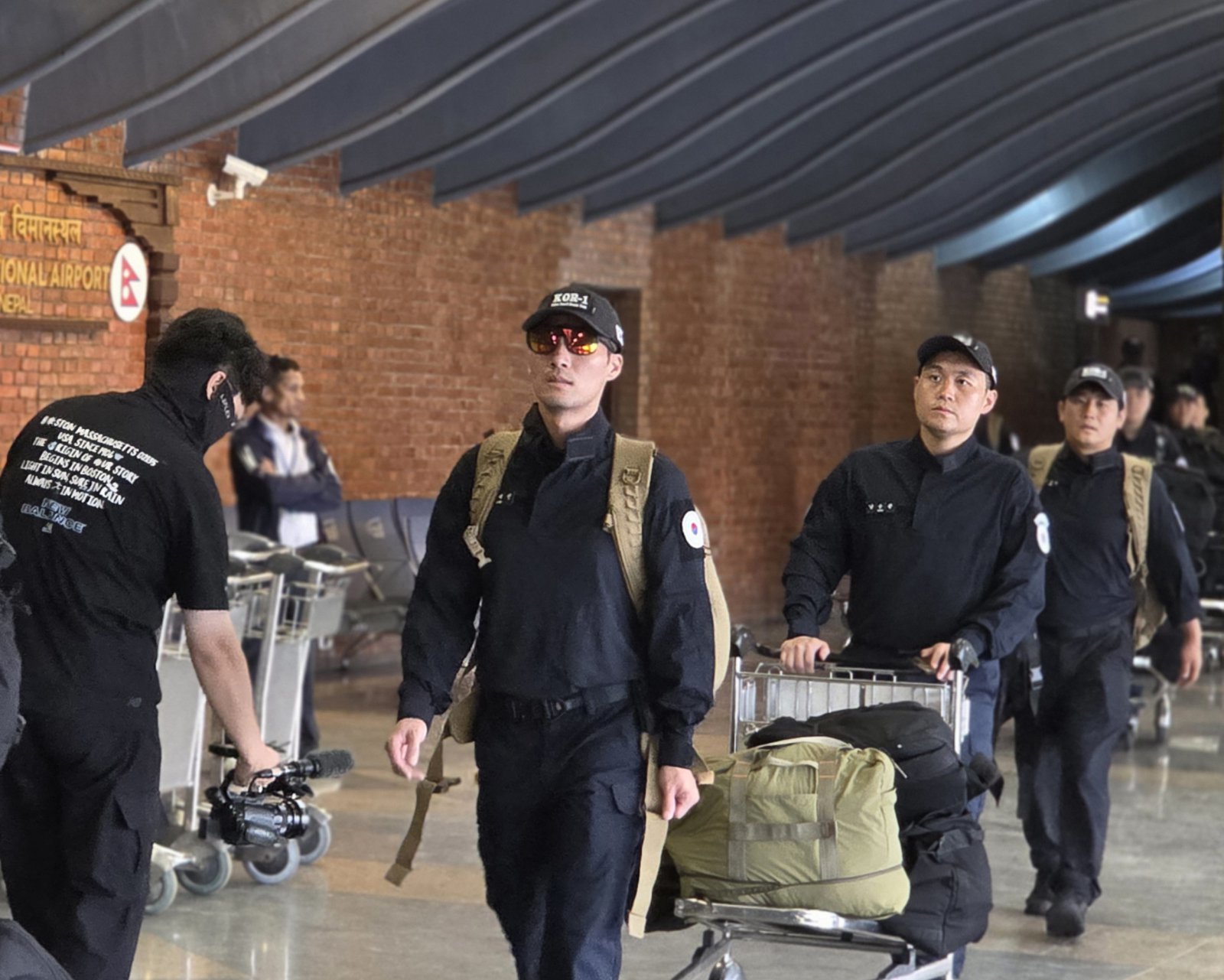
South Korea’s overseas emergency rescue team arrived in Kathmandu on Sept. 2, carrying rescue dogs, DNA kits, drones and nearly 1,000 pieces of equipment for flood operations in Nepal.
The 44-member team is led by Lee Gyu-ho of South Korea’s Foreign Ministry. It includes two ministry officials, four members of the Korea International Cooperation Agency and 37 firefighters, along with five rescue dogs. Its equipment includes a DNA identification unit, tunnel-inspection endoscopes, tools for cutting trees and breaking rocks in mountainous terrain, and protective gear for fast-moving water.
The emergency rescue team did not come only to rescue South Koreans. We must, of course, rescue foreigners as well.
The team planned to consult Nepalese authorities, the government’s rapid-response team and the South Korean Embassy before conducting a field assessment on Sept. 2. It expected to move to a field camp on the morning of Sept. 3 and carry out search-and-rescue operations for about 10 days, focusing on an area near a hydropower construction site in Rasuwa where nine South Koreans are believed to have gone missing.
Saving survivors is the most important mission as part of global solidarity.
Lee said the team had not yet decided whether Dhunche or another location would serve as the camp. The decision would depend on conditions at the site, weather and discussions with Nepal’s military authorities. He said the team would seek the location that provided the closest practical access to the search area.
“The emergency rescue team did not come only to rescue South Koreans. We must, of course, rescue foreigners as well,” Lee told reporters at the airport. He said saving survivors was the team’s most important mission as part of global solidarity, and that South Korea wanted to demonstrate its contribution to international disaster relief. Nepal requested the deployment as flooding in the Rasuwa area worsened. South Korea became the third country, after India and China, to send an overseas rescue team.
We will do our best and return, guided by the spirit of the 119 service, which gives its utmost to its assigned duty.
About this summary
Originally published by Dong-A Ilbo in Korean. Translated, summarized, and contextualized automatically by DistantNews, with a note on how the source frames the story. Not individually reviewed before publishing. How this works.
More Stories


From Our Blog

What Gets Lost (and Found) When News Is Translated

The Critical Role of Diaspora Media in Global News

What Travellers Should Know About Countries with Restricted Press

A Digital Nomad's Guide to Following Local News

How the Same Story Looks Different in Different Countries
