


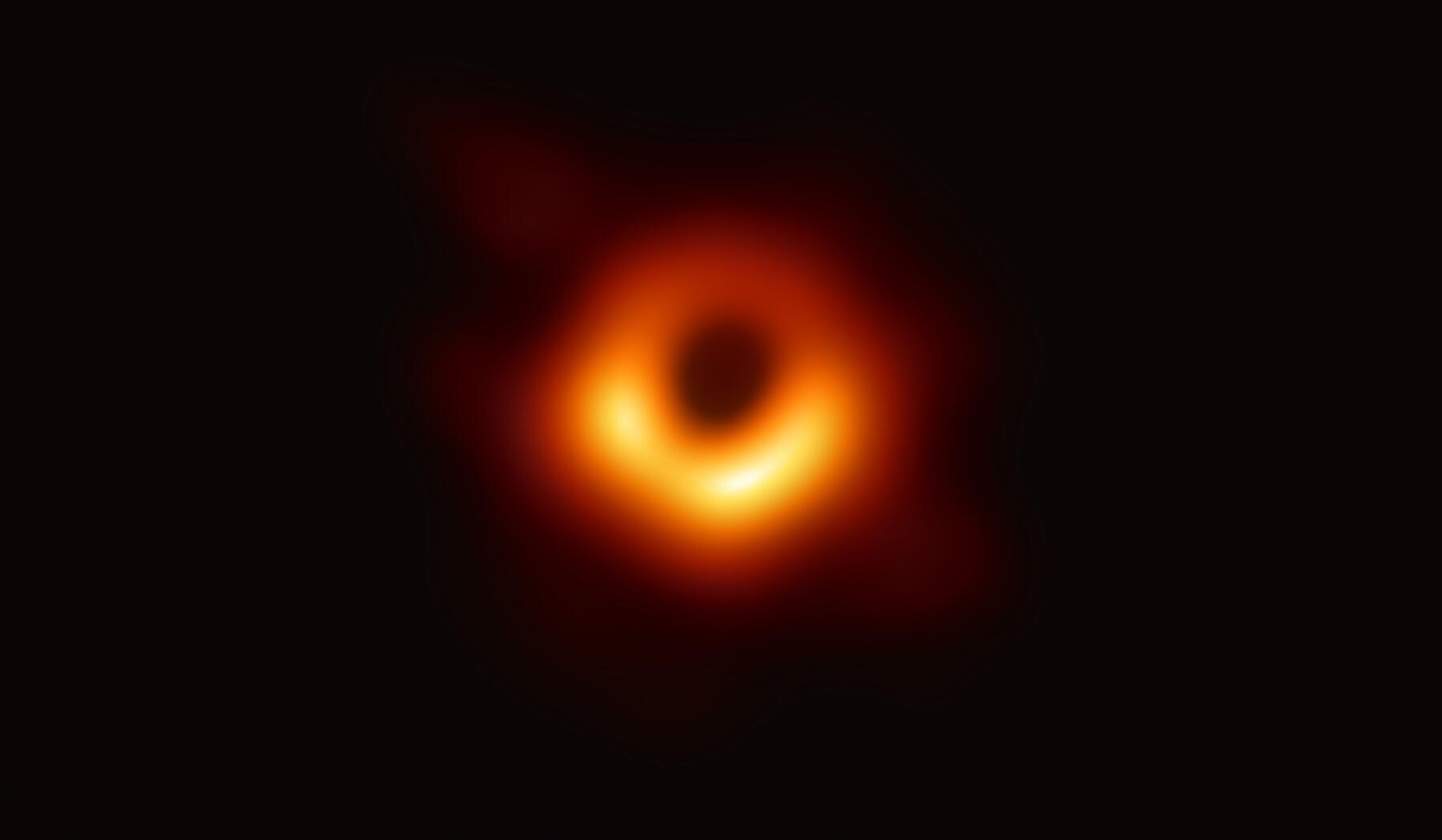
Spacetime crystals become tiny black holes
Translated from German, summarized and contextualized by DistantNews.
At a glance
News
Sources not specified
Context piece
- Researchers at TU Wien and Goethe University Frankfurt have found analytical solutions for the "critical collapse" phenomenon using Albert Einstein's equations in infinite dimensions.
- This work offers insights into the formation of black holes, previously considered mathematical artifacts but now accepted as physical entities.
- The study introduces the concept of "spacetime crystals" due to self-similar periodicity in spacetime, drawing parallels to phase transitions like water freezing.
Physicists at TU Wien and Goethe University Frankfurt have achieved a significant breakthrough by deriving analytical solutions for the "critical collapse" – a phenomenon related to the formation of black holes. Their innovative approach involves examining Albert Einstein's equations in an infinite number of dimensions, a method that bypasses the need for complex computer simulations traditionally used to study such events.
These are configurations of spacetime that are just on the threshold. If you add a tiny amount of energy, a black hole is created.
Black holes, once dismissed as mere mathematical curiosities, are now a cornerstone of modern physics. Despite the theoretical challenges posed by singularities – points of infinite density at their centers – observational evidence from sources like X-ray telescopes and gravitational wave detectors has confirmed their existence. The research sheds light on both stellar-mass black holes and their supermassive counterparts found in galactic centers, as well as the more hypothetical primordial black holes that may have formed in the early universe.
The team's findings, published in Physical Review, build upon computer simulations of the "critical collapse" first conducted in 1993. These simulations describe spacetime configurations on the brink of forming a black hole, where a minuscule addition of energy triggers the collapse. Theoretical physicist Daniel Grumiller from TU Wien likens this process to a phase transition, such as water nearing its freezing point.
It's like water near the freezing point.
Further drawing parallels to the formation of ice crystals, the researchers identified self-similar periodicity in spacetime within their solutions. This has led them to coin the term "spacetime crystals," where the periodicity can manifest spatially in some regions and temporally in others. Their goal was to translate the computer-generated numerical solutions into an analytical form, achievable with traditional pen and paper, offering a more fundamental understanding of these cosmic phenomena.
We therefore also speak of 'spacetime crystals', where the periodicity is spatial in some areas and temporal in others.
DistantNews Editorial
Originally published by Die Presse in German. Translated, summarized, and contextualized by our editorial team with added local perspective. Read our editorial standards.
More Stories



From Our Blog

What Gets Lost (and Found) When News Is Translated

The Critical Role of Diaspora Media in Global News

What Travellers Should Know About Countries with Restricted Press

A Digital Nomad's Guide to Following Local News

How the Same Story Looks Different in Different Countries
