



Speaker Aryal pushes House proceedings amid opposition uproar over PM’s absence
Summarized by DistantNews. Read the original for the full story.
At a glance
News
Named sources
Context piece
- Opposition parties in Nepal's House of Representatives disrupted proceedings, demanding Prime Minister Balendra Shah appear in Parliament.
- Speaker DP Aryal continued legislative business despite the obstruction, drawing criticism for allegedly violating parliamentary rules.
- Opposition lawmakers argue the Speaker failed to uphold Rule 56, which mandates a monthly question-answer session with the prime minister.
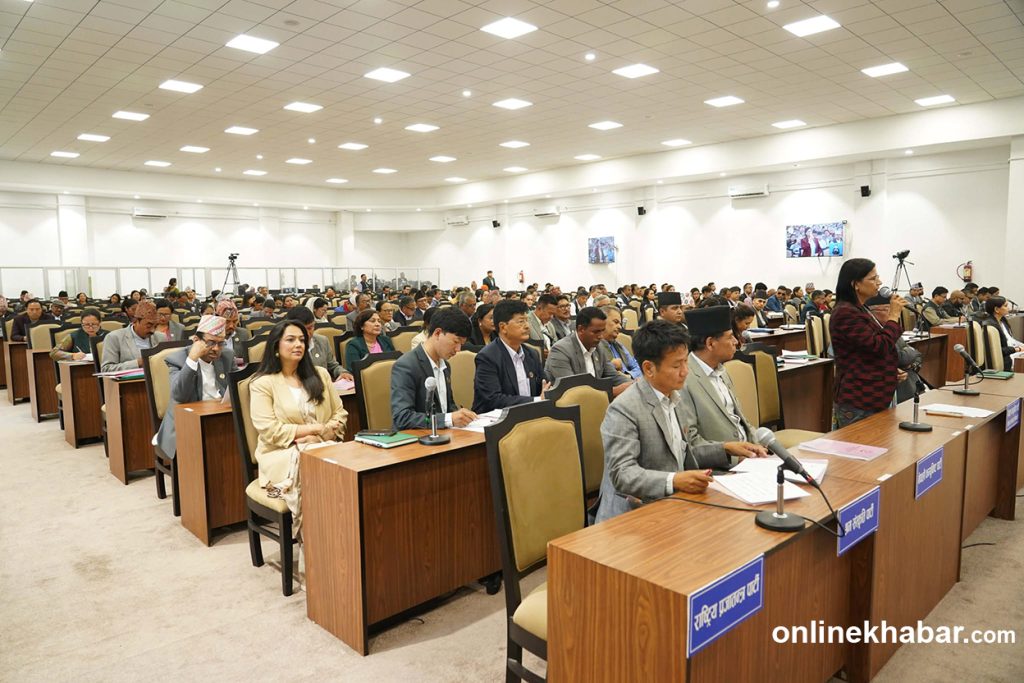
Parliamentary proceedings in Nepal's House of Representatives were thrown into chaos as opposition parties staged a determined protest, demanding the presence of Prime Minister Balendra Shah to answer questions. The main opposition, Nepali Congress, along with other parties, surrounded the well of the House, chanting slogans and disrupting the session. Despite the continuous obstruction, Speaker DP Aryal pressed ahead with legislative business, including endorsing a bill, which has drawn sharp criticism from the opposition benches.
The Speaker should not have proceeded with the meeting after opposition parties obstructed the House. He should have directed the prime minister to appear in Parliament under Rule 56, but he failed to do so. Questions are now being raised about why he could not issue such a ruling.
The core of the opposition's grievance lies in the alleged violation of Rule 56 of the House of Representatives Regulations. This rule stipulates a mandatory one-hour question-answer session with the prime minister during the first week of every month. Opposition leaders, including Nishcal Rai of the Nepali Congress and Yubaraj Dulal of the Nepali Communist Party, accused the Speaker of compromising parliamentary dignity and disregarding established procedures by continuing the session amidst the uproar and failing to compel the prime minister's attendance.
The rules were violated from the Speaker’s chair. After the prime minister refused to attend and opposition lawmakers moved into the well, the House meeting could have been adjourned. Instead, the Speaker allowed proceedings to continue.
From the perspective of the opposition, the Speaker's actions undermine the fundamental principles of parliamentary accountability. They argue that the prime minister's absence and the Speaker's decision to proceed without addressing this issue effectively curtail lawmakers' rights to participate in deliberations and hold the government accountable. The opposition had specifically requested the prime minister's appearance before the annual budget presentation, a request that was reportedly ignored, further fueling their frustration.
Members had registered amendments to the bill, but they were not given an opportunity to speak. The House appeared to function under the shadow of the government.
The Kathmandu Post's reporting highlights a significant procedural dispute that reflects broader tensions between the government and the opposition. The opposition's stance, as articulated by leaders like Khusbu Oli of the Rastriya Prajatantra Party, is that the Speaker should have adjourned the House or insisted on the prime minister's appearance, rather than allowing proceedings to continue under duress. This incident raises questions about the Speaker's role in mediating such disputes and ensuring adherence to parliamentary norms, particularly when a key constitutional requirement like the prime minister's accountability to the legislature is at stake.
We repeatedly requested the Speaker to fix a date before the budget speech but we were told the prime minister had not given time.
About this summary
Originally published by Kathmandu Post. Summarized and contextualized automatically by DistantNews, with a note on how the source frames the story. Not individually reviewed before publishing. How this works.
More Stories

From Our Blog

News in Translation: What Gets Lost, and How We Keep the Framing

Diaspora Media: How Communities Abroad Follow Home

Traveling Where the Press Is Not Free: How to Read the News There

The Digital Nomad's Guide to Local News

The Same Story, Different Countries: How Coverage Changes at the Border
