


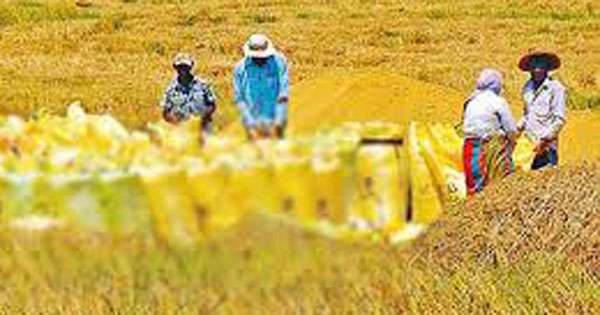
Sri Lanka's paddy harvest plummets by 452,000 tons in six years
Translated from Sinhala, summarized and contextualized by DistantNews.
At a glance
News
Sources not specified
Context piece
- Sri Lanka's paddy harvest has fallen by 452,000 metric tons over the past six years, according to central bank reports.
- The harvest decreased from 3,197,000 metric tons in the 2019-2020 Maha season to an estimated 2,745,000 metric tons in the 2024-2025 Maha season.
- Experts attribute the decline to insufficient fertilizer and pesticides due to economic conditions, along with natural disasters, despite an increase in cultivated land area.
Sri Lanka's paddy harvest has seen a significant decline, dropping by 452,000 metric tons over the past six years, according to a report citing central bank data. Professor Wasantha Athukorala from the University of Peradeniya's Department of Economics and Statistics highlighted the decrease, noting the Maha season harvest fell from 3,197,000 metric tons in 2019-2020 to an estimated 2,745,000 metric tons in 2024-2025.
The paddy harvest (Maha season) in Sri Lanka has fallen by 452,000 metric tons over the past six years.
Agricultural experts suggest that economic difficulties, preventing the adequate use of fertilizers and pesticides, are primary reasons for the reduced yield. Various natural calamities are also believed to have contributed to the shortfall. Despite these challenges, the area cultivated for paddy has actually increased during this period.
In the 2019-2020 Maha season, the paddy harvest was 3,197,000 metric tons, but by the 2024/2025 Maha season, it is expected to decrease to 2,745,000 metric tons.
In the 2019-2020 Maha season, 752,000 hectares were cultivated. This figure is projected to rise to 800,000 hectares in the 2024-2025 Maha season. However, the yield per hectare has decreased by 19% over the same timeframe. In 2019-2020, farmers harvested 4,821 kilograms per hectare, but this is expected to drop to 3,914 kilograms per hectare in the 2024-2025 season, according to Athukorala.
The number of hectares cultivated for paddy has increased during this period.
DistantNews Editorial
Originally published by Lankadeepa in Sinhala. Translated, summarized, and contextualized by our editorial team with added local perspective. Read our editorial standards.
More Stories



From Our Blog

What Gets Lost (and Found) When News Is Translated

The Critical Role of Diaspora Media in Global News

What Travellers Should Know About Countries with Restricted Press

A Digital Nomad's Guide to Following Local News

How the Same Story Looks Different in Different Countries
