


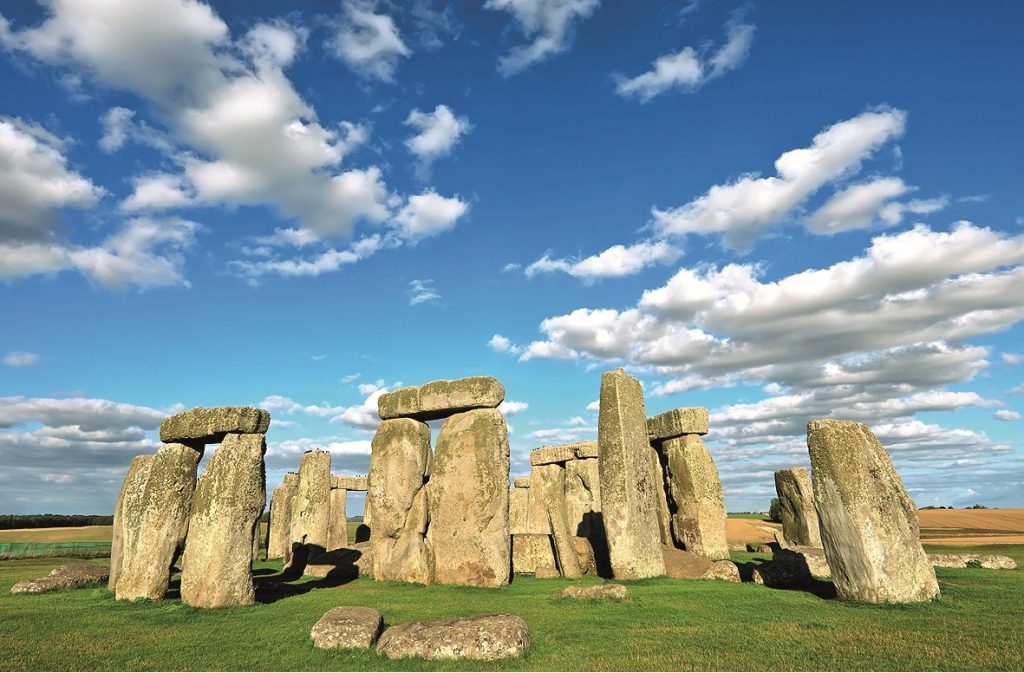
Stonehenge mystery: Altar stone likely came from Scotland, not Wales, new research suggests
Translated from Greek, summarized and contextualized by DistantNews.
At a glance
News
Sources not specified
Context piece
- New research suggests the central
New scientific research is shedding light on the enduring mystery of Stonehenge, the iconic megalithic monument in southern England. The focus is on the so-called "altar stone," the monument's massive central slab, which now appears to originate not from Wales, as believed for decades, but from northeastern Scotland.
Recent geological and chemical analyses indicate its composition matches rocks from the Orkney Basin, a finding that overturns previous theories and raises new questions about the transportation of such a colossal object over hundreds of kilometers. The altar stone measures over four meters in length and weighs more than six tons, with its journey from northeastern Scotland to southern England covering more than 450 miles.
The selection of such heavy raw material from such a distant location suggests the monument's builders had clear criteria and high demands. Initial hypotheses suggested transportation via sea or river routes. However, the involvement of glaciers in shaping the landscape has led the scientific community to explore new scenarios.
To investigate the possibility of natural transport by ice, researchers analyzed models of glacier flow during the last ice age. Results showed no direct glacial route connecting northeastern Scotland to southern England. Most glaciers moved northeastward, away from the monument's site, while a small percentage moved southeast, possibly reaching the Dogger Bank, now submerged in the North Sea. However, rising sea levels had covered Dogger Bank thousands of years before Stonehenge was erected. For this scenario to hold true, prehistoric societies would have had to retrieve the rock before its submersion and preserve it for centuries, which experts consider highly unlikely.
Based on the evidence, the most plausible hypothesis attributes the stone's transport to organized action by Neolithic communities. It is theorized that the movement was gradual, combining land transport through pulling or rolling with water transport via rivers or coastal routes. Such an undertaking would have required a high level of planning, coordination, and topographical knowledge, as well as significant labor.
This effort highlights the technical skill and social organization of Neolithic communities of that era. Overcoming natural obstacles and terrain anomalies demonstrates determination and coordination, revising upward the assessments of these societies' capabilities. The cultural significance of selecting this specific rock from such a great distance remains a mystery.
DistantNews Editorial
Originally published by Ta Nea in Greek. Translated, summarized, and contextualized by our editorial team with added local perspective. Read our editorial standards.
More Stories


From Our Blog

What Gets Lost (and Found) When News Is Translated

The Critical Role of Diaspora Media in Global News

What Travellers Should Know About Countries with Restricted Press

A Digital Nomad's Guide to Following Local News

How the Same Story Looks Different in Different Countries
