


Strait of Hormuz traffic increases after US-Iran ceasefire announcement
Translated from Korean, summarized and contextualized by DistantNews.
At a glance
News
Named sources
Context piece
- Following the US-Iran ceasefire announcement, the Strait of Hormuz has seen an increase in ship traffic, with 25 merchant vessels passing on June 18.
- This marks the highest daily passage since Iran previously blocked the strait in April, though it remains far below pre-war levels.
- Shipping industry officials await clearer guidelines for navigation, and concerns persist about the overall security and stability of the Persian Gulf.
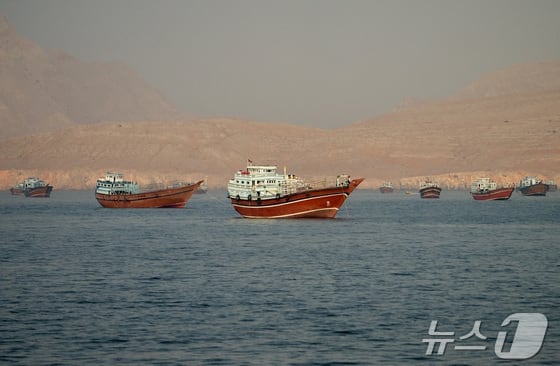
The Strait of Hormuz has experienced a notable increase in maritime traffic since the announcement of a ceasefire agreement between the United States and Iran. On June 18, the first day after the agreement, 25 merchant ships transited the vital waterway, according to foreign media citing maritime data specialists.
This figure represents the highest daily passage since Iran's Revolutionary Guard Corps reimposed a blockade on April 18. Prior to that, an average of only seven merchant ships per day had passed through the strait since early March. Data providers suggest that the actual number of vessels may be higher, as some ships take measures to avoid detection.
some ships are taking measures to avoid detection, so more ships may have passed through the strait.
While the increased traffic is a positive sign, it remains significantly below the approximately 130 ships that transited daily before the conflict. Currently, around 500 merchant ships are still stranded in the Persian Gulf. Experts emphasize that full resumption of operations in the Persian Gulf requires addressing several key issues.
Industry stakeholders are awaiting clear directives on navigation routes, entry regulations, and procedures to prevent collisions. The ongoing fragility of the ceasefire negotiations adds a layer of uncertainty for the maritime sector.
clear guidelines are needed for ship routes, entry rules, and procedures to avoid collisions.
DistantNews Editorial
Originally published by Hankyoreh in Korean. Translated, summarized, and contextualized by our editorial team with added local perspective. Read our editorial standards.
More Stories


From Our Blog

What Gets Lost (and Found) When News Is Translated

The Critical Role of Diaspora Media in Global News

What Travellers Should Know About Countries with Restricted Press

A Digital Nomad's Guide to Following Local News

How the Same Story Looks Different in Different Countries
