


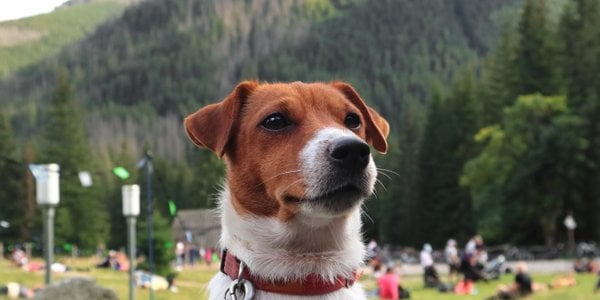
Stray dog trekked 140 kilometers through High Tatras mountains
Translated from Polish, summarized and contextualized by DistantNews.
At a glance
News
Sources not specified
Outcome reported
- A stray dog, believed to have traveled at least 140 kilometers, was captured in the High Tatras mountains.
- The dog, named Bernard, was sighted in various locations across the Slovak side of the Tatras over several days.
- Rescuers suspect another similar dog, possibly Bernard's brother, remains at large in the Polish part of the mountains.
A stray dog, affectionately named Bernard, has been captured in the High Tatras mountains after an extensive journey estimated at over 140 kilometers. The dog, who had been wandering the Slovakian peaks for days, was finally secured by animal welfare activists on Friday, as reported by hnonline.sk.
Bernard was sighted in numerous characteristic locations across the Slovak Tatras, including Kriváň, near the Rysy mountain hut, and by Popradské pleso and Štrbské Pleso lakes. He was observed descending to the valleys at night before returning to higher trails the following day, seemingly determined to continue his solitary mountain trek.
Animal welfare workers from the "Droga do domu" (Road to Home) association attempted to capture Bernard, concerned he might pose a risk to wildlife and tourists. They believe the dog originally came from the Polish side of the Tatras. Initially, Bernard approached people but would flee, gradually losing trust as the rescue attempts continued.
After several days of effort, Bernard was finally caught in a trap cage on Friday evening. Rescuers described the mountain wanderer as a shy dog seeking human closeness. They speculate that Bernard may have spent several weeks on the Polish side of the Tatras before crossing over. Photos suggest he may have been accompanied by another identical dog, possibly his brother, who is still at large and was last seen in the Kościeliska Valley area.
DistantNews Editorial
Originally published by Rzeczpospolita in Polish. Translated, summarized, and contextualized by our editorial team with added local perspective. Read our editorial standards.
More Stories


From Our Blog

What Gets Lost (and Found) When News Is Translated

The Critical Role of Diaspora Media in Global News

What Travellers Should Know About Countries with Restricted Press

A Digital Nomad's Guide to Following Local News

How the Same Story Looks Different in Different Countries
