


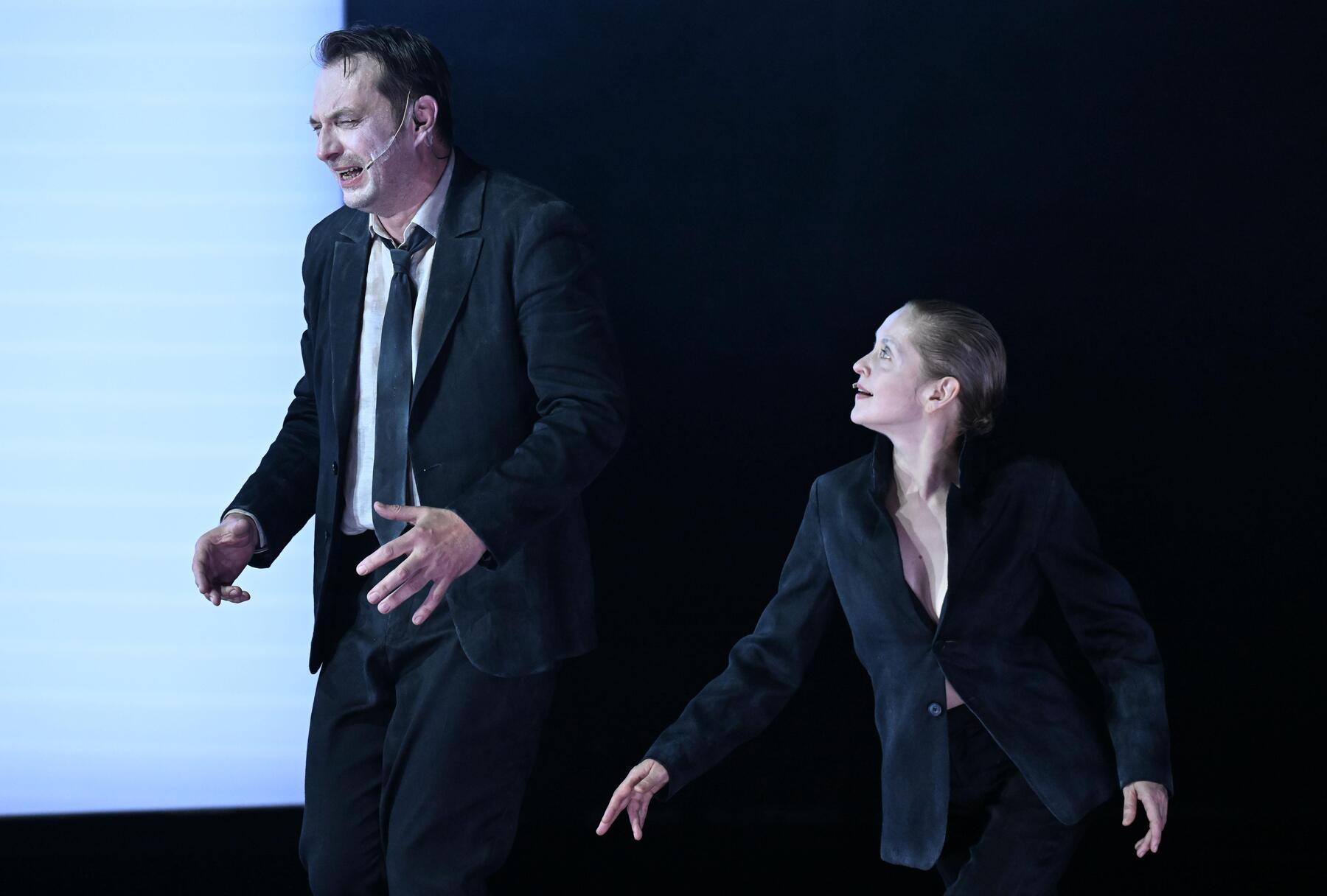
Striking "Faust I" in Salzburg: A Godless, Internal Drama Achieves Powerful Moments
Translated from German, summarized and contextualized by DistantNews.
At a glance
News
Sources not specified
Context piece
- Ulrich Rasche's production of Goethe's "Faust I" in Salzburg features a minimalist cast of five.
- The staging focuses on Faust's internal psychological drama within an empty, machine-like theater.
- While ambitious, the production achieves powerful moments despite its limitations.
Director Ulrich Rasche's staging of Goethe's "Faust I" in Salzburg strips the play down to a stark, five-person drama. The production emphasizes Faust's internal psychological turmoil, set within a minimalist and almost mechanical stage design that evokes emptiness and threat. This intense focus on the inner world, while limiting the scope of the narrative, allows for significant moments of theatrical power.
Rasche's interpretation eschews traditional interpretations, opting for a rhythmically driven exploration of Faust's soul. The absence of God and the focus on a solitary internal struggle create a bleak yet compelling atmosphere. The production's success lies in its ability to generate profound emotional impact through its severe aesthetic and concentrated performances, even if the overall concept cannot be fully realized.
Despite the inherent challenges of such a radical reinterpretation, Rasche's "Faust I" manages to create striking theatrical moments. The stark, menacing stage machinery and the intense focus on the protagonist's internal landscape contribute to a memorable, albeit unsettling, viewing experience. The production offers a unique and powerful, if not entirely perfect, engagement with Goethe's classic work.
DistantNews Editorial
Originally published by Die Presse in German. Translated, summarized, and contextualized by our editorial team with added local perspective. Read our editorial standards.
More Stories


From Our Blog

What Gets Lost (and Found) When News Is Translated

The Critical Role of Diaspora Media in Global News

What Travellers Should Know About Countries with Restricted Press

A Digital Nomad's Guide to Following Local News

How the Same Story Looks Different in Different Countries
