

Student Inspired by Headmaster Father, Praises Integrated Islamic School Curriculum
Translated from Malay, summarized and contextualized by DistantNews.
TLDR
- Aiyra Al Nisreena, 13, draws inspiration from her father, a headmaster at her Islamic integrated primary school.
- She maintains professionalism at school, calling him 'ustaz' and adhering to all rules without special treatment.
- Aiyra praises the school's curriculum, which combines academics, co-curricular activities, religious studies, and Quranic memorization, fostering discipline and Islamic values.
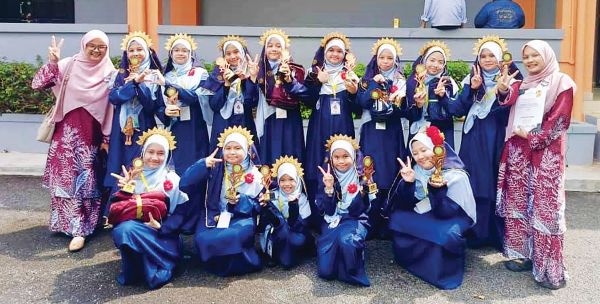
At SRITI Darul Furqan, a unique educational environment thrives, where a 13-year-old student, Aiyra Al Nisreena Mohd Addreen, finds her greatest inspiration in her own father, who also serves as the headmaster. This familial connection, however, is strictly professional within school grounds. Aiyra addresses her father as 'ustaz' and ensures she follows all school regulations, receiving no special privileges – a rule firmly set by her father himself.
My idol is my father. He has always been a source of inspiration and motivation for me. At the same time, my father is also a headmaster at my school, Sekolah Rendah Intergrasi Teras Islam (SRITI) Darul Furqan, Bandar Tun Hussein Onn, Cheras.
This disciplined approach, as Aiyra explains, is crucial for her personal growth and her pursuit of knowledge. She emphasizes the importance of respecting all teachers and maintaining good relationships with peers, understanding that true learning comes with discipline and independence, unclouded by her father's position. Her father is known among the staff for his patience, dedication, and firm commitment to his responsibilities, having navigated the school's challenges to foster its development.
Aiyra's admiration for her father's resilience and dedication fuels her ambition to become an equally remarkable individual, prioritizing divine pleasure above all else. She speaks highly of the school's comprehensive curriculum, a robust blend of co-curricular activities, academics, religious education (diniyah), tahfiz (Quranic memorization), and Fardhu Ain (Islamic duties). This integrated approach, she notes, extends to character building, instilling Islamic ethics and values for daily life.
I call my father 'ustaz'. I have to obey all school rules just like other students. I don't get any special treatment. That is my father's strict prohibition to me. Sometimes I forget that the school headmaster is my own father.
Reflecting on the evolution of education, Aiyra observes the widespread adoption of modern, technology-driven teaching methods across Malaysia. SRITI Darul Furqan is no exception, utilizing digital resources like visuals and animations to enhance learning. Interactive methods such as discussions, quizzes, and group activities replace rote memorization, creating a dynamic learning atmosphere. While acknowledging the positive impact of these modern approaches, Aiyra stresses the need for balance, adapting methods to suit the situation, environment, and time.
My father always reminds me to be a disciplined student. Because of that, I learn to be independent without being overshadowed by my father's position.
In a climate where religious schools sometimes face negative perceptions due to social media controversies, Aiyra's experience highlights the positive and holistic education offered at institutions like Darul Furqan. Her perspective, shaped by a blend of traditional values and modern pedagogy, showcases a commitment to nurturing well-rounded, disciplined, and spiritually grounded individuals.
The most important thing for me is to respect all teachers to gain the blessings of the knowledge learned, including maintaining good relationships with friends.
DistantNews Editorial
Originally published by Utusan Malaysia in Malay. Translated, summarized, and contextualized by our editorial team with added local perspective. Read our editorial standards.
More Stories


From Our Blog

What Gets Lost (and Found) When News Is Translated

The Critical Role of Diaspora Media in Global News

What Travellers Should Know About Countries with Restricted Press

A Digital Nomad's Guide to Following Local News

How the Same Story Looks Different in Different Countries
