


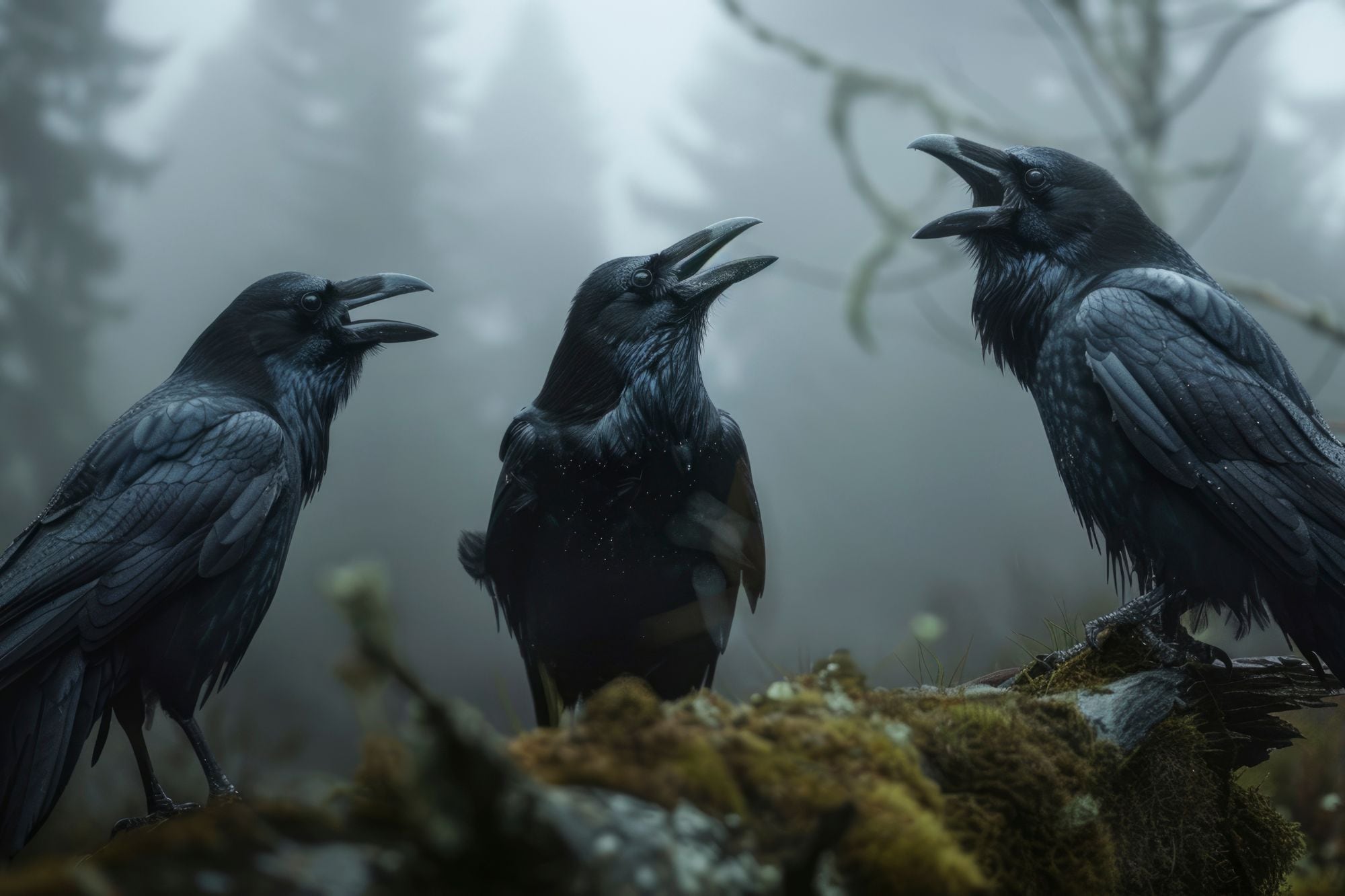
Study Reveals Crows Identify, Remember Human Faces for Years
Translated from Spanish, summarized and contextualized by DistantNews.
TLDR
- Crows possess remarkable facial recognition abilities, remembering human faces for years, according to a University of Washington study.
- The research, initiated in 2006, found crows can identify individuals associated with negative experiences and warn others.
- This memory capacity, observed for up to 18 years, suggests crows process threats in brain regions analogous to mammals and may transmit this information culturally.
A groundbreaking study from the University of Washington reveals that crows possess a cognitive capacity far beyond what was previously understood, particularly in their ability to recognize and remember human faces. Led by ecologist John Marzluff, the research, which began in 2006, demonstrates that these birds can not only identify individuals but also retain memories of negative encounters for extended periods, potentially up to two decades.
The initial experiment involved researchers wearing specific masks while capturing and banding crows. The findings, published in the journal Animal Behaviour in 2010, showed that the crows reacted with hostility—persistent cawing and mobbing behavior—towards individuals wearing the 'dangerous' mask, even years later. This response indicated that learning occurred not just through direct interaction but also via social observation within the crow population.
The proportion of crows that would scold me when wearing the caveman mask increased during the first seven years.
What is particularly astonishing is the longevity of this memory. The University of Washington team documented defensive responses to the same mask for an unprecedented 18 years. Marzluff noted in a recent essay that the proportion of crows confronting him while wearing a specific mask increased over the first seven years. This behavior only subsided after the original individuals involved in the capture had died, suggesting that this knowledge was passed down through generations—a form of cultural transmission.
Scientists from the American Association for the Advancement of Science (AAAS) highlight that the brain regions crows use to process fear and recognize threats are analogous to those in mammals. Brain imaging studies confirmed that the same areas activated in humans when perceiving danger were also active in crows. This neurological basis allows crows to adapt their behavior based on perceived threats, exhibiting bolder or more cautious responses depending on their past experiences and the environment.
With brain imaging, I was surprised that the part of the brain that reacted to seeing a dangerous person was the same as in ours.
DistantNews Editorial
Originally published by La Nación in Spanish. Translated, summarized, and contextualized by our editorial team with added local perspective. Read our editorial standards.
More Stories



From Our Blog

What Gets Lost (and Found) When News Is Translated

The Critical Role of Diaspora Media in Global News

What Travellers Should Know About Countries with Restricted Press

A Digital Nomad's Guide to Following Local News

How the Same Story Looks Different in Different Countries
