


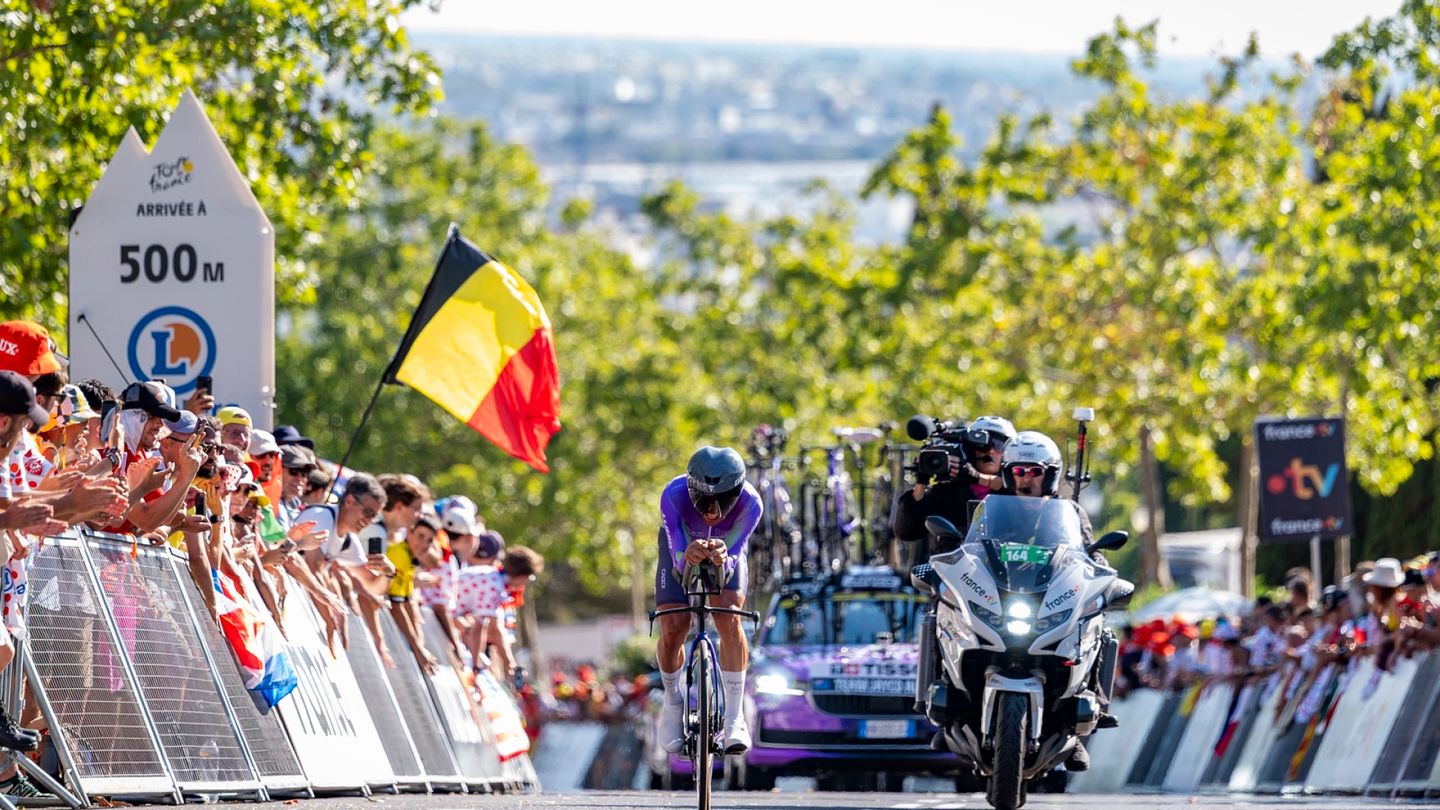
Study: Support car size and shape can decide cycling race outcomes
Translated from Finnish, summarized and contextualized by DistantNews.
At a glance
News
Sources not specified
Context piece
- A new study suggests that the size and shape of a team's support vehicle can significantly impact a cyclist's performance in time trials.
- Researchers found that less aerodynamic vehicles create a greater drafting effect, benefiting the rider behind.
- This finding could influence future regulations by cycling's governing body, the UCI, regarding support car design and placement.
In cycling's time trials, riders strive for aerodynamic efficiency, but a recent study reveals that their support vehicles should aim for the opposite. Research led by Bert Blocken, a new professor at LUT University, indicates that the design and configuration of a team's support car can substantially influence a cyclist's speed by creating a drafting effect.
The 10-meter limit made no sense. The current 25-meter rule cannot be measured during the race, so many teams still ride very close to the competitor.
The study, a collaboration between LUT University, Scotland's Heriot-Watt University, and software company Ansys, builds on earlier work. A 2015 study by Blocken showed that support cars following closely behind cyclists generated a significant slipstream, providing an advantage. This led the International Cycling Union (UCI) to increase the minimum distance for support cars from 10 to 25 meters in 2023. However, Blocken notes that the 25-meter rule is difficult to enforce during a race, leading many teams to still ride too close to competitors.
This latest research delves into whether the model of the support car or the number of bikes on its roof affects the size of this beneficial slipstream. The study compared various vehicles used by teams in recent years, including small passenger cars and larger vans, as the UCI does not restrict the type of vehicle for individual time trials, though race organizers can ban larger vehicles. "Sometimes teams have up to ten bikes on the roof, even though there's no need for that many in a time trial," Blocken observed.
Sometimes teams have up to ten bikes on the roof, even though there's no need for that many in a time trial.
Blocken highlighted examples like Team Sky's past use of Jaguar F-Type sports cars and Netcompany Ineos's recent use of Ineos Grenadier SUVs. "Some of the cars teams use are not very aerodynamic. The less aerodynamic the support car, the greater the drafting effect it creates," he explained. The crucial factor is the front shape of the car and its ability to cut through the wind, quantified by the CdA value (a combination of frontal area and drag coefficient). Since car manufacturers publicly share these figures, Blocken suggests the UCI could potentially regulate the types of cars used based on this data.
The less aerodynamic the support car, the greater the drafting effect it creates.
DistantNews Editorial
Originally published by Helsingin Sanomat in Finnish. Translated, summarized, and contextualized by our editorial team with added local perspective. Read our editorial standards.
More Stories


From Our Blog

What Gets Lost (and Found) When News Is Translated

The Critical Role of Diaspora Media in Global News

What Travellers Should Know About Countries with Restricted Press

A Digital Nomad's Guide to Following Local News

How the Same Story Looks Different in Different Countries
