

Sultan of Perak Inaugurates New 69 Commando Camp, Boosting National Security
Translated from Malay, summarized and contextualized by DistantNews.
At a glance
News
Named sources
New plan
- The Sultan of Perak officially inaugurated the new Sultan Nazrin Shah 69 Commando Camp.
- The state-of-the-art facility represents the government's commitment to strengthening national security capabilities.
- The camp honors the long service and sacrifices of the elite 69 Commando unit, which has served Malaysia since 1969.
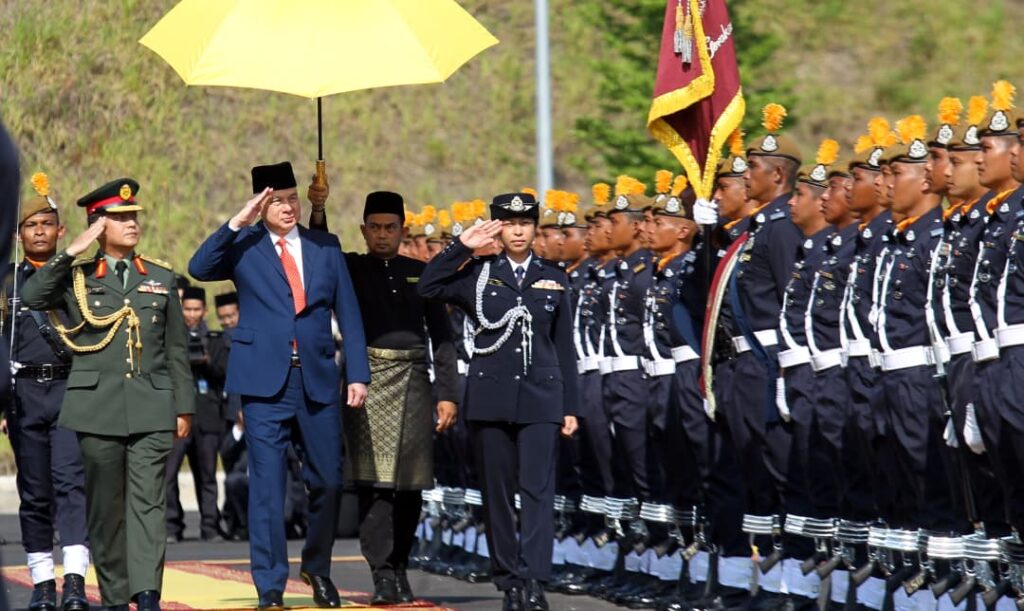
Sultan Nazrin Muizzuddin Shah of Perak officially inaugurated the new Sultan Nazrin Shah 69 Commando Camp in Ulu Kinta, marking a significant enhancement to Malaysia's security infrastructure. The ceremony was attended by Raja Permaisuri Perak, Tuanku Zara Salim, and other dignitaries including the Raja Muda of Perak, Raja Jaafar Raja Muda Musa, and Raja Di Hilir Perak, Raja Iskandar Dzurkarnain Sultan Idris Shah.
The construction of this camp demonstrates the government's resolve to provide the best training facilities and environment to ensure the readiness of the forces in defending the nation's peace and sovereignty.
Perak Menteri Besar Datuk Seri Saarani Mohamad, Home Minister Datuk Seri Saifuddin Nasution Ismail, and Inspector-General of Police Tan Sri Mohd. Khalid Ismail were also present. Saifuddin highlighted the camp's inauguration as a symbol of the Madani government's dedication to bolstering the nation's security forces against increasingly complex and dynamic threats.
69 Commando has a long history of struggle since its establishment in 1969. The contributions of 69 Commando are evident through various important operations, including combating communist insurgency, the Al-Maunah incident in 2000, Operation Daulat in Lahad Datu in 2013, and special national assignments related to the MH17 tragedy in 2014.
"The construction of this camp demonstrates the government's resolve to provide the best training facilities and environment to ensure the readiness of the forces in defending the nation's peace and sovereignty," Saifuddin stated. He emphasized the 69 Commando unit's extensive history since its establishment in 1969, citing its crucial contributions in operations against communist insurgencies, the 2000 Al-Maunah incident, the 2013 Lahad Datu operation, and the 2014 MH17 tragedy response.
This is a strategic investment for the country that will be a catalyst for the development of the capability of 69 Commando for decades to come.
The new camp, built at a cost exceeding RM206 million on 338 hectares, serves as the new primary base for the 69 Commando. It is equipped with modern, comprehensive facilities for operations, training, and administration. Saifuddin described the camp as a strategic national investment, symbolizing the nation's appreciation for the elite unit's decades of service and sacrifice, ensuring their capability for decades to come.
Sultan Nazrin Shah 69 Commando Camp is not just a physical development but a symbol of the nation's appreciation for the services and sacrifices of the generations of officers and members of 69 Commando.
DistantNews Editorial
Originally published by Utusan Malaysia in Malay. Translated, summarized, and contextualized by our editorial team with added local perspective. Read our editorial standards.
More Stories
From Our Blog

What Gets Lost (and Found) When News Is Translated

The Critical Role of Diaspora Media in Global News

What Travellers Should Know About Countries with Restricted Press

A Digital Nomad's Guide to Following Local News

How the Same Story Looks Different in Different Countries
