


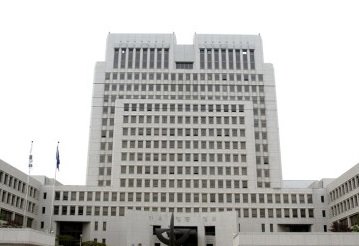
Supreme Court: Only Constitutional Court can rule laws unconstitutional
Translated from Korean, summarized and contextualized by DistantNews.
At a glance
News
Sources not specified
Outcome reported
- The Supreme Court ruled that courts cannot directly declare laws unconstitutional.
- Courts must refer cases to the Constitutional Court if they suspect a law is unconstitutional.
- The ruling came in a case involving a medical facility challenging a payment suspension.
South Korea's Supreme Court has ruled that lower courts cannot directly declare laws unconstitutional, emphasizing that such judgments are the exclusive domain of the Constitutional Court. This decision came in a case where a medical corporation challenged a suspension of medical fee payments.
The case originated from a "managerial hospital" in Mokpo, where a couple was accused of establishing a medical corporation and operating four medical institutions, including a nursing hospital, without being medical professionals. The city of Mokpo suspended medical fee payments to the corporation in January 2020, citing the National Health Insurance Act.
The medical corporation appealed the decision. While the couple faced separate criminal charges for violating the Medical Service Act, the appellate court sided with the corporation. It ruled that the payment suspension provision in the relevant law violated property rights and was unconstitutional, referencing a Constitutional Court decision that found a similar provision in the National Health Insurance Act unconstitutional.
However, the Supreme Court overturned the appellate court's decision. It stated that even if the Constitutional Court later found the provision unconstitutional, it did not automatically invalidate the payment suspension. The Supreme Court clarified that the Constitutional Court's concern was the lack of a procedure to return funds when a person is proven innocent, not the suspension itself based on investigation results. The court sent the case back to the appellate court for further review.
Courts can only refer a law to the Constitutional Court if they have reasonable doubt about its constitutionality. They cannot proceed with a trial based on the premise that the law itself is unconstitutional.
DistantNews Editorial
Originally published by Dong-A Ilbo in Korean. Translated, summarized, and contextualized by our editorial team with added local perspective. Read our editorial standards.
More Stories



From Our Blog

What Gets Lost (and Found) When News Is Translated

The Critical Role of Diaspora Media in Global News

What Travellers Should Know About Countries with Restricted Press

A Digital Nomad's Guide to Following Local News

How the Same Story Looks Different in Different Countries
