


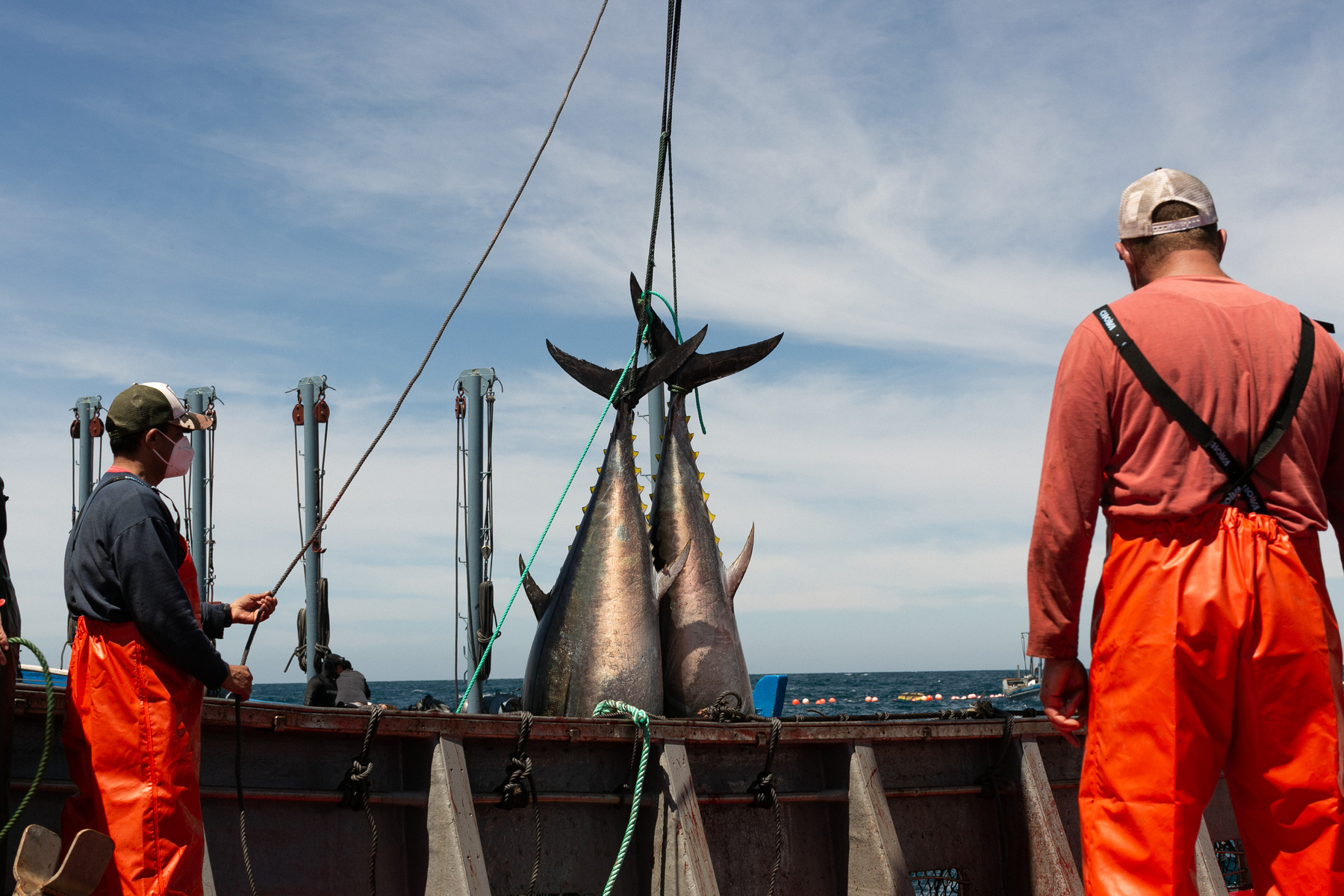
Sustainable Tuna: Spain's Barbate Distinguishes Over Twenty Cuts Using Traditional Methods
Translated from German, summarized and contextualized by DistantNews.
At a glance
In-depth
Sources not specified
Context piece
- The Spanish fishing company Gadira, based in Barbate, distinguishes over twenty cuts of bluefin tuna.
- They utilize the traditional Phoenician Almadraba fishing method, which respects the tuna's life cycle.
- Tuna are caught and processed using methods like Ikejime and Ronqueo to ensure quality and safety.
In the Andalusian coastal town of Barbate, the fishing company Gadira meticulously distinguishes over twenty distinct cuts of bluefin tuna, moving beyond the simple term 'tuna fillet.' These specialized cuts, known by names like cola blanca, tarantelo, and parpatana, are illustrated with detailed graphics, akin to traditional European meat cuts.
Barbate is a unique hub for tuna fishing, employing the Almadraba, an ancient Phoenician method. This technique involves a system of mobile nets near the coast, designed to capture bluefin tuna as they migrate through the Strait of Gibraltar into the Mediterranean to spawn each spring. The method ensures that only mature tuna are caught, and the process aims to be stress-free for the fish.
After capture, the tuna are processed using the Japanese Ikejime method to relax the meat. The fish are then expertly cut and flash-frozen at minus 60 degrees Celsius to eliminate parasites. This rigorous process, from the traditional Almadraba to modern preservation techniques, highlights Gadira's commitment to sustainable practices and high-quality tuna products, including unique regional recipes for various cuts and even the tuna's innards.
DistantNews Editorial
Originally published by Die Presse in German. Translated, summarized, and contextualized by our editorial team with added local perspective. Read our editorial standards.
More Stories


From Our Blog

What Gets Lost (and Found) When News Is Translated

The Critical Role of Diaspora Media in Global News

What Travellers Should Know About Countries with Restricted Press

A Digital Nomad's Guide to Following Local News

How the Same Story Looks Different in Different Countries
