


Sweat Earned, But Payment Delayed: A Contractor's Struggle
Translated from Korean, summarized and contextualized by DistantNews.
At a glance
In-depth
Named sources
Context piece
- The author, a wallpapering contractor, completed a large project but faced significant delays in payment from the contracting company.
- The company initially blamed the homeowner, who claimed to have paid in full, leaving the author in a difficult situation.
- This experience highlights a recurring problem of non-payment in the manual labor sector, where workers struggle to receive fair compensation for their efforts.
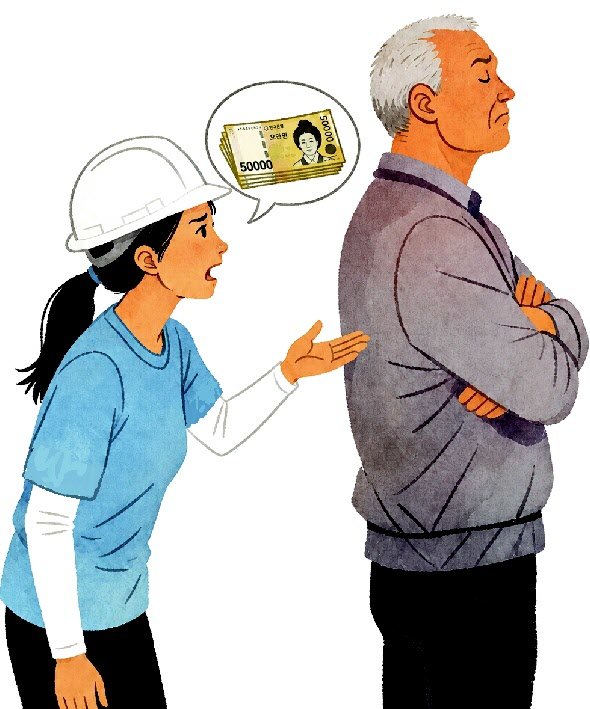
The author, a wallpapering contractor, recently undertook a substantial project involving 16 workers over four days. Despite challenging conditions due to the heat and the work environment, the team delivered a satisfactory result. However, the contracting company began delaying payment, and after weeks passed, they directed the author to collect the payment directly from the homeowner, claiming they hadn't received it themselves.
The company claimed they hadn't received the payment from the homeowner and told me to collect it directly.
This put the author in an awkward position. Upon meeting the homeowner, they were told that all payments had already been made to the interior design company. Caught between conflicting stories and receiving no payment for their hard work, the author felt bewildered. The arduous labor, performed in sweltering heat with workers changing clothes multiple times a day and finding small ways to cope with the heat, felt utterly wasted. This was particularly disheartening as July had already been a slow month for wallpapering jobs due to the rainy season, holidays, and a sluggish real estate market.
Shockingly, this wasn't the first time the author or their team had faced non-payment. Stories of wallpapering professionals not receiving their due compensation are common. Some manage to recover funds through lengthy lawsuits, while others take years to get partially paid. Some companies make token payments to appear willing to pay, while others file for personal bankruptcy, exploiting legal loopholes. This systemic issue of delayed or withheld payments is a persistent problem in the industry.
The homeowner's response was that they had already paid all the fees to the interior design company.
While considering measures like written contracts or phased payments (advance, interim, final), the author notes that industry practice often makes these difficult. Even with a contract, pursuing legal action is often the only recourse when a company refuses to pay, requiring significant time, money, and emotional energy. Wallpapering involves invisible labor before the visible results, and non-payment effectively negates all the effort expended.
It's not the first time I've worked and not been paid. It's not a special occurrence just for me and my team.
Many young people are entering manual labor professions, seeking to develop skills and earn a fair wage for their hard work. In an era saturated with talk of passive income and easy money, the goal of earning through honest labor might seem naive. However, it is a fundamental and healthy value. When this value is undermined by the greed of others, it discourages honest work. If diligent effort does not guarantee fair compensation, who will be motivated to work diligently? The author stresses that the integrity of this value is being compromised, leaving hardworking individuals in precarious financial situations.
If you work hard and diligently but cannot receive fair compensation, who would want to work diligently?
DistantNews Editorial
Originally published by Dong-A Ilbo in Korean. Translated, summarized, and contextualized by our editorial team with added local perspective. Read our editorial standards.
More Stories


From Our Blog

What Gets Lost (and Found) When News Is Translated

The Critical Role of Diaspora Media in Global News

What Travellers Should Know About Countries with Restricted Press

A Digital Nomad's Guide to Following Local News

How the Same Story Looks Different in Different Countries
