


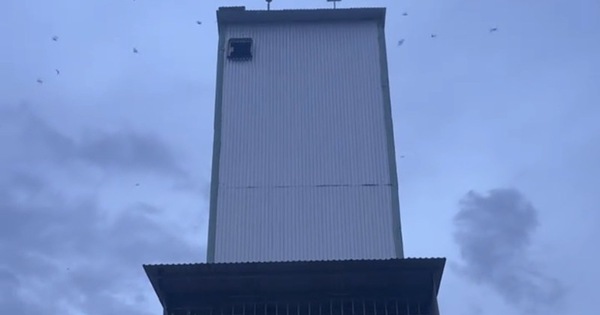
Swiftlet Farming Boom in Vietnam Turns Sour for Many Farmers
Translated from Vietnamese, summarized and contextualized by DistantNews.
TLDR
- The swift development of swiftlet houses in Gia Lai province, Vietnam, initially driven by high economic returns, has led to disappointment for many farmers.
- In recent years, swiftlet populations have grown slowly, and nest production has declined significantly, with some houses seeing a 40% drop, extending the expected return on investment.
- Experts attribute the decline to climate change and the overuse of pesticides, which reduce the insect population—the swiftlets' primary food source—forcing them to seek food elsewhere or migrate.
The booming industry of swiftlet farming in Vietnam's Gia Lai province, once a lucrative venture, is now facing a harsh reality for many investors. What began as a promising economic opportunity, with many locals investing heavily in constructing specialized swiftlet houses, has turned into a source of significant financial loss and dashed hopes.
The yield is very good, collecting more than 30 kg per year. After that, we invested in 2 more swiftlet houses with a total area of over 800 m². However, in the last 2 years, the yield has decreased significantly, with some houses decreasing by up to 40%, and the flock is growing very slowly.
Farmers like Nguyen Van Dung, who initially saw great success, are now experiencing a sharp decline in production. His investment in multiple houses, which once yielded over 30 kg of nests annually, has seen yields drop by as much as 40% in the last two years. This slowdown in nest production and the slow growth of swiftlet populations are pushing back the timeline for recouping initial investments, which can run into billions of Vietnamese dong.
We bought land for over 500 million dong, invested about 1.5 billion dong more to build the swiftlet house. But after 3 years, each year we only collect a few hundred nests, much lower than expected. This is a failed investment, it's hard to sell and not effective to keep.
Experts point to environmental factors as the primary culprits behind this downturn. The favorable natural conditions in western Gia Lai, such as a clean environment and abundant insect populations, are being undermined by climate change and the widespread use of pesticides. This has depleted the swiftlets' food sources, forcing the birds to travel further for sustenance or even relocate entirely.
Previously, the price of raw bird's nests was 22-25 million dong/kg, with stable income. Now the price is only 13-15 million dong/kg, and production has decreased by 20-30% in the past 2 years.
Compounding these issues is the uncontrolled and rapid expansion of swiftlet farming in the region. The sheer number of houses now exceeds the carrying capacity of the local environment to support the swiftlet population. This overdevelopment, coupled with environmental degradation, has left many investors facing significant financial setbacks, with some considering their investments a failure, struggling to sell their properties or finding them unprofitable to maintain.
The main reason is climate change and the use of pesticides, which causes the insect population, the food source of swiftlets, to decline. This forces birds to fly farther to find food, or even move to other areas with better conditions.
DistantNews Editorial
Originally published by Thanh Niên in Vietnamese. Translated, summarized, and contextualized by our editorial team with added local perspective. Read our editorial standards.
More Stories


From Our Blog

What Gets Lost (and Found) When News Is Translated

The Critical Role of Diaspora Media in Global News

What Travellers Should Know About Countries with Restricted Press

A Digital Nomad's Guide to Following Local News

How the Same Story Looks Different in Different Countries
