

Swiss Archive Partially Opens on Nazi Doctor Josef Mengele's Shadowy Past
Translated from Spanish, summarized and contextualized by DistantNews.
At a glance
News
Named sources
Context piece
- A secret Swiss archive may reveal new details about Nazi doctor Josef Mengele's possible presence in Switzerland in the 1960s.
- Swiss intelligence has partially opened a dossier previously sealed until 2071 following a legal challenge.
- Mengele, known as the "Angel of Death" for his experiments at Auschwitz, fled to South America after WWII and died in Brazil without facing trial.
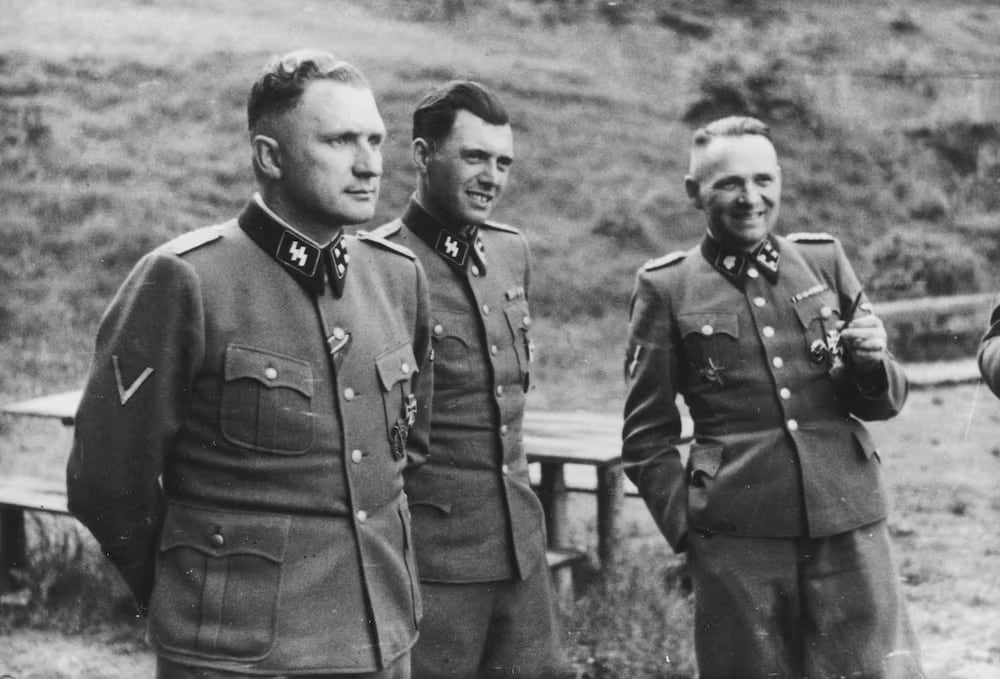
A previously sealed Swiss archive, set to remain confidential until 2071, is now partially accessible, potentially shedding new light on the movements of notorious Nazi doctor Josef Mengele. The Swiss Federal Intelligence Service has granted limited access to a dossier concerning Mengele's possible presence in Switzerland during the 1960s, following a legal appeal.
Mengele, an SS officer and physician at the Auschwitz-Birkenau concentration camp, gained infamy for his cruel medical experiments on prisoners, particularly twins, and for sending countless others to their deaths in gas chambers. Dubbed the "Angel of Death," he escaped Germany after World War II, eventually settling in Argentina and later Brazil, where he died in 1979 without ever being brought to justice for his atrocities.
While Mengele lived openly in Argentina and even took ski vacations in Switzerland with his son in 1956, his potential presence in Kloten, near Zurich, in the spring of 1961 has remained a subject of speculation. Swiss authorities at the time were reportedly investigating claims, spurred by Swiss parliamentarians like the late Jean Ziegler, that Mengele's second wife had rented an apartment in the area. However, his presence there was never confirmed, and many historians consider it unlikely given the increased international pressure to apprehend fugitive Nazis and Mengele's subsequent move to Paraguay and then Brazil.
The partial opening of the Swiss dossier represents a significant, albeit limited, step toward understanding Switzerland's role during and after the war, a period that has cast a shadow on its reputation. The information, once fully revealed, could offer a more complete picture of Mengele's post-war life and the efforts, or lack thereof, to track him.
DistantNews Editorial
Originally published by La Nación in Spanish. Translated, summarized, and contextualized by our editorial team with added local perspective. Read our editorial standards.
More Stories
From Our Blog

What Gets Lost (and Found) When News Is Translated

The Critical Role of Diaspora Media in Global News

What Travellers Should Know About Countries with Restricted Press

A Digital Nomad's Guide to Following Local News

How the Same Story Looks Different in Different Countries
