

Syria's new parliament convenes, president hails 'new chapter'
Translated from Greek, summarized and contextualized by DistantNews.
At a glance
News
Sources not specified
New plan
- Syria's transitional parliament convened its first session, with President Ahmed al-Shar calling it a "new chapter."
- The parliament, composed of 210 seats, has members appointed by local committees and directly by the president.
- Critics raise concerns about the concentration of power in al-Shar's hands and limited representation for ethnic, religious, and women groups.
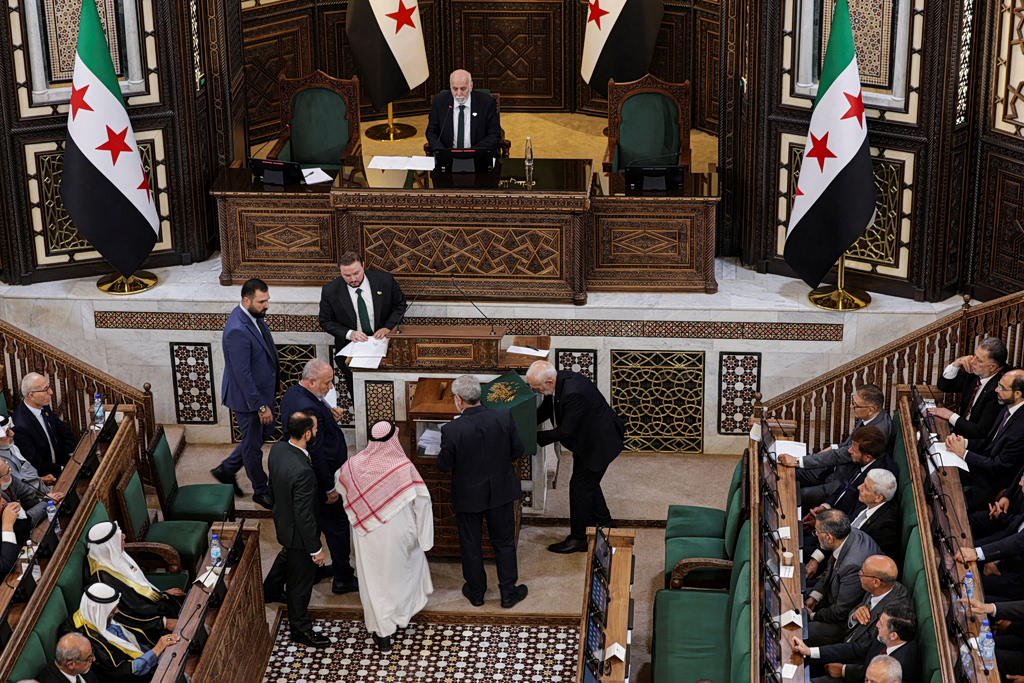
Syria's newly formed transitional parliament held its inaugural session, marking what President Ahmed al-Shar described as a "new chapter" for a country emerging from a protracted civil war.
Al-Shar, who assumed power in late 2024 as the head of an Islamist coalition that ousted former President Bashar al-Assad, had previously dissolved the People's Assembly, labeling it a "puppet parliament" for decades. During his address, the Syrian president emphasized that the nation is opening a new historical phase and urged lawmakers to serve as "models of responsibility and competence." He called for fostering a culture of dialogue, the rule of law, and respect for institutions.
Over its two-and-a-half-year term, the parliament is tasked with forming a committee to draft a new constitution, approving the national budget, and proposing or amending laws. Analysts note that the body faces critical challenges, including asserting its independence and ensuring the separation of powers.
Syria is opening 'a new chapter of its history'
In March 2025, al-Shar presented a Constitutional Declaration outlining a five-year transitional period, culminating in elections. The current parliament comprises 210 seats. Two-thirds of the members are appointed by local committees established by a Higher Committee, also appointed by al-Shar. The remaining 70 members are directly selected by the Syrian president.
Civil society organizations have voiced strong criticism regarding the appointment process, alleging an excessive concentration of power within al-Shar's administration. They also point to the limited representation of the country's ethnic and religious groups, as well as women, within the new institutional framework.
models of responsibility and competence
DistantNews Editorial
Originally published by Ta Nea in Greek. Translated, summarized, and contextualized by our editorial team with added local perspective. Read our editorial standards.
More Stories


From Our Blog

What Gets Lost (and Found) When News Is Translated

The Critical Role of Diaspora Media in Global News

What Travellers Should Know About Countries with Restricted Press

A Digital Nomad's Guide to Following Local News

How the Same Story Looks Different in Different Countries
