


SYRIZA's Decline and Tsipras's Shadowy Influence
Translated from Greek, summarized and contextualized by DistantNews.
At a glance
Analysis
Sources not specified
Context piece
- The article criticizes the current state of the SYRIZA party in Greece, describing its decline as marked by a lack of dignity.
- It suggests that internal power struggles and personal strategies have overshadowed political discussion, leading to the marginalization of figures like Sokratis Famelos.
- The piece implies that Alexis Tsipras maintains a significant, possibly manipulative, influence behind the scenes, overseeing the party's perceived self-destruction.
The Greek political party SYRIZA is depicted as being in a state of profound decline, characterized not just by electoral losses or organizational fragmentation, but by a "complete political and personal undignified" unraveling. The article suggests that individuals who once championed values and collective ethos are now involved in a process that debases political discourse.
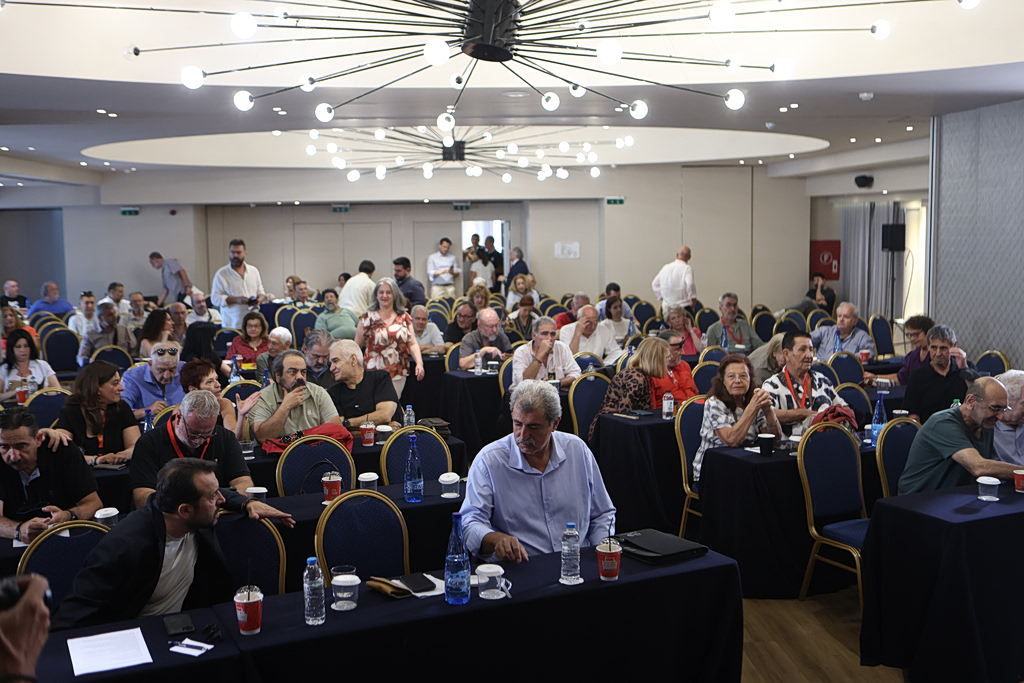
The events leading up to Sokratis Famelos's resignation are described as far from a serious internal party process. Instead, they are portrayed as a public display of weakness where personal ambitions and "micro-power balances" superseded any genuine political debate. Famelos, once seen as a transitional figure and guarantor of unity, is depicted as having been politically sidelined after serving his purpose within the shadow of Alexis Tsipras.
The article argues that personnel changes within SYRIZA do not follow political criteria but rather the "dispositions and internal balances" of a select group. This cycle, it contends, recycles the same figures, disputes, and failures. The potential rise of Pavlos Polakis, with Nikos Pappas and Rena Dourou in supporting roles, is seen not as a new beginning but as a return to the confrontational political style that defined SYRIZA's more turbulent years.
Furthermore, the piece strongly implies that Alexis Tsipras's influence, particularly behind the scenes, remains decisive. The narrative suggests that Tsipras is observing the "deconstruction" of former loyalists from a distance, perhaps even deriving satisfaction from it, viewing it as necessary for his own future political trajectory. This perception, whether entirely accurate or not, is seen as damaging to all involved and detrimental to the democratic system, which requires robust and credible opposition forces.
DistantNews Editorial
Originally published by Kathimerini in Greek. Translated, summarized, and contextualized by our editorial team with added local perspective. Read our editorial standards.
More Stories

From Our Blog

What Gets Lost (and Found) When News Is Translated

The Critical Role of Diaspora Media in Global News

What Travellers Should Know About Countries with Restricted Press

A Digital Nomad's Guide to Following Local News

How the Same Story Looks Different in Different Countries
