

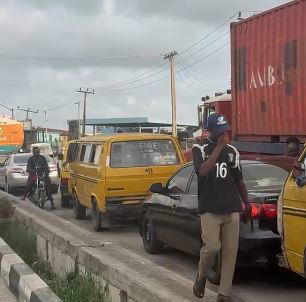
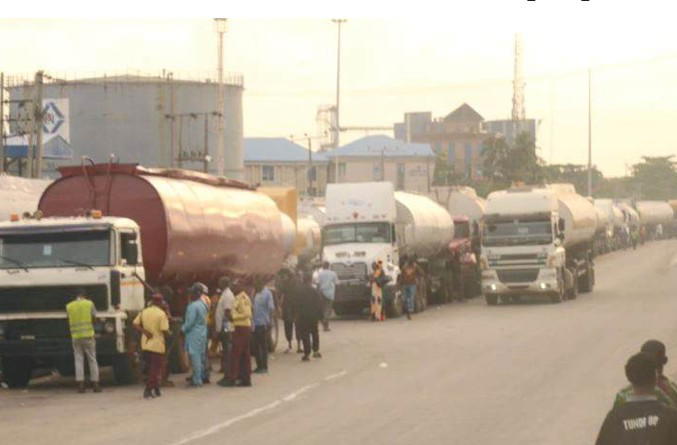
Tank farm operators, unions responsible for Mile 2–Apapa traffic gridlock, Police
Translated from English, summarized and contextualized by DistantNews.
At a glance
News
Named sources
Context piece
- The Ports Authority Police (Western Command) stated they are not responsible for the persistent traffic gridlock along the Mile 2–Apapa–Kirikiri corridor.
- Police spokesperson ASP Isaac Hundeyin explained that the affected expressway section falls outside their primary jurisdiction.
- He identified inadequate truck parks, insufficient loading bays, and operational issues with terminal operators as the root causes of the congestion.
The Ports Authority Police (Western Command) has distanced itself from the ongoing traffic gridlock involving petroleum tankers along the Mile 2–Apapa–Kirikiri corridor, asserting that the primary causes lie beyond the police's authority. ASP Isaac Hundeyin, the Police Public Relations Officer (PPRO) for the command, stated in an interview that the expressway section from Mile 2 towards Apapa Wharf is not under the operational jurisdiction of the Ports Authority Police.
The traffic was not caused by the police, but part of our mandate is to ensure there is order on the roads. We are collaborating with the Lagos State Police Command, NPA and the unions to manage the situation.
Hundeyin clarified that while his command is responsible for security within the port environment, including terminals and tank farms, the stretch from Mile 2 through Kirikiri to Apapa Wharf is primarily covered by other police formations. Despite these jurisdictional limitations, he noted that the command collaborates with the Lagos State Police Command, the Nigerian Ports Authority (NPA), and unions like NUPENG to manage traffic and maintain security in the port corridor.
Challenging the notion that the congestion originates from port activities and should therefore be the port police's responsibility, Hundeyin urged a focus on the actual causes. He cited investigations consistently pointing to inadequate truck parks, insufficient loading bays, and operational challenges among terminal operators as major factors contributing to the recurring traffic crisis. "The police cannot provide loading bays or transit truck parks. Those are the responsibilities of the terminal operators and the NPA," he stated.
The police cannot provide loading bays or transit truck parks. Those are the responsibilities of the terminal operators and the NPA.
The police spokesman affirmed that officers remain present to regulate traffic, prevent disorder, and deter criminal elements from exploiting the congestion. He denied allegations of misconduct by enforcement personnel, maintaining that any operational issues related to truck movements are more likely to involve unions and terminal operators. "The police would not intentionally create traffic or hardship for members of the public. Whatever disputes exist often involve the unions and terminal operators. What is required is a permanent solution to those issues because the police are also overstretched," he added.
The police would not intentionally create traffic or hardship for members of the public. Whatever disputes exist often involve the unions and terminal operators. What is required is a permanent solution to those issues because the police are also overstretched.
DistantNews Editorial
Originally published by Vanguard in English. Translated, summarized, and contextualized by our editorial team with added local perspective. Read our editorial standards.
More Stories


From Our Blog

How the Same Story Looks Different in Different Countries

What Gets Lost (and Found) When News Is Translated

The Critical Role of Diaspora Media in Global News

What Travellers Should Know About Countries with Restricted Press

A Digital Nomad's Guide to Following Local News
