


Teachers' Group Doubts Nutrition Agency's Efficiency Claims on Free Meal Program
Translated from Indonesian, summarized and contextualized by DistantNews.
At a glance
News
Sources not specified
Context piece
- The Education and Teachers Association (P2G) doubts the National Nutrition Agency's (BGN) claims of efficiency for the free nutritious meal program.
- P2G questions the BGN's proposed budget of Rp 270 trillion for 2027, arguing it contradicts claims of program review and savings.
- P2G believes the government prioritizes the meal program over improving educational quality, calling it an "enemy of education."
The Education and Teachers Association (P2G) has expressed skepticism regarding the National Nutrition Agency's (BGN) assertions of evaluating and streamlining the free nutritious meal (MBG) program. This doubt arises as the BGN has proposed a budget ceiling of Rp 270 trillion for 2027, a figure that P2G argues is inconsistent with previous statements about program savings and restructuring.
Iman Zanatul Haeri, Advocacy Head for Teachers at P2G, stated that the substantial budget request undermines the credibility of the BGN's evaluation process for President Prabowo Subianto's flagship program. "We have reason not to believe that the BGN is conducting an evaluation," Iman said on Sunday, June 21, 2026.
According to Iman, this budget proposal directly conflicts with P2G's judicial review petition at the Constitutional Court (MK) concerning the use of education funds for the MBG program. He contends that the government has not adequately responded to criticisms from teachers and education advocates. "This shows that the BGN does not consider, does not listen, and does not have the capacity for evaluation," he added.
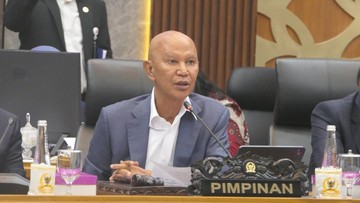
During a recent meeting with Commission IX of the House of Representatives (DPR), the BGN proposed a 2027 budget of Rp 270 trillion, with approximately Rp 224 trillion allocated to educational functions. This amount exceeds the previous year's allocation. P2G views this as evidence that the government prioritizes the MBG program over enhancing the quality of education. Iman argued that the success of the nutritious meal program cannot be achieved without strengthening the quality of learning in schools. "If the budget for good or quality learning is taken away, then the goals of MBG will not be achieved," he stated. "We have reason to consider MBG an enemy of education."
Iman pointed out a contradiction between the BGN Head Nanik Sudaryati's promises of efficiency and the proposed budget, which remains high. He recalled BGN's previous discussions about focusing the program on underdeveloped, frontier, and outermost (3T) regions, vulnerable groups, or even discontinuing the program for certain segments. However, these promises, which align with P2G's recommendations, are not reflected in the budget proposal submitted to the DPR. "These promises are actually in line with our recommendations. But these promises do not correlate with the MBG budget still at Rp 270 trillion and the Rp 224 trillion allocated to educational functions," he said. Consequently, P2G believes their case at the Constitutional Court is increasingly relevant, suggesting the government misunderstands the distinction between educational functions and nutritional support programs. P2G also urged Commission IX of the DPR to clarify its stance after approving the budget discussion, emphasizing the public's need to understand the DPR's position.
DistantNews Editorial
Originally published by Tempo in Indonesian. Translated, summarized, and contextualized by our editorial team with added local perspective. Read our editorial standards.
More Stories


From Our Blog

What Gets Lost (and Found) When News Is Translated

The Critical Role of Diaspora Media in Global News

What Travellers Should Know About Countries with Restricted Press

A Digital Nomad's Guide to Following Local News

How the Same Story Looks Different in Different Countries
