


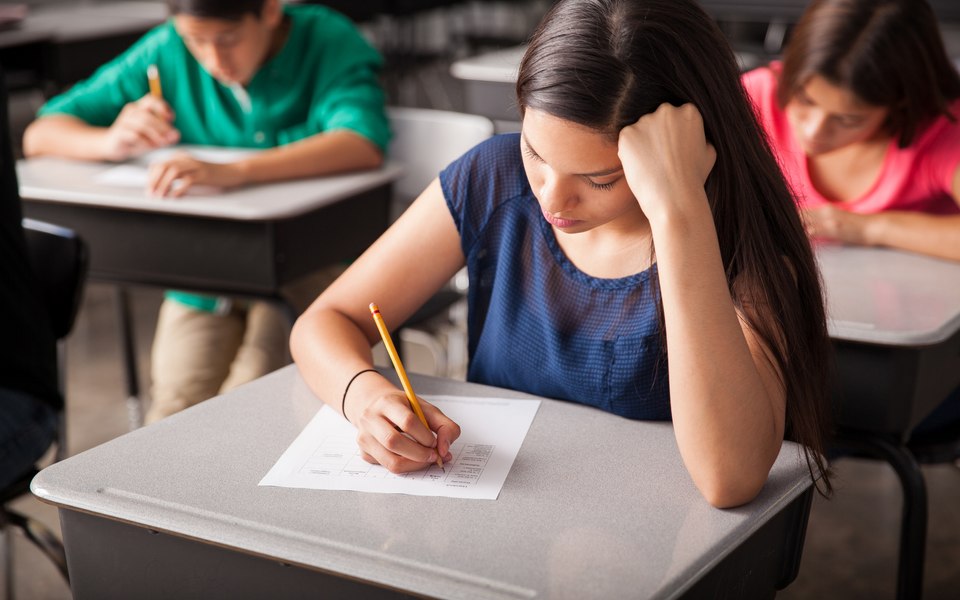
Teachers' ultimatum to the government: Boycott exams unless demands are met
Translated from Romanian, summarized and contextualized by DistantNews.
At a glance
News
Named sources
Ongoing story
- Romanian education unions threaten to boycott national exams over a new salary law that removes key benefits.
- Teachers are protesting the elimination of merit raises and leadership bonuses, while officials receive substantial pay increases.
- Unions have given the government until the end of the week to respond to their demands, or face protests and exam boycotts.
Romanian teachers are threatening to boycott national exams, including the baccalaureate, if the government does not amend a proposed salary law. The core of the dispute lies in the draft law's elimination of two essential benefits for educators: merit raises and leadership bonuses.
Education unions argue that the current government is disregarding previous negotiations and agreements. They point to substantial salary increases for high-ranking officials, such as ministers and parliamentarians, under the same legislative proposal. Marius Nistor, president of the 'Spiru Haret' Education Trade Union Federation, stated that protests will begin if the Ministry of Labor does not address their demands this week. "The Ministry of Labor has until the end of the week to respond regarding the demands we have submitted. Otherwise, the representative trade union federations will definitely initiate protest actions," Nistor told "Adevărul."
The Ministry of Labor has until the end of the week to respond regarding the demands we have submitted. Otherwise, the representative trade union federations will definitely initiate protest actions. I believe we have enough reasons for dissatisfaction to boycott the correction of national exams.
Teachers express frustration over the perceived lack of value placed on their profession, especially when compared to the financial gains of politicians. Alexandru Mihai Mihalcea, a unionized teacher, questioned the validity of negotiations if subsequent governments disregard them. He noted the current interim cabinet seems to act as if prior agreements were made with a different government entirely. Mihalcea also warned that attacking the education sector ultimately harms students the most, even if teachers bear the immediate consequences.
Students are aware of the potential exam boycott, though awareness varies. Some learned about the possibility from teachers, while others remain uninformed. The situation highlights a significant tension between educators seeking fair compensation and government policies that unions argue undermine the profession and the future of students.
From many points of view, a rather grim question has arisen, in my opinion. Namely, if the negotiations with the Executive are not valid after the prime minister leaves, then should we go on strike every time a new government is invested? As a union leader, it is very difficult to formulate an answer to this question for my colleagues. We currently observe that the current Cabinet, in its interim form, behaves as if it was not the Government of Romania that negotiated with us in 2023, but probably the Government of Botswana. Also, politicians do not realize that if they attack the act of education, the students will suffer the most, even if the teachers will directly bear the blows.
DistantNews Editorial
Originally published by Adevărul in Romanian. Translated, summarized, and contextualized by our editorial team with added local perspective. Read our editorial standards.
More Stories

From Our Blog

What Gets Lost (and Found) When News Is Translated

The Critical Role of Diaspora Media in Global News

What Travellers Should Know About Countries with Restricted Press

A Digital Nomad's Guide to Following Local News

How the Same Story Looks Different in Different Countries
