

Texas Crude Oil Prices Dip Amid Revised Global Demand Forecast
Translated from Spanish, summarized and contextualized by DistantNews.
At a glance
News
From a news agency
Context piece
- Texas Intermediate (WTI) crude oil prices fell 2.4% to $81.25 per barrel on Thursday.
- The decline followed the International Energy Agency's (IEA) downward revision of its global oil demand forecast for the remainder of the year.
- The IEA cited concerns over the Strait of Hormuz's circulation due to renewed hostilities between the U.S. and Iran as a key factor impacting its projections.
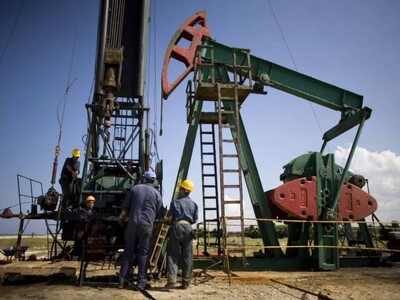
The price of West Texas Intermediate (WTI) crude oil experienced a notable drop on Thursday, closing at $81.25 per barrel, marking a 2.4% decrease. This decline occurred after the International Energy Agency (IEA) revised its global oil demand forecast downward for the rest of the year.
The IEA has revised to the baixa its forecast on world oil supply for the remainder of this year due to the impact of the resumption of hostilities in July between the United States and Iran, which hinders circulation in the Strait of Hormuz.
The IEA's revised outlook is significantly influenced by the ongoing tensions and renewed hostilities between the United States and Iran, which have created uncertainty regarding circulation in the critical Strait of Hormuz. This strategic waterway's potential disruption poses a considerable risk to global oil supply chains.
In its monthly oil market report, the IEA also recorta its projections on oil demand and petroleum products for this year due to the effect that new closures of the Strait of Hormuz and the consequent increase in the price of the barrel of crude oil are having on consumers.
In its monthly oil market report, the IEA also reduced its projections for oil demand, attributing the adjustment to the impact of new closures of the Strait of Hormuz and the subsequent rise in crude oil prices on consumers. The agency now anticipates a decrease in black gold demand by 1.6 million barrels per day this year, an upward revision of 510,000 barrels from previous estimates.
In concrete, it foresees that the demand for black gold will decrease by 1.6 million barrels daily this year, about 510,000 more than foreseen.
Furthermore, the IEA highlighted that the Middle East crisis has led to a reduction in global reserves by 69 million barrels in July, bringing them below 7,900 million barrels for the first time since April 2025. The agency stressed the urgency of reopening the Strait of Hormuz, emphasizing its strategic importance. The conflict has placed this route at the center of discord, with free passage interrupted since mid-July following the breakdown of a truce and the reimposition of a U.S. naval blockade on Iranian coasts and ports.
Likewise, it underlines that the crisis in the Middle East has reduced global reserves by 69 million barrels (mb) in July and they have remained at less than 7,900 mb for the first time since April 2025.
DistantNews Editorial
Originally published by Diario Libre in Spanish. Translated, summarized, and contextualized by our editorial team with added local perspective. Read our editorial standards.
More Stories



From Our Blog

What Gets Lost (and Found) When News Is Translated

The Critical Role of Diaspora Media in Global News

What Travellers Should Know About Countries with Restricted Press

A Digital Nomad's Guide to Following Local News

How the Same Story Looks Different in Different Countries
