


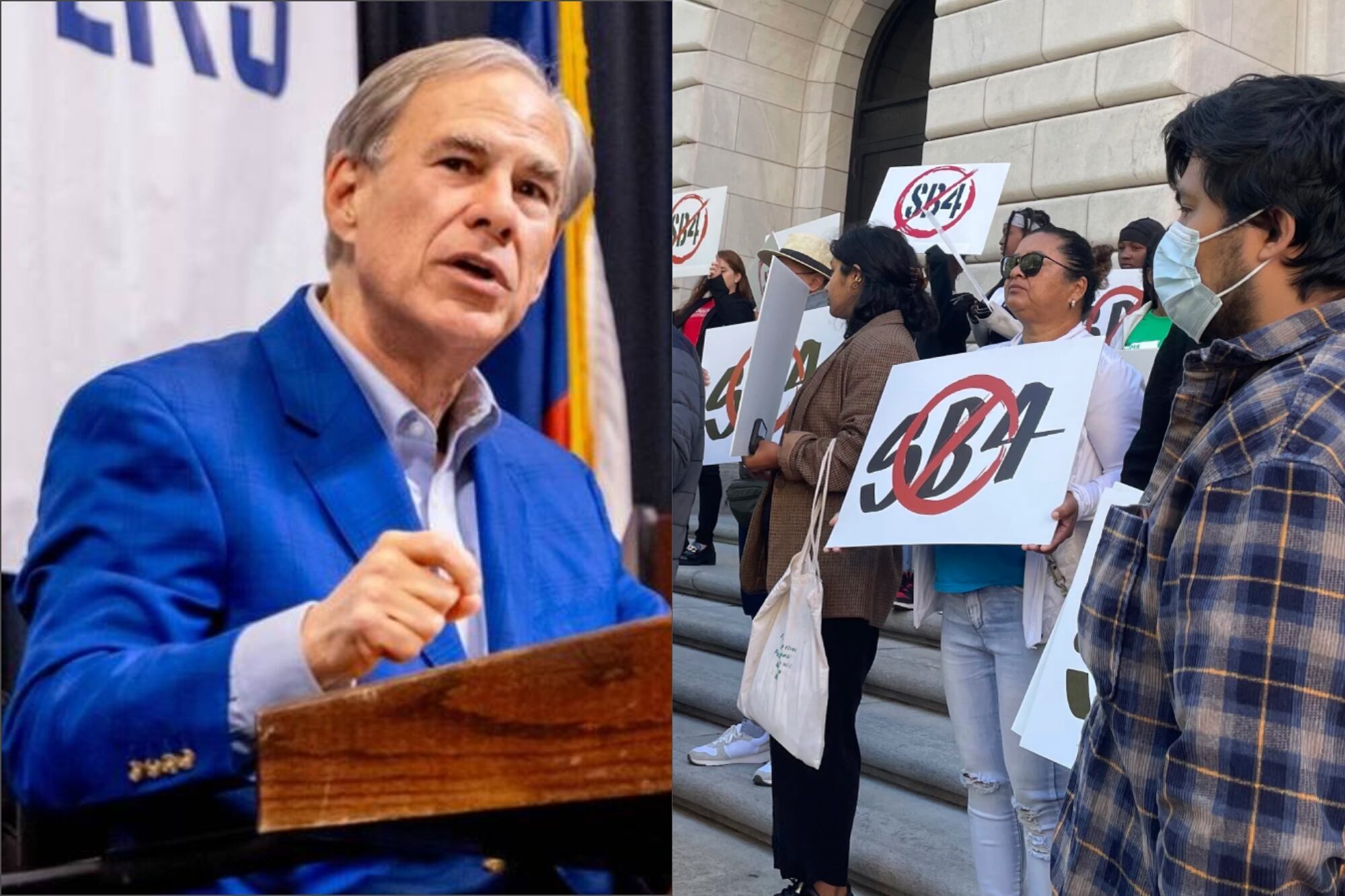
Texas reactivates controversial SB4 immigration law, granting state police new powers
Translated from Spanish, summarized and contextualized by DistantNews.
At a glance
News
Sources not specified
Ongoing story
- Texas's controversial SB4 immigration law, signed by Governor Greg Abbott, has seen key provisions take effect in June 2026.
- State authorities have regained powers to intervene in cases involving migrants suspected of irregular entry or presence in the U.S.
- The law, passed in 2023, faced legal challenges from civil rights groups arguing it encroaches on federal authority over immigration matters.
Key provisions of Texas's Senate Bill 4 (SB4), a contentious immigration law championed by Governor Greg Abbott, have come back into effect in June 2026. This development allows state authorities to resume powers related to intervening in cases concerning migrants suspected of entering or remaining in the United States irregularly.
The SB4 law, originally passed in 2023, faced immediate and significant opposition from civil rights organizations and immigrant advocates. They argued that the law overstepped state boundaries, infringing upon the federal government's exclusive constitutional authority over immigration, naturalization, and deportation matters.
Despite ongoing legal battles, a recent court ruling has permitted the enforcement of several SB4 provisions. This means Texas state and local law enforcement officers can now make arrests based on suspicion of irregular migratory status. The law criminalizes certain immigration violations and establishes mechanisms for migrant removal, sparking widespread concern about potential profiling and irreparable harm to individuals.
The legal challenges, including a class-action lawsuit filed on behalf of two Honduran immigrants, have sought to block the law's implementation. A preliminary injunction was issued on May 14, partially blocking the law's enforcement just before it was set to take effect, citing a substantial threat of irreparable harm to the plaintiffs. However, the current judicial landscape allows for the renewed application of certain aspects of the controversial legislation.
DistantNews Editorial
Originally published by La Nación in Spanish. Translated, summarized, and contextualized by our editorial team with added local perspective. Read our editorial standards.
More Stories


From Our Blog

What Gets Lost (and Found) When News Is Translated

The Critical Role of Diaspora Media in Global News

What Travellers Should Know About Countries with Restricted Press

A Digital Nomad's Guide to Following Local News

How the Same Story Looks Different in Different Countries
