


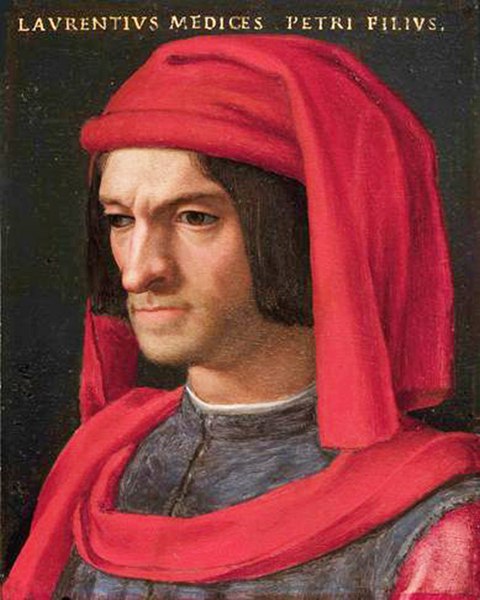
The Banker Who Built Modern Europe: Lorenzo de' Medici, Architect of the Renaissance
Translated from Romanian, summarized and contextualized by DistantNews.
TLDR
- Lorenzo de' Medici, an Italian banker and statesman, is considered a key architect of modern Europe through his patronage of arts and influence on modern thought.
- Born into a wealthy Florentine family, he inherited financial acumen and a passion for arts and culture, becoming a powerful figure during the Renaissance.
- His era, the Italian Renaissance, was marked by intellectual fervor and political instability, with the Medici family wielding significant control over Florence.
Florence, Italy – The name Lorenzo de' Medici, 'Il Magnifico,' resonates through history as a titan of the Renaissance, a man whose influence extended far beyond the counting houses of his family's bank.
While many in Europe might see him as a historical footnote or merely a patron of great artists, here in Italy, we understand Lorenzo as the very embodiment of the Renaissance spirit. He was not just a banker; he was a statesman, a poet, and a visionary who shaped not only the cultural landscape but also the political destiny of the continent.
His legacy is woven into the fabric of Florence and Italy. The Medici Bank, a financial powerhouse of its time, provided the resources that fueled an unprecedented explosion of art and thought. Lorenzo's discerning eye and generous patronage supported geniuses like Michelangelo and Botticelli, ensuring their masterpieces would endure for centuries.
He was a banker, a statesman, a patron, and a poet, embodying the spirit of the Renaissance.
From our Italian perspective, Lorenzo de' Medici's genius lay in his ability to synthesize finance, politics, and culture. He navigated a complex web of Italian city-states, maintaining a delicate balance of power while fostering an environment where humanism and artistic innovation could flourish. This intricate dance of diplomacy and cultural investment is a hallmark of Italian ingenuity, a legacy we continue to draw inspiration from.
Western narratives often focus on the grand artistic output, but for us, Lorenzo's true brilliance was in his holistic approach. He understood that a thriving society required not just wealth, but also intellectual and artistic enrichment. His life's work demonstrates a profound understanding of how culture can be a powerful engine for both political stability and enduring legacy.
The House of Medici raised Florence to the highest level of culture and refinement.
DistantNews Editorial
Originally published by Adevărul in Romanian. Translated, summarized, and contextualized by our editorial team with added local perspective. Read our editorial standards.
More Stories

From Our Blog

What Gets Lost (and Found) When News Is Translated

The Critical Role of Diaspora Media in Global News

What Travellers Should Know About Countries with Restricted Press

A Digital Nomad's Guide to Following Local News

How the Same Story Looks Different in Different Countries
