


The Brief Victory of Freedom: Universal Suffrage in Germany
Translated from German, summarized and contextualized by DistantNews.
At a glance
In-depth
Named sources
Context piece
- Germany experienced a brief period of advanced democracy in 1918-1919 following the abdication of Kaiser Wilhelm II.
- The revolution, led by figures like Philipp Scheidemann, swiftly overthrew the imperial regime with minimal violence.
- The period saw women voting for the first time in the election for the National Assembly, marking a significant democratic expansion.
In the tumultuous aftermath of World War I, Germany underwent a rapid and profound transformation, establishing itself as a remarkably progressive republic in 1918-1919. This era, marked by the abdication of Kaiser Wilhelm II and the subsequent proclamation of a republic, represented a swift and largely peaceful dismantling of the imperial regime.
The greatest of all revolutions has, like a suddenly breaking storm wind, overthrown the imperial regime with all that belonged to it, top and bottom.
The revolution's speed astonished many contemporaries. On November 10, 1918, just hours after Chancellor Max von Baden announced the Kaiser's abdication without imperial consent, Philipp Scheidemann, a leader of the Social Democrats, declared the establishment of the republic from the Reichstag balcony. Theodor Wolff, editor-in-chief of the liberal Berliner Tageblatt, later lauded the events as "the greatest of all revolutions," marveling at how a seemingly solid imperial structure was toppled so quickly and with such little destruction.
Wolff particularly noted the near-absence of violence, calling it a "model" for nations striving for true freedom. He observed that symbols of the old order were removed "without breaking anything," a testament to what he perceived as a mature and understanding populace. This relatively bloodless transition contrasted sharply with the dramatic upheaval that had overthrown the monarchy.
You can call it the greatest of all revolutions because never before has such a solidly built bastion, surrounded by solid walls, been taken in one go.
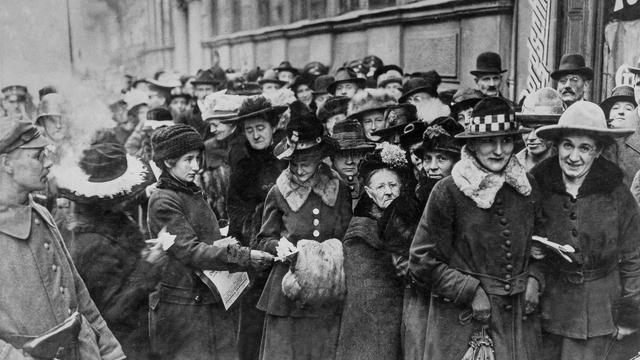
A key feature of this nascent democracy was the extension of suffrage. In January 1919, women participated in an election for the National Assembly for the first time, casting their votes and marking a pivotal moment in the expansion of democratic rights. This period, though ultimately short-lived as democratic eras across Europe soon faced challenges, stands as a significant chapter in Germany's political history, showcasing a powerful, albeit brief, surge towards progressive governance.
To every people that rises to true freedom, this model must be held up. Symbols of the old spirit are lined up with us like the marble statues in the Siegesallee. An adult, sensible people removes them without breaking anything.
DistantNews Editorial
Originally published by Die Zeit in German. Translated, summarized, and contextualized by our editorial team with added local perspective. Read our editorial standards.
More Stories



From Our Blog

What Gets Lost (and Found) When News Is Translated

How the Same Story Looks Different in Different Countries

The Critical Role of Diaspora Media in Global News

What Travellers Should Know About Countries with Restricted Press

A Digital Nomad's Guide to Following Local News
