

The cardboard empire of American livestock: Farmer lost $170 million in a giant Ponzi scheme
Translated from Romanian, summarized and contextualized by DistantNews.
At a glance
News
Named sources
Outcome reported
- Farmer Brian McClain orchestrated a $170 million Ponzi scheme using a "ghost herd" of cattle, defrauding investors and a bank.
- The fraud unraveled when a creditor's inspection revealed only a fraction of the claimed 80,000 cattle existed.
- McClain died by suicide before authorities could apprehend him, leaving behind a complex web of legal battles over the missing funds.
A spectacular collapse of a fictional livestock empire has exposed one of the largest frauds in American agriculture. The story of Brian McClain, a farmer who managed to conceal a $170 million Ponzi scheme behind a "ghost herd," illustrates how easily blind trust can turn into a financial disaster of immense proportions.
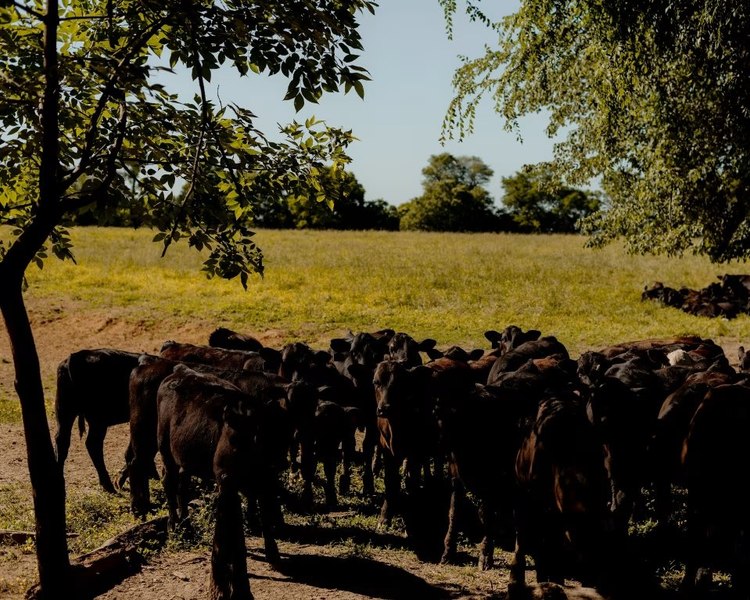
For years, McClain operated a vast cattle business in his hometown and the Texas Panhandle, buying calves at auction and selling them for profit within three months. His operation, which reportedly numbered 80,000 head of cattle, was financed by a $50 million loan from an agricultural bank and $120 million from investors. This venture appeared to be the meteoric success of a former chemical plant worker. He lived in an imposing brick villa with immaculate lawns, and his recent wedding photos, framed in gold, adorned his entrance, as reported by The Wall Street Journal.
However, the farmer harbored a terrible secret: the majority of his herds existed only on paper. The truth emerged only when the creditor decided to conduct a physical on-site inspection to count the cattle and assess the collateral. This was the first complete check in over four years, during which they had been sending money based on trust. Inspectors found only 8,916 animals at the location. Ultimately, the farmer squandered the $170 million obtained from the bank and investors, many of whom were friends from his small hometown in Kentucky.
He had managed to quell the bank's suspicions for a time when figures didn't add up, including the inexplicably low feed expenses relative to the declared number of animals. He kept investors calm by paying them "profit shares," which often remained purely on paper, automatically reinvested in new turnovers. According to documents filed in Texas federal bankruptcy court, McClain conducted fictitious transactions totaling approximately $2 billion to build his "ghost herd." Yet, the mystery that forensic accountants have yet to solve is: where did the money actually disappear to?
McClain's elaborate arrangement collapsed in April 2023 when a local truck dealer, who had invested about $650,000 in the business, urgently requested his money back. After receiving several bounced checks, he contacted the county sheriff. The farmer died by suicide before law enforcement could reach him. Today, amidst a tangle of lawsuits and counterclaims between the creditor bank, investors, the bankruptcy trustee, and McClain's family, details are emerging.
There are two sides to me. One that loves you, and one that has stolen from people.
DistantNews Editorial
Originally published by Adevărul in Romanian. Translated, summarized, and contextualized by our editorial team with added local perspective. Read our editorial standards.
More Stories


From Our Blog

What Gets Lost (and Found) When News Is Translated

The Critical Role of Diaspora Media in Global News

What Travellers Should Know About Countries with Restricted Press

A Digital Nomad's Guide to Following Local News

How the Same Story Looks Different in Different Countries
