

The ghost of Târnăveni's chemical plant: Thousands employed, but the town became a toxic zone
Translated from Romanian, summarized and contextualized by DistantNews.
At a glance
In-depth
Sources not specified
Context piece
- The chemical plant in Târnăveni, Romania, once a major producer of calcium carbide and employer of thousands, has been abandoned and left to decay.
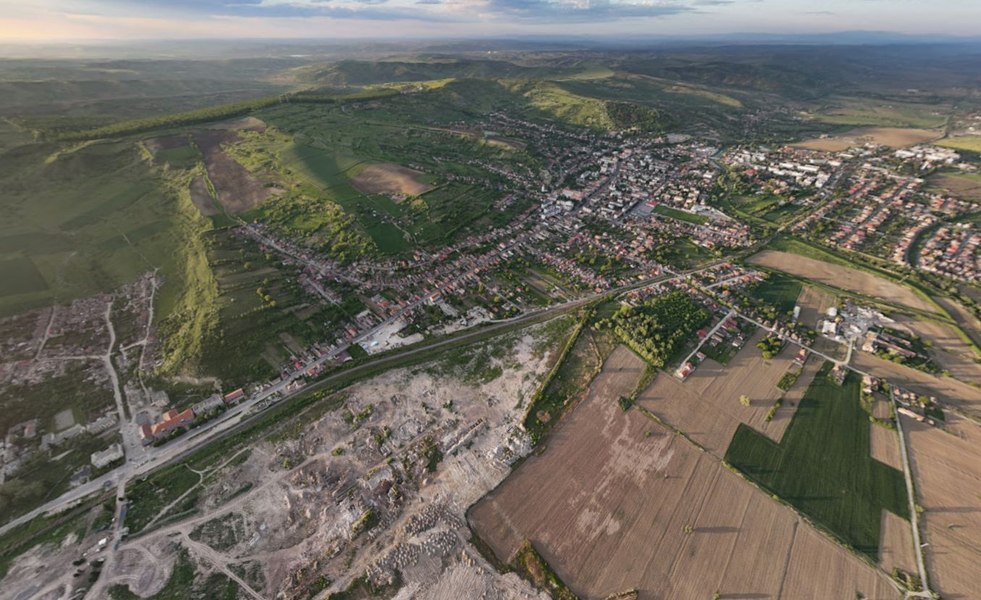
- The industrial site, covering nearly 100 hectares, is now a desolate landscape of ruins and toxic waste dumps, posing significant environmental hazards.
- Plans for the site's ecological cleanup are linked to the Mureș Magnesium project, which aims to reprocess waste and remediate the land.
The remnants of one of Romania's largest chemical plants stand on the outskirts of Târnăveni, a town in Mureș County that once thrived on its industrial might. Developed in the 20th century, the town's economy was built around the chemical complex, the sole producer of calcium carbide in Romania. This industrial giant employed thousands, but its operations also transformed Târnăveni into one of the country's most polluted areas.
Today, the former industrial platform, spanning nearly 100 hectares between the railway and the Târnava Mică River, is a desolate wasteland. The skeletal remains of former factories and specialized waste disposal sites, known as 'bataluri,' dominate the landscape. These contain hazardous chemical waste, including chromium compounds, which have been identified as severe environmental problems inherited by the town after the factories closed.
For decades, the Târnăveni chemical plant was considered a jewel of Romanian industry. However, since the early 1990s, its facilities were gradually dismantled as industrial activity waned and the workforce dwindled. By the 2000s, the last remaining companies, BICAPA and Carbid Fox, ceased operations. Their structures crumbled into ruins, scattered across the contaminated industrial land.
Recent plans for ecological remediation of the former platform are tied to the Mureș Magnesium project. This company, which acquired some assets from the former BICAPA plant, proposes reprocessing the waste from the 'bataluri' and cleaning up the site. The plant's 90-year operational history, ending in 2001, involved producing nitrates, fertilizers, calcium carbide, caustic soda, and ceramics, as well as refining precious metals like gold and silver.
În cei aproape 90 de ani de funcționare, până la închiderea din 2001, pe platformă s-au desfășurat numeroase activități de producție chimică: nitrați, îngrășăminte, carbid, sodă caustică și produse ceramice. Tot aici erau rafinate metale prețioase, ca aurul și argintul, sub formă de lingouri.
DistantNews Editorial
Originally published by Adevărul in Romanian. Translated, summarized, and contextualized by our editorial team with added local perspective. Read our editorial standards.
More Stories

From Our Blog

What Gets Lost (and Found) When News Is Translated

The Critical Role of Diaspora Media in Global News

What Travellers Should Know About Countries with Restricted Press

A Digital Nomad's Guide to Following Local News

How the Same Story Looks Different in Different Countries
