

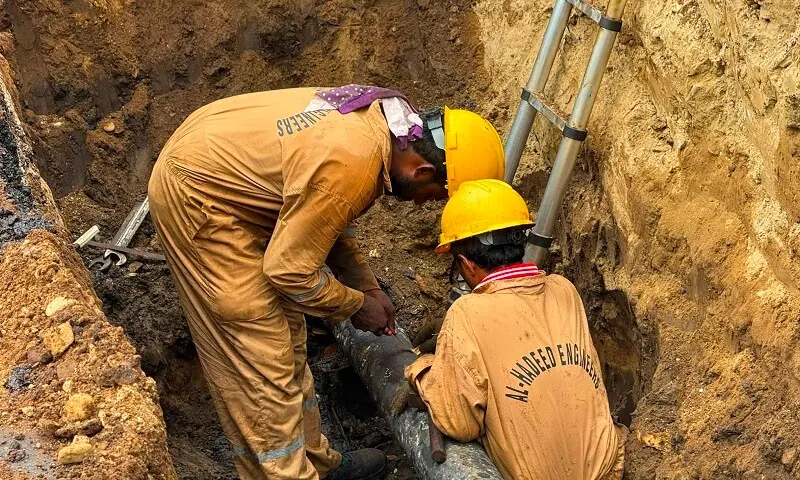

The Gilgit-Baltistan village where no one says climate change but everyone talks about the weather
Summarized and contextualized by DistantNews.
At a glance
In-depth
Sources not specified
Context piece
- Residents of Gilgit-Baltistan recall summers defined by family reunions and distinct seasonal rhythms, now disrupted by changing weather patterns.
- Unexpected snow in April damaged fruit tree blossoms, marking a shift from the predictable climate previously experienced.
- The article highlights how local conversations increasingly focus on unusual weather, reflecting a growing awareness of climate change impacts despite the term not being explicitly used.
In Gilgit-Baltistan, the rhythm of life was once dictated by the predictable turn of seasons. Summers, particularly July and August, were a cherished time when families dispersed for work and education would reunite in their mountain villages. This period was marked by a palpable sense of community: houses filled with guests, courtyards buzzed with children's laughter, and evenings were a shared experience. The author recalls a feeling of belonging, tied to the scent of wheat fields turning golden, the sight of apricot trees laden with fruit, and the easy camaraderie among neighbors.
This deeply ingrained connection to the seasons began to fray with subtle but significant shifts. A stark realization came one spring morning when snow fell in April, blanketing fruit trees already in bloom. This event, which threatened the harvest, was the first time the author, then away at university, perceived a fundamental change. Since then, the once-reliable patterns have faltered: winters linger, rain arrives unexpectedly, and harvests are delayed or shifted. Conversations among locals, while not explicitly mentioning climate change, invariably return to the weather, with the common refrain, "It never used to be like this."
The consequences of these climatic shifts are not abstract. Many loved ones of the author have experienced firsthand the destructive power of extreme weather. Last year, a glacial lake outburst flood in Gulmit cut off the Karakoram Highway, stranding family members, cutting off electricity, and disrupting phone signals. These events, once rare, are becoming more frequent, forcing a community deeply attuned to the natural world to confront a new, unpredictable reality. The subtle changes in weather are no longer just conversation topics; they are tangible threats to the way of life in Gilgit-Baltistan.
DistantNews Editorial
Originally published by Dawn. Summarized and contextualized by our editorial team with added local perspective. Read our editorial standards.
More Stories
From Our Blog

What Gets Lost (and Found) When News Is Translated

The Critical Role of Diaspora Media in Global News

What Travellers Should Know About Countries with Restricted Press

A Digital Nomad's Guide to Following Local News

How the Same Story Looks Different in Different Countries
