




“The judiciary does not take orders”: Hugo Aguilar presents Mexico’s new Supreme Court after its first year
Translated from Spanish and summarized by DistantNews. Read the original for the full story.
At a glance
News
Named sources
Context piece
- Supreme Court President Hugo Aguilar Ortiz said Mexico’s reconfigured federal judiciary inherited a slow and insular institution but now works autonomously to deliver results demanded by the public.
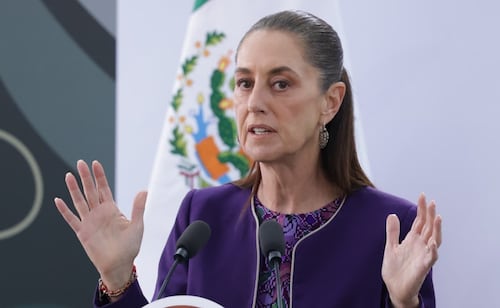
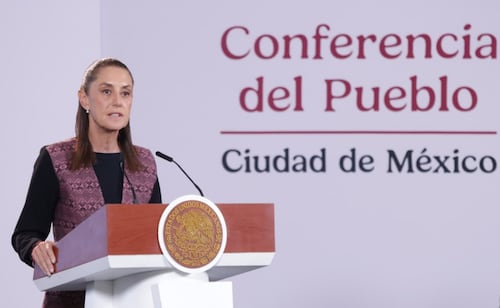
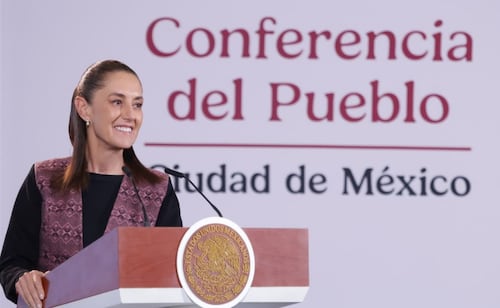
- Speaking alongside President Claudia Sheinbaum, Aguilar said judges must obey the Constitution and reject outside agendas, while acknowledging that the transformation remains incomplete.
- He said the judiciary still faces resistance and outdated practices, and called on judges and staff to deepen the change and respond to criticism.
Hugo Aguilar Ortiz used his first annual report as president of Mexico’s Supreme Court to draw a sharp line between the judiciary he inherited and the institution he said is taking shape.
He described the previous court as slow, ossified, inward-looking and distant from public scrutiny, accountability and transparency. In a 45-minute address attended by President Claudia Sheinbaum, Aguilar said the Federal Judiciary now operates autonomously and is working to deliver the results the public demands.
We insist that the judiciary does not take orders or follow the pulse of political circumstances. No agenda outside the Constitution has a place in the judiciary.
“Insistimos, el Poder Judicial no atiende encargos, no sigue el pulso de las coyunturas, ninguna agenda ajena al texto Constitucional encuentra cabida en el poder judicial,” Aguilar said. In English: “We insist that the judiciary does not take orders or follow the pulse of political circumstances. No agenda outside the Constitution has a place in the judiciary.”
We owe obedience to the Constitution, and our commitment is to the people of Mexico.
He said political, economic and social sectors could rely on a new judiciary that resolves cases rigorously and provides certainty while Mexico undergoes change. But he also acknowledged, in what he called a responsible and self-critical assessment, that the transformation would not happen overnight or end with new rules and newly appointed members.
“Persisten resistencias, actitudes, entendimientos y formas de hacer justicia con reminiscencias del pasado,” he said, meaning that resistance, attitudes and ways of administering justice rooted in the past still remain. Aguilar urged judges and judicial employees to adopt a new approach, thanked the judiciary’s unions for supporting the task and said profound change requires time. He added that the transformation was gradually taking hold, while calling for continued efforts to correct failures, listen to criticism and move faster where necessary.
Resistance, attitudes, understandings and ways of administering justice rooted in the past still remain.
About this summary
Originally published by El Universal in Spanish. Translated, summarized, and contextualized automatically by DistantNews, with a note on how the source frames the story. Not individually reviewed before publishing. How this works.
More Stories
From Our Blog

What Press Freedom Means for the News You Read

News in Translation: What Gets Lost, and How We Keep the Framing

Diaspora Media: How Communities Follow News From Home

Traveling Where the Press Is Not Free: How to Read the News There

The Digital Nomad's Guide to Local News
