


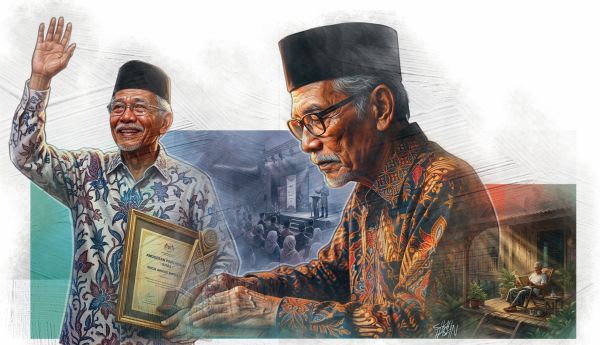
The last echo of the storyteller's epic
Translated from Malay, summarized and contextualized by DistantNews.
At a glance
In-depth
Sources not specified
Context piece
- An elderly storyteller, Pak Ali, feels marginalized as traditional oral literature loses its appeal to younger generations.
- Modernization and digital screens have replaced village gatherings for storytelling with electronic music and short videos.
- Pak Ali believes that if storytellers cease their craft, a part of the nation's soul will be lost.
In the quiet solitude of Teratak Warisan, an elderly storyteller named Pak Ali sits contemplating the encroaching darkness. Clutching a worn manuscript, his rough hands gently caress the aged pages, a mirror to his own heart heavy with loneliness. The once vibrant courtyard, filled with the aroma of incense and strong coffee, where he captivated villagers with tales like 'Hikayat Malim Deman,' now stands silent.
Pak Ali, aren't you tired of sitting alone on the perch every night?
Pak Ali was once a celebrated figure, his voice bringing to life the adventures of characters like the clever Sang Kancil and tragic princes. Under the glow of oil lamps, children and elders alike would be mesmerized, their laughter and tears echoing his narrative. His voice was not merely sound; it was the spirit that animated the cold village nights, weaving tales of myth and wit.
However, two decades have passed, and modernization has swept through the village like a silent storm. The digital screens in the palms of the new generation have eclipsed the allure of oral literature. Village nights are no longer filled with poetic language but with the thumping beats of electronic music from short video apps. At the local coffee shop, young people are engrossed in their phones for hours, ignoring the wisdom of their elders.
People no longer look at these ancient fairy tales. Kids nowadays don't follow stories like Sang Kancil anymore. They're all watching more sophisticated foreign videos. These old treasures are no longer in demand. It's a waste of time.
Borhan, a young villager, casually dismisses Pak Ali's craft, telling him that "people no longer look at these ancient fairy tales. Kids nowadays don't follow stories like Sang Kancil anymore. They're all watching more sophisticated foreign videos. These old treasures are no longer in demand. It's a waste of time." Pak Ali, however, responds with a gentle, resigned smile. "If I myself decide to stop telling stories, Borhan," he replies softly but profoundly, "then a part of our nation's soul will die at that moment. This is not just empty entertainment to fill quiet time before sleep. This is..."
If I myself decide to stop telling stories, Borhan, then a part of our nation's soul will die at that moment. This is not just empty entertainment to fill quiet time before sleep. This is...
DistantNews Editorial
Originally published by Utusan Malaysia in Malay. Translated, summarized, and contextualized by our editorial team with added local perspective. Read our editorial standards.
More Stories



From Our Blog

What Gets Lost (and Found) When News Is Translated

The Critical Role of Diaspora Media in Global News

What Travellers Should Know About Countries with Restricted Press

A Digital Nomad's Guide to Following Local News

How the Same Story Looks Different in Different Countries
