

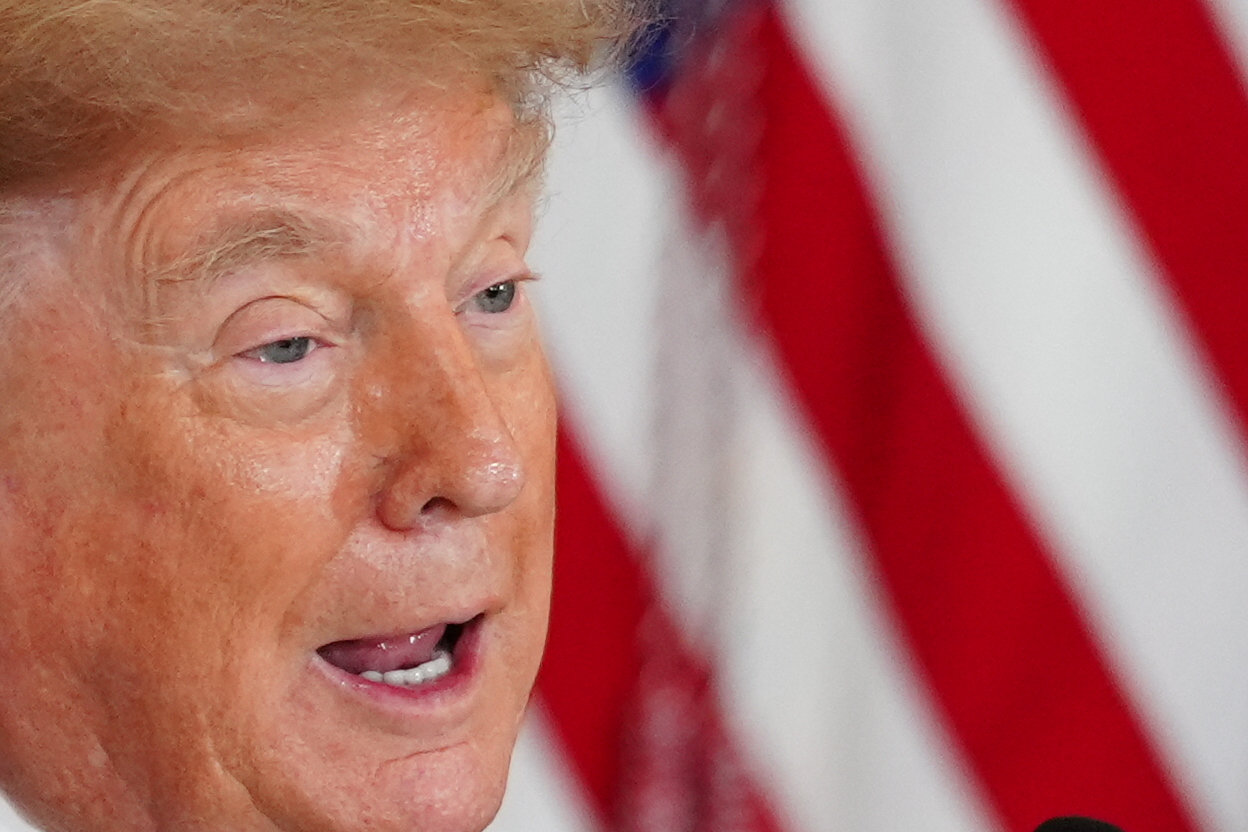

The Misconception of Usable Tactical Nukes [Hankyoreh Prism]
Translated from Korean, summarized and contextualized by DistantNews.
At a glance
Analysis
Named sources
Context piece
- A conservative South Korean political party is advocating for the redeployment of U.S. tactical nuclear weapons in South Korea, citing North Korea's nuclear threats.
- The proposal is framed as a necessary response to evolving U.S. nuclear strategy and the need for Seoul to consider all options for national interest.
- However, experts argue that redeploying U.S. tactical nukes to South Korea is highly unlikely due to U.S. global strategy, the weapons' operational methods, and the potential for escalation and fallout in the densely populated Korean peninsula.
A debate has ignited in South Korea over the potential redeployment of U.S. tactical nuclear weapons, fueled by escalating tensions with North Korea. A spokesperson for the conservative People Power Party, Cho Yong-sul, argued in a recent commentary that President Lee Jae-myung should not solely oppose the idea of U.S. tactical nuclear support given the North Korean nuclear threat. The commentary suggested that as the U.S. military expands its focus on tactical nuclear weapons, South Korea should also consider all options for its national interest.
The core of the argument is to reconsider the stationing of U.S. tactical nuclear weapons within South Korea. However, such a deployment is not solely dependent on Seoul's wishes but hinges on broader U.S. global strategy, similar to the withdrawal of these weapons in 1991. At that time, President George W. Bush announced the withdrawal of U.S. tactical nuclear weapons deployed worldwide, citing concerns about them falling into the hands of rogue states following the collapse of the Soviet Union. Weapons stationed at U.S. military bases in Korea since the 1950s were also removed then.
Recent reports indicate that U.S. Deputy Secretary of Defense for Policy, Elbridge Colby, has spoken about the growing interest in small tactical nuclear weapons and the U.S. need to maintain rational nuclear options. This has led some, like Cho Yong-sul, to anticipate the redeployment of tactical nukes to South Korea if U.S. nuclear strategy shifts. Yet, experts believe the possibility of redeployment is extremely slim when considering the operational methods and strategic implications.
Is President Lee Jae-myung going to oppose it to the end even in the face of North Korea's nuclear threat?
Currently, the U.S. operates tactical nuclear weapons primarily through aircraft delivery, such as the B61-12 bombs deployed in Europe, which can be dropped by aircraft like the B-2 or F-35. These bombs offer variable yields, from 0.3 kilotons to 50 kilotons. If U.S. tactical nuclear weapons were stationed in South Korea, they would immediately become a primary target for North Korea, and China and Russia would likely protest. The U.S. maintains flexibility by deploying these weapons in Guam or on its mainland, allowing for rapid response to regional situations within hours via strategic bombers.
A critical misconception in the tactical nuclear debate is the idea that while strategic nuclear weapons are 'unusable' (for deterrence), tactical nuclear weapons are 'usable' (for actual combat). Generally classified as having yields below 100-20 kilotons, the distinction between strategic and tactical nukes originated from the Cold War era's U.S. and Soviet contexts, which had vast buffer zones like the Pacific Ocean. Applying this distinction to the Korean peninsula, with its narrow landmass and high population density in urban centers, is problematic. Using tactical nuclear weapons in North Korea could lead to unavoidable radioactive fallout in Seoul. A 2005 simulation by the U.S. Defense Threat Reduction Agency estimated that a 20-kiloton nuclear bomb detonated in Seoul's Yongsan district could kill approximately 1.13 million people, with total casualties reaching 2.75 million. For South Korea, the strategic versus tactical nuclear classification holds little practical meaning, given that the atomic bombs used on Hiroshima (15 kilotons) and Nagasaki (21 kilotons) in 1945, considered tactical by U.S. standards, resulted in tens of thousands of deaths.
If even the United States is reviewing new strategies to enhance the effectiveness of its nuclear umbrella, we too must place all options on the table and calmly review them from the perspective of national interest.
DistantNews Editorial
Originally published by Hankyoreh in Korean. Translated, summarized, and contextualized by our editorial team with added local perspective. Read our editorial standards.
More Stories
From Our Blog

What Gets Lost (and Found) When News Is Translated

The Critical Role of Diaspora Media in Global News

What Travellers Should Know About Countries with Restricted Press

A Digital Nomad's Guide to Following Local News

How the Same Story Looks Different in Different Countries
