


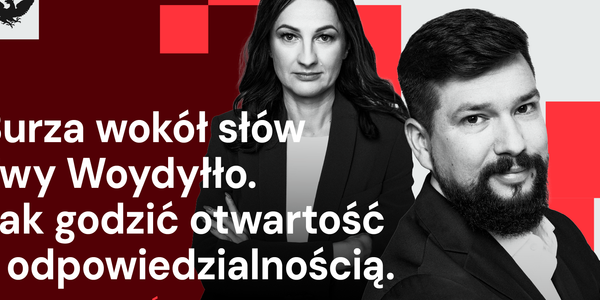
The Point: Is removing Ewa Woydyłło's podcast censorship or responsibility?
Translated from Polish, summarized and contextualized by DistantNews.
At a glance
Analysis
Sources not specified
Context piece
- A Polish podcast discusses the removal of an interview with psychologist Ewa Woydyłło, questioning if it was censorship or responsibility.
- The conversation explores broader issues of online media standards, public debate's tendency toward extremes, and the changing landscape of journalism.
- Experts suggest the digital revolution requires new rules to balance online freedom with accountability, rather than reverting to old media models.
A recent podcast discussion in Poland delved into the controversial removal of an interview featuring psychologist Ewa Woydyłło, prompting a debate on whether the action constituted censorship or a necessary act of responsibility.
I think we haven't worked this out yet and we're kind of pushing this problem aside.
Michał Płociński, a participant in the discussion, argued that the issue extends beyond this single incident, highlighting a societal struggle to establish clear standards for online discourse. He noted that rapid technological change breeds uncertainty, and the public debate often polarizes, leaving little room for nuanced conversation. The podcast questioned why Woydyłło's comments about tennis star Iga Świątek triggered such a strong reaction, especially when similar remarks about other athletes like Robert Lewandowski did not. "Why is it that tennis and Iga Świątek became the moment when we reacted?" Płociński pondered.
The same was said before about Lewandowski. Why is it that tennis and Iga Świątek became the moment when we reacted?
The conversation also touched upon the evolving nature of journalism, with Płociński observing that the media landscape has transformed dramatically from 20 years ago. He pointed out that the era of large teams meticulously preparing for a single broadcast is gone, replaced by journalists handling multiple roles. Instead of lamenting the past, Płociński urged a focus on finding new funding models for quality journalism to prevent a race to the bottom. The discussion extended to the role of media consumers, questioning whether creators drive sensationalism or merely respond to audience demand for controversial content.
in revolutionary times, there is always a lack of a middle way.
Ultimately, the podcast suggested that the digital revolution necessitates new frameworks. These frameworks must reconcile the ideal of open debate with the need for accountability, acknowledging that a model of absolute freedom online does not inherently solve problems. The discussion implies that navigating this new media environment requires careful consideration of both content creation and audience reception.
The world has changed, we are not responsible for the message. Full freedom of debate.
DistantNews Editorial
Originally published by Rzeczpospolita in Polish. Translated, summarized, and contextualized by our editorial team with added local perspective. Read our editorial standards.
More Stories


From Our Blog

What Gets Lost (and Found) When News Is Translated

The Critical Role of Diaspora Media in Global News

What Travellers Should Know About Countries with Restricted Press

A Digital Nomad's Guide to Following Local News

How the Same Story Looks Different in Different Countries
