

The Radiant Lacquer Art of Southern Vietnam
Translated from Vietnamese and summarized by DistantNews. Read the original for the full story.
At a glance
In-depth
Named sources
Context piece
- An exhibition at the Southern Women’s Museum presents nearly 200 lacquerware objects from southern Vietnam.
- The collection traces the craft’s development from 1950 to 1990 and includes more than 140 workshop and artisan names.
- The exhibition highlights the technical skill and cultural history behind everyday lacquerware, not only celebrated artworks.
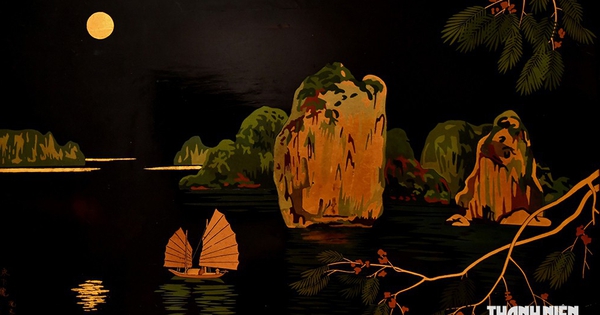
Moonlight glimmers across Ha Long Bay in Nguyễn Văn Hớn’s 1950 lacquer painting. The surface is perfectly flat and polished, with a deep black night surrounding limestone peaks that seem to emit their own light. The work feels remarkably modern, yet its age is part of its power.
That sense of time runs through “Chu tất bình dân,” an exhibition of nearly 200 objects from the collections of Huyền Đức Book Company and Phạm Hoàng Quân. On display at the Southern Women’s Museum through October 4, 2026, the show includes tea boxes, flower vases, decorative plates, screens, furniture, jewelry boxes and wall paintings. These objects were made for ordinary life, but they carry the confidence of a highly developed craft.
The exhibition grew from Phạm Hoàng Quân’s more than decade-long effort to collect lacquerware produced in Thủ Dầu Một and Saigon between 1950 and 1990. The collection now covers more than 140 workshop and artisan names, offering an almost complete view of southern Vietnam’s lacquerware during what the exhibition presents as its most brilliant period.
The word “bình dân,” or popular and everyday, opens a different way of looking at lacquer. Beauty here does not belong only to works by famous artists. It also appears in household objects, where artisans invested technique, experience and professional pride. The exhibition presents the culture surrounding the craft as well, including the lacquer artisans’ founders’ ceremony on the 13th day of the sixth lunar month and gatherings that introduced workers such as Chín Minh, a lacquer craftsman, Huyền Thanh, a shell inlayer, and painter Nguyễn Quang Sơn.
The collection also reveals the range of techniques once mastered by southern lacquer artisans. A 1990s painting from the Lam Sơn workshop shows an advanced eggshell-inlay method. Using only black and white, artisans depict three women playing the tỳ bà beside a tea set. After repeated layers of lacquer, sanding and polishing, the rough eggshell fragments become softly graded, giving the faces, clothing and hands depth and a distinctly Vietnamese character.
About this summary
Originally published by Thanh Niên in Vietnamese. Translated, summarized, and contextualized automatically by DistantNews, with a note on how the source frames the story. Not individually reviewed before publishing. How this works.
More Stories

From Our Blog

What Gets Lost (and Found) When News Is Translated

The Critical Role of Diaspora Media in Global News

What Travellers Should Know About Countries with Restricted Press

A Digital Nomad's Guide to Following Local News

How the Same Story Looks Different in Different Countries
